
A French Squadron near a Rocky Coast — History & Facts
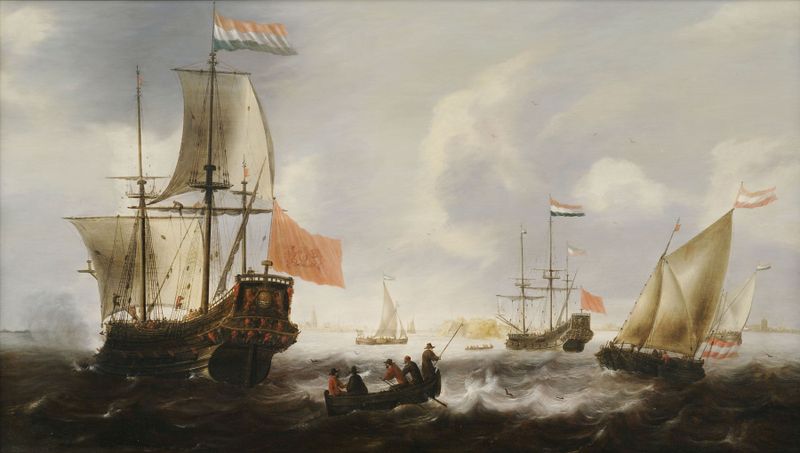
Such is the paradox of existence embedded within every stroke of the canvas. In A French Squadron near a Rocky Coast, the turbulent sea and rugged cliffs invite contemplation of nature’s duality — both formidable and serene. Look closely at the center of the composition, where a fleet of ships dances precariously on the waves. The artist’s rich palette draws your eye, with deep blues and greens swirling beneath the luminous white foam of crashing waves.
Notice how the light reflects off the water, creating a dazzling shimmer that contrasts sharply with the dark, imposing rocks rising to the left. Each vessel, draped in billowing sails, seems both anchored by tradition and swept away by the relentless current of time. Beyond the surface, a narrative unfolds — the ships, symbols of human ambition and exploration, are dwarfed by the uncaring force of nature. The rocky coast signifies the barriers we face, while the open sea embodies the allure of discovery.
This juxtaposition speaks to the tension between aspiration and the harsh realities of our world, echoing a melancholic truth: the pursuit of greatness often entails sacrifice and struggle. Created between 1640 and 1676, this piece reflects Bellevois's alignment with the Baroque style, characterized by dramatic movement and vivid detail. During this period, Europe was rife with naval conflicts and explorations, serving as both a backdrop and catalyst for the artist's maritime inspirations. The work stands as a testament to the era's complex interplay between human endeavor and the sublime power of nature, capturing the zeitgeist of a world in flux.
More Artworks by Jacob Adriaensz. Bellevois
Browse all →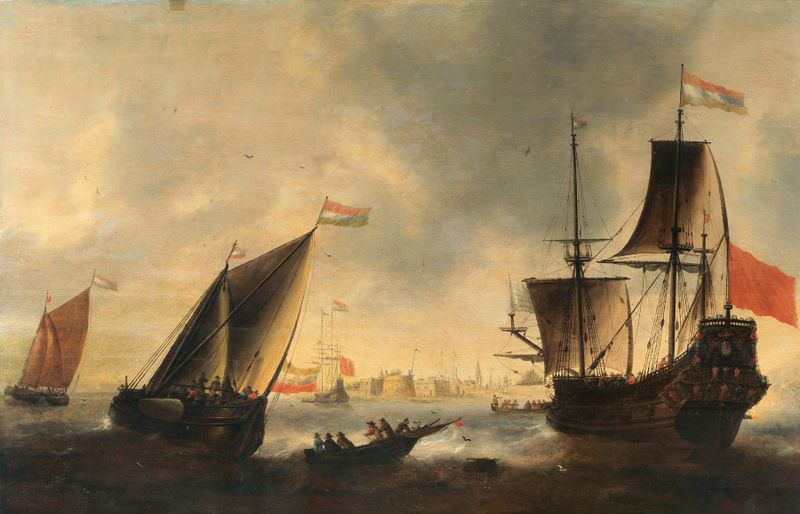
Dutch ships and boats at sea, a city beyond
Jacob Adriaensz. Bellevois
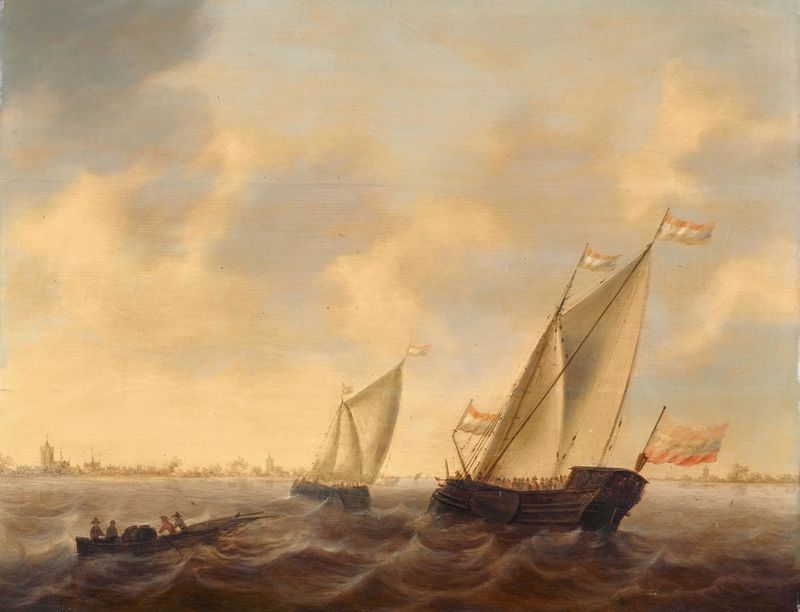
Ships and boats at sea
Jacob Adriaensz. Bellevois
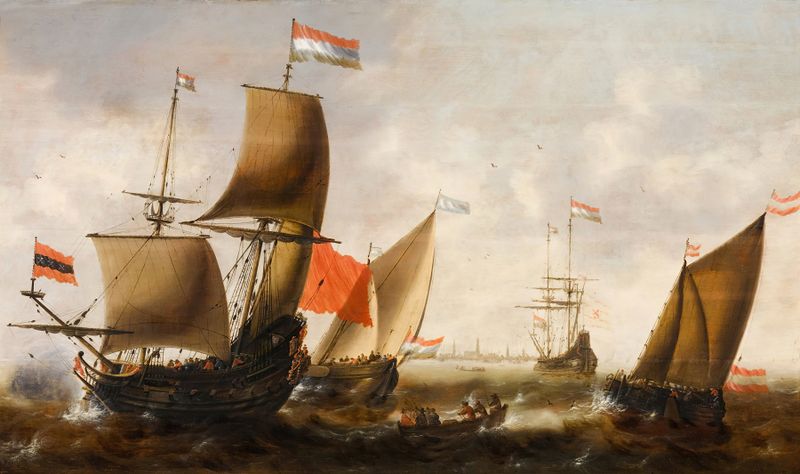
Dutch shipping in choppy seas off the coast of Amsterdam
Jacob Adriaensz. Bellevois
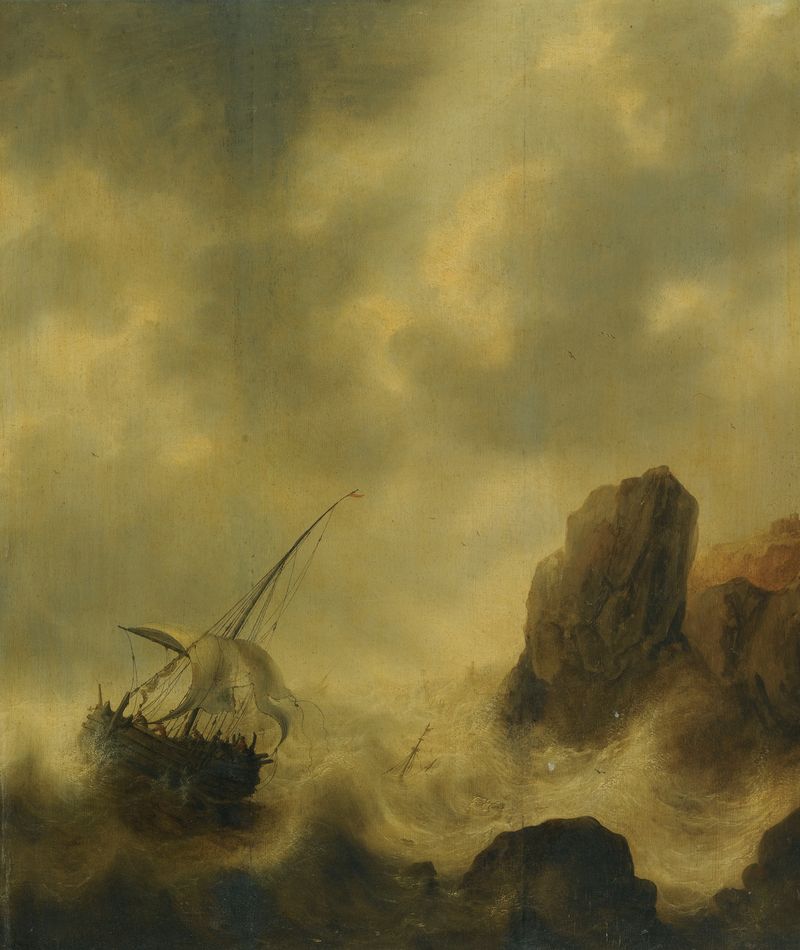
A Ship Foundering Off A Rocky Coast
Jacob Adriaensz. Bellevois
Holländische Fregatten und Boote an der Küste von Vlissingen
Jacob Adriaensz. Bellevois





