A Gèdres (Basses Pyrénnées) — History & Facts
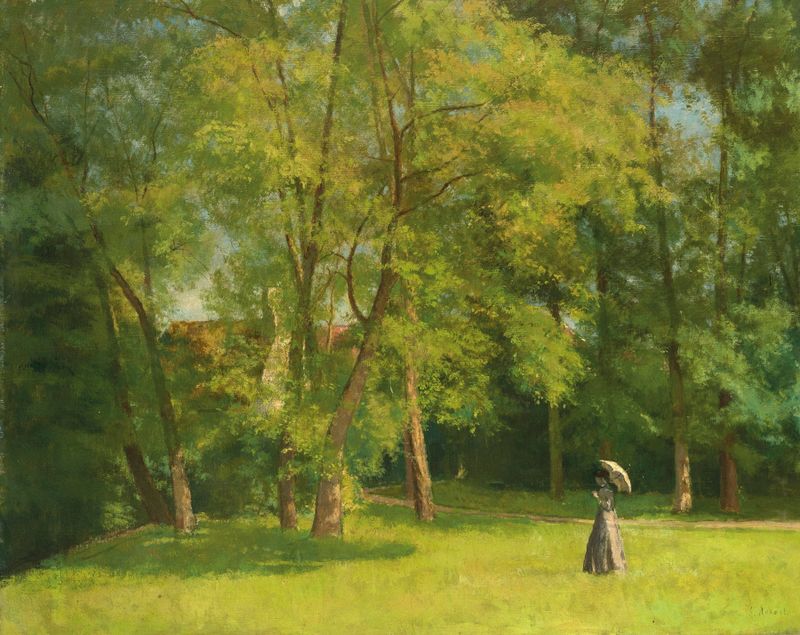
Is this a mirror — or a memory? In A Gèdres (Basses Pyrénnées), the moment captured feels suspended in time, inviting contemplation of both the present and the past. Look to the left at the towering mountains; their majestic slopes are painted with a rich palette of deep greens and muted browns, suggesting a lush landscape that is both inviting and imposing. The sky above, a brilliant blue, contrasts beautifully with the earthy hues, while the gentle brushstrokes evoke a sense of movement in the air. Notice how light dances across the surfaces, creating subtle highlights that breathe life into the scene.
Central to this composition is a serene river, winding its way through the canvas, inviting the viewer’s gaze to trace its path. In this landscape, contrasts abound: the tranquility of the water juxtaposed with the rugged, unyielding terrain that surrounds it speaks to the duality of nature. The soft reflections in the river mirror the grandeur of the mountains, blurring the lines between reality and imagination. This interplay of elements embodies a sense of awe, inviting viewers to reflect on their own feelings of smallness against the vastness of nature. Henri Stanislas Rouart painted A Gèdres in 1878, during a period of artistic transition in France, as Impressionism began to dominate the scene.
At this time, Rouart was actively participating in the avant-garde movement, seeking to capture the beauty of the natural world with an innovative approach to color and light. His commitment to portraying the landscapes of his native France speaks not only to his personal journey but also to the broader cultural shifts that defined this vibrant era in art.