Paysage à la Ferme — History & Facts
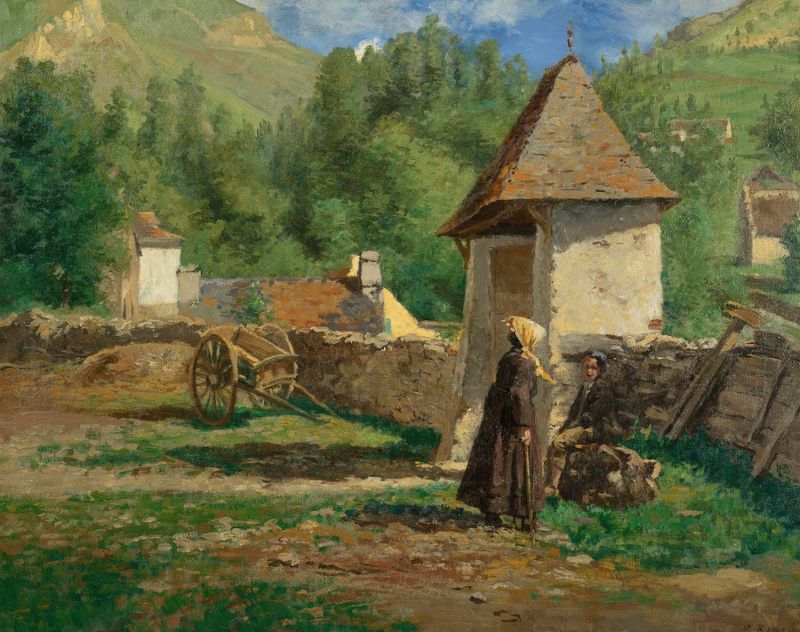
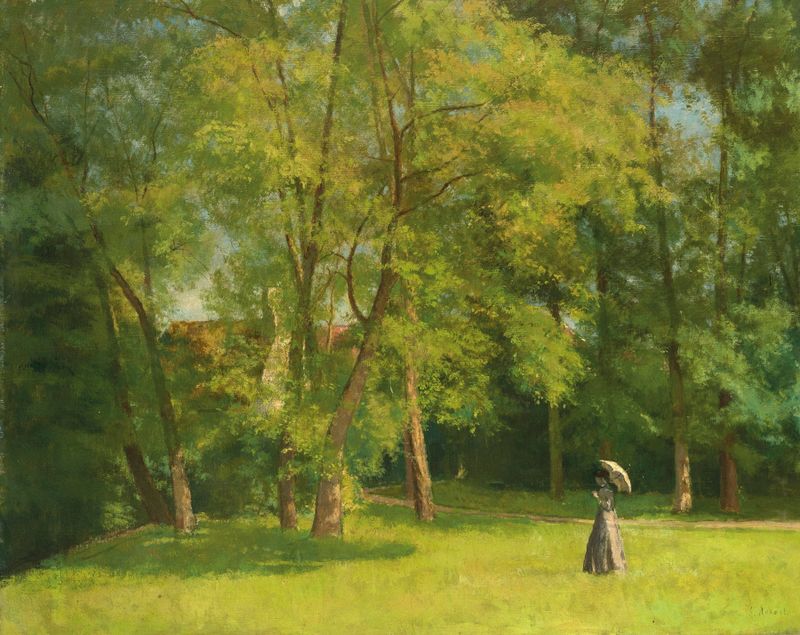
Where does light end, and longing begin? In this exquisite landscape, a world unfolds that resonates with the gentle ache of nostalgia, capturing the essence of simpler times. Look to the left, where the soft pastel hues of the sky meld with earthy greens and browns of the fields below. The brushstrokes dance lightly across the canvas, evoking a sense of movement in the leaves and the serenity of the farmstead. Notice how the golden light spills over the horizon, casting elongated shadows that breathe life into the tranquil scene.
The composition invites the eye to wander, revealing a distant path leading to whispers of the past, as if guiding us toward forgotten moments. Beyond the surface beauty, a profound emotional resonance lies hidden within the details. The weathered barn, with its peeling paint, speaks to the passage of time, while the scattered hay bales suggest labor and sustenance, an homage to rural life. The play between light and shadow not only illuminates the physical space but also echoes the bittersweet memories that haunt our collective consciousness—a reminder of what was and what may never return. In 1885, Henri Stanislas Rouart painted this scene amid a vibrant artistic movement characterized by a shift toward impressionism.
Living in Paris, he was influenced by contemporaries who celebrated the beauty of everyday life and the fleeting qualities of nature. This work reflects his commitment to capturing not just the visual splendor of the landscape, but the emotional landscape of memory itself.