A Harbour View — History & Facts
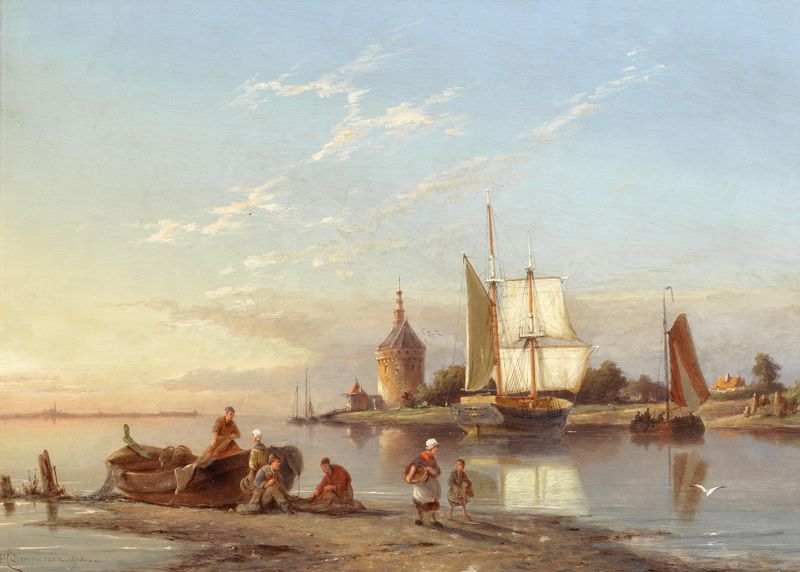
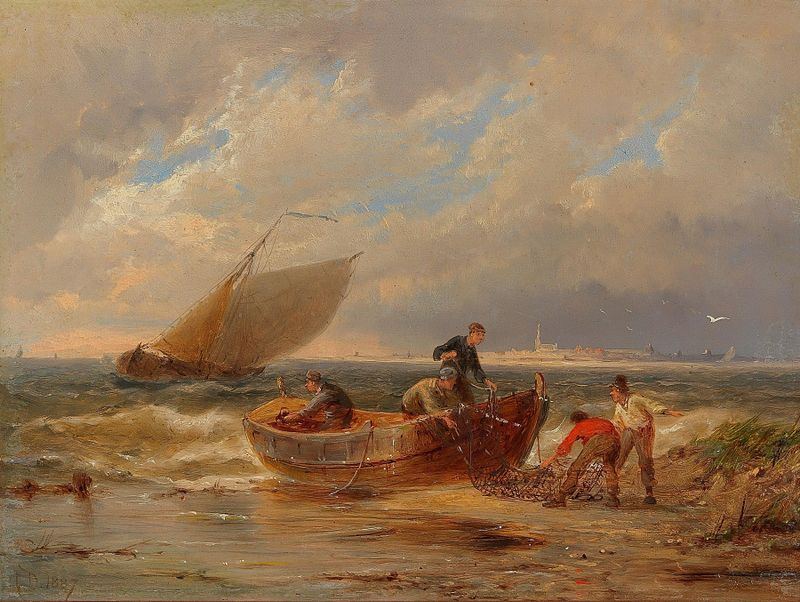
What if silence could speak through light? In A Harbour View, the hush of the twilight hours wraps the scene in a bittersweet embrace, echoing the quietude of loss that lingers within the brushstrokes. Look to the left at the gentle lapping of water against the hull of a docked boat, where the muted colors reflect the subtle transitions of dusk. The fading light casts a golden hue across the scene, highlighting the shadows that stretch and merge, creating a sense of stillness. Notice how the boats, both present and absent in their stillness, create a narrative of waiting, a poignant reminder of what was once vibrant and alive. The interplay between light and shadow captures the heartache of departure, as the fading day embodies the passage of time.
The serene water mirrors not just the boats but also the emotional depths of solitude and longing. Each element—the solitary figures, the distant horizon—serves as a metaphor for the unyielding grip of memory, suggesting not only absence but the yearning that accompanies it. In 1858, Dommersen painted this work while living in the Netherlands, a period when maritime scenes were gaining popularity among artists. The thriving trade and the rise of the bourgeoisie influenced his choice of subject, reflecting a world in constant motion.
Yet, amidst this backdrop of commerce and vitality, the artist encapsulated a deeper narrative of personal reflection, hinting at the transient nature of life and the echoes of loss that accompany it.