A harbour view at dusk — History & Facts
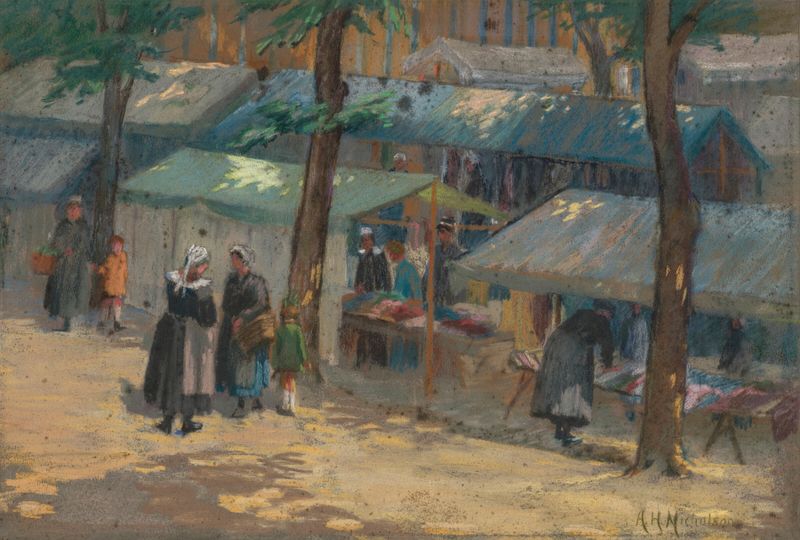
Can paint confess what words never could? In the quiet hush of dusk, where colors mingle softly, the canvas whispers secrets left unspoken, inviting contemplation and reflection. Look to the center of the piece, where the fading light dances across the water, casting shimmering reflections that ripple gently. The muted palette of blues and purples evokes a sense of calm, while strokes of warm amber hint at the day's end. Notice how the boats, silhouetted against the horizon, find a moment of stillness as they rest in the embrace of the fading light, their outlines softened by dusk, beckoning the viewer to pause and absorb the serenity. In this masterpiece, the interplay between light and shadow reveals a tension between solitude and connection.
The serene water reflects the sky’s shifting hues, symbolizing the passage of time, while the boats stand as silent sentinels, representing fleeting moments of life that sometimes go unnoticed. The horizon, where the sun sinks and the day exhales its final breath, serves as a reminder of transient beauty, urging the viewer to grasp the importance of stillness in a chaotic world. Alice Hogarth Nicholson painted this work during a period of introspection in her life. Though the exact date remains elusive, her artistic journey flourished alongside the growing Impressionist movement in the late 19th century.
At this time, her choice to capture tranquil scenes reflected a broader desire among artists to portray emotional depth through nature and light, inviting audiences to linger in the silence that art can evoke.