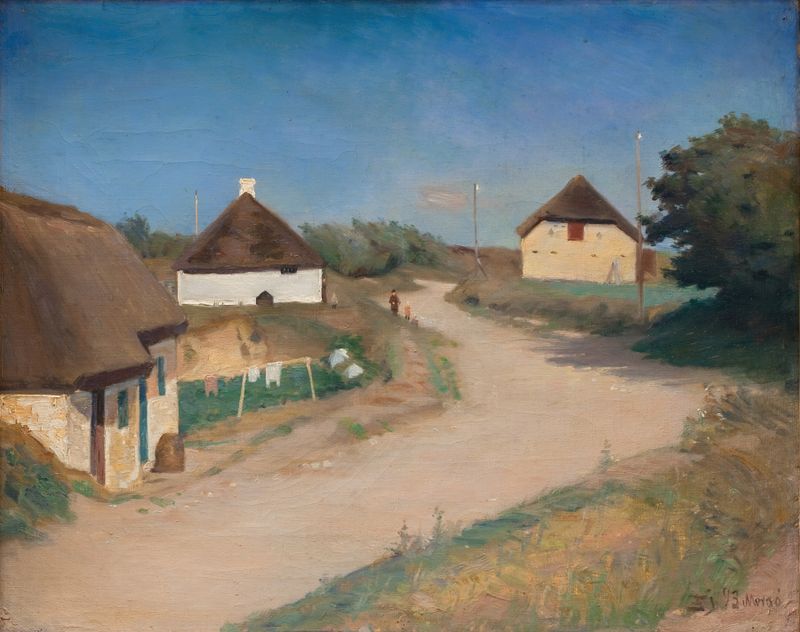
A Landscape. The Island of Mors, jutland — History & Facts
Where does light end, and longing begin? The interplay between the expansive sky and the muted earth in this evocative landscape captures the essence of human yearning for connection and place. Look to the horizon, where a pale blue sky meets a soft, undulating landscape. The gentle strokes of the brush communicate a sense of serenity, while the gradual blending of colors infuses the scene with an air of profound stillness. The artist’s choice of earth tones—greens and browns—anchors the viewer in the natural world, yet the lightness of the clouds invites dreams of distant shores and forgotten paths.
This harmonious balance creates a sensation that is both comforting and haunting. As you explore the painting, notice how the empty spaces resonate with the spectators’ own feelings of solitude. The sparse tree line in the distance stands like sentinels of history, whispering stories of what once was. The enigmatic quality of the emptiness evokes reflections on absence, suggesting that the true heart of the landscape lies not in what is depicted, but in what is left unsaid.
Here, the interplay of light and shadow becomes a metaphor for the complexities of human emotion—the longing for something just out of reach. Fridolin Johansen painted this piece in 1893, a time when he was deeply influenced by the romantic notions of landscape in Danish art. Living in Jutland, he sought to capture the raw beauty of his surroundings, a response to the shifting tides of the Impressionist movement elsewhere in Europe. His quiet contemplation of the landscape reflects a broader artistic exploration of nature, identity, and the emotional undertones that reside within them.