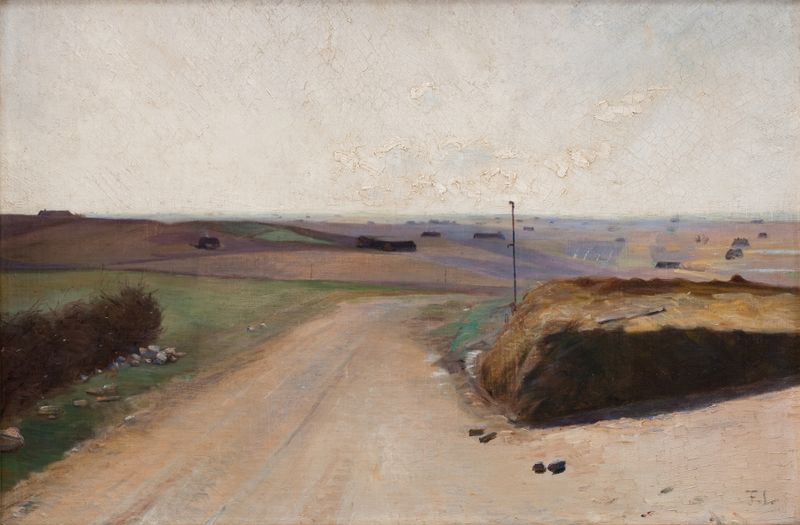
Houses Alongside a Road in Morsø, Jutland — History & Facts
Could beauty survive in a century of chaos? Look closely at the striking interplay of color in Houses Alongside a Road in Morsø, Jutland. The vibrant hues of the houses leap into view, enveloping the viewer in a warm embrace. Focus on the vivid reds and soft yellows that breathe life into each structure, while the cool blues of the sky and the earth-toned road ground the scene in nature’s stability.
The composition draws your eye along the winding path, inviting you to explore each cottage’s intricate details, from the gabled roofs to the lush surroundings that frame them. As you absorb the painting, notice the contrast between the homes' lively colors and the muted, tranquil landscape. Here lies a tension between the vibrancy of human life and the serene, almost solemn backdrop of nature. The bright facades suggest warmth and hospitality, yet they are juxtaposed with the solitude of the rural setting.
This duality hints at the complexities of rural existence during a time when daily life was often steeped in quiet hardship and resilience. Fridolin Johansen painted this work in 1893 while living in Denmark, a period marked by significant artistic evolution as movements like Impressionism began to take root across Europe. At this time, there was a growing interest in portraying everyday life and the beauty found in the ordinary, as artists sought to capture fleeting moments of light and color. Johansen's choice of vibrant colors reflects a departure from darker, heavier palettes of earlier times, signaling a hopeful embrace of modernity and the promise of a new era in art.