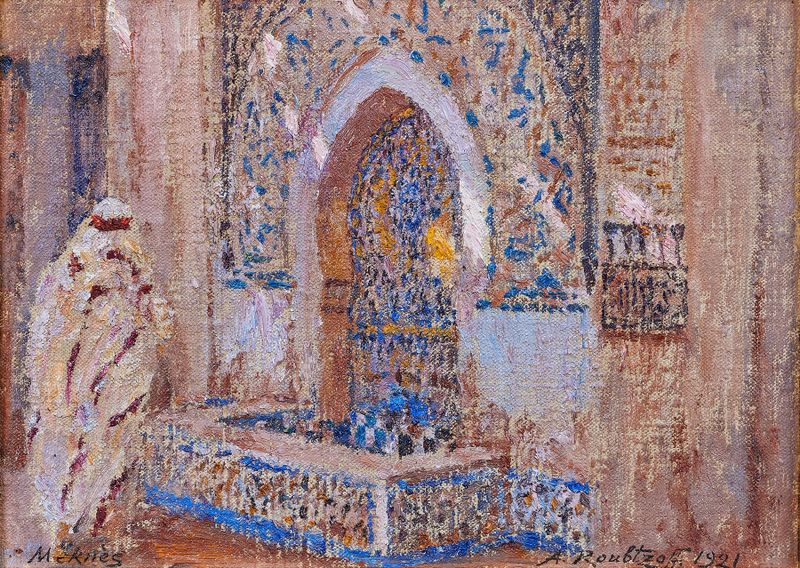
A Loggia In The Ben Negro Park In Bizerte — History & Facts
In the stillness of a painting, whispers of mortality linger, beckoning us to reflect on the evident beauty of life’s transience. Look to the left at the delicate interplay of light filtering through the archways, casting soft shadows on the ground below. Notice how the vibrant greens of the park contrast with the warm terracotta hues of the loggia, creating a serene yet poignant atmosphere. The composition feels both inviting and distant, pulling the viewer deeper into a moment suspended in time, each brushstroke pulsating with the vibrancy of nature's spirit. Deeper insights reveal the bittersweet tension captured in this moment — the loggia stands as a testament to human artistry within the embrace of nature’s inevitable change.
It represents a sanctuary, yet the encroaching shadows hint at the passage of time. Small details, like the scattered leaves and distant figures, evoke a sense of solitude amidst beauty, reminding us that every blossom must eventually wither. In 1926, Alexandre Roubtzoff painted this scene during a time marked by both personal reflection and artistic exploration. Living in Tunisia, he was immersed in a cultural tapestry that stimulated his senses and deepened his appreciation for light and landscape.
This period in art history was characterized by a transition toward modernism, as artists sought new ways to capture the essence of experience, blending realism with emotional depth.