A Mediterranean Harbour Capriccio — History & Facts
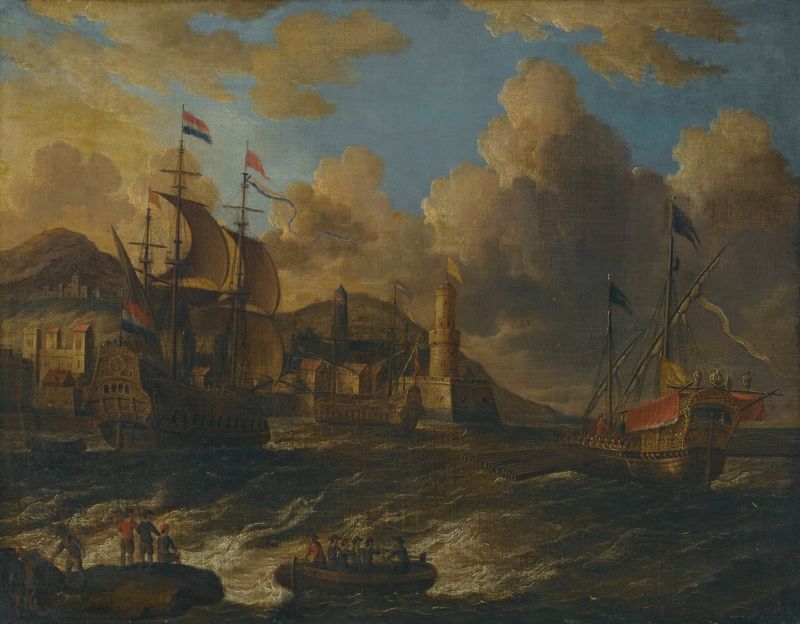
In the quiet ebb of memories, the essence of place is distilled onto the canvas, where echoes of the past linger like whispers in the air. Look to the left, where delicate sails billow gently in the wind, their white fabric illuminated by a soft, golden light. Notice how the artist's brushstrokes bring to life the waterfront buildings, their warm hues reflecting off the water’s surface. The tranquil harbor scene invites the viewer to meander through the composition, with the horizon line gently cradling the sky, reminding us of the unique interplay between land and sea.
The vibrant palette evokes a sense of nostalgia, hinting at both permanence and transience. Hidden within this idyllic portrayal lies a contrast between lively activity and serene stillness. Observe the bustling figures along the docks, their gestures animated yet fleeting, as if caught in timelessness. The juxtaposition of dynamic human presence against the backdrop of unchanging nature speaks to the tension between fleeting moments and lasting impressions.
Each detail, from the rippling water to the distant mountains, contributes to a narrative of memory, capturing the essence of a place that exists both in reality and in the mind. Peter van de Velde crafted this evocative piece during an era when European art was embracing the allure of landscape and genre painting. While the exact date remains uncertain, the artist’s work flourished in the late 17th century, reflecting a growing interest in capturing the beauty of everyday life amid a backdrop of burgeoning trade and exploration. It was a time when artists sought to immortalize the ephemeral beauty of their surroundings, weaving personal memory into the fabric of their creations.