
A Mill by a Creek — History & Facts
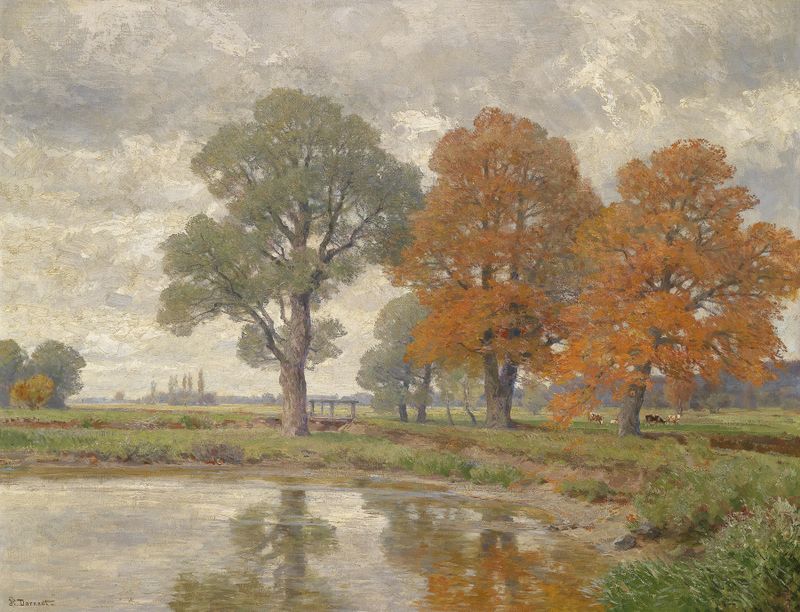
Can paint confess what words never could? In the gentle interplay of nature and architecture, destiny weaves itself quietly within the stillness of a mill by a creek, inviting contemplation. Look to the left at the mill itself, its sturdy silhouette contrasting against the soft curves of the surrounding landscape. The strokes evoke a sense of movement in the water, with delicate blues and greens reflecting the sky’s tranquility. Notice how the light falls upon the creek, casting shimmering highlights that draw the eye towards the mill's wheel, promising life and labor intertwined with nature's rhythm. Here, the mill represents not just industry but also the intersection of man and the environment—a delicate balance of productivity and preservation.
The lush foliage frames the scene, hinting at a cycle of growth and decay, while the creek's gentle flow symbolizes time’s unyielding march. Each element speaks to a hidden narrative of purpose and interconnectedness, echoing the artist's exploration of destiny and choice. During an uncertain period in the late 19th century, when artistic movements were shifting and traditional forms were being challenged, the artist created this piece amidst his search for identity and expression. Living in France, he embraced realism’s tenets, capturing everyday life with honesty while also hinting at deeper philosophical themes that resonated with the changing tides of both society and art.
More Artworks by Hugo Darnaut
Browse all →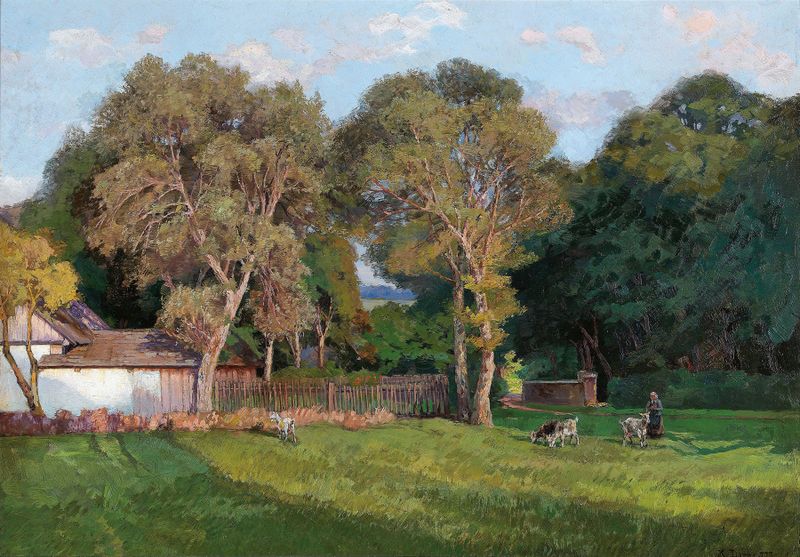
Aus dem Wienerwald
Hugo Darnaut
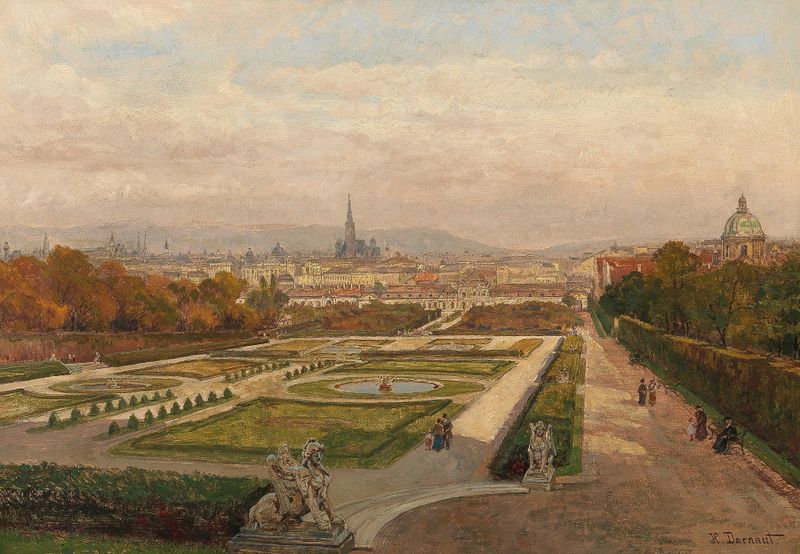
Blick vom Belvedere auf Wien
Hugo Darnaut

Motiv aus Plankenberg
Hugo Darnaut

In einem Wiener Garten (II., Praterstraße 60)
Hugo Darnaut

A Scene at Dusk in Late Autumn
Hugo Darnaut
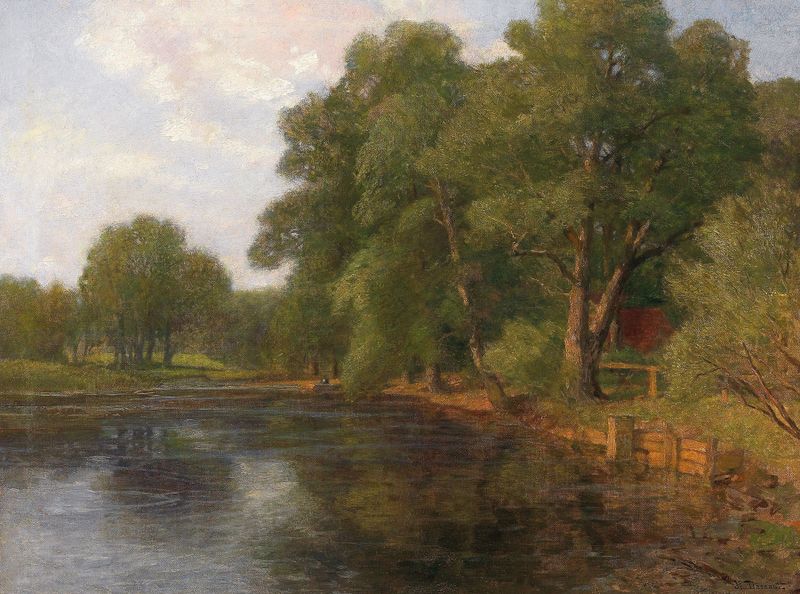
Motiv bei Plankenberg
Hugo Darnaut

Die Ruine Starhemberg im Piestingtal
Hugo Darnaut
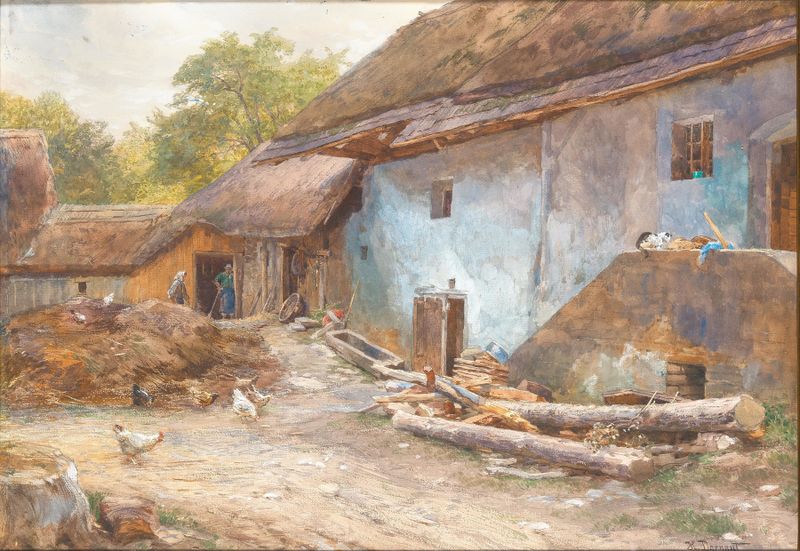
Niederösterreichischer Bauernhof
Hugo Darnaut

River Landscape with Small Herd of Cows and a Village in the background
Hugo Darnaut
Spätherbsttag
Hugo Darnaut





