
A Mosque — History & Facts
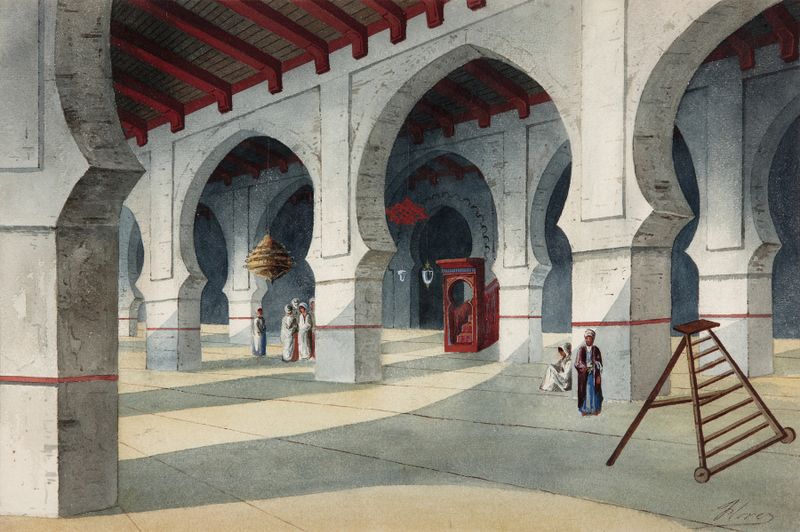
When did color learn to lie? The interplay of hues whispers truths and fabricates illusions, echoing the sacredness of the divine. In A Mosque, the vibrant palette unravels a narrative that transcends the ordinary and beckons the soul to reflect. Look closely at the intricate patterns that dance across the surface; the geometric forms draw you in, each line pulsating with rhythm and meaning. Notice how the deep blues and radiant golds interact, creating a dialogue between the earthly and the celestial.
The composition's symmetry evokes harmony, while the interplay of light and shadow captures a moment of serenity, inviting contemplation and reverence. Yet, beneath the surface beauty lies a tension—a juxtaposition of the physical and the spiritual. The brilliant colors suggest a celebration of life, yet they also invoke a sense of longing for something beyond reach. The ornate details, while breathtaking, remind us of the fragility of existence and the weight of devotion.
Each element works together to conjure a feeling of awe, reflecting the complexities of faith and the pursuit of understanding in a world filled with contradiction. Eduardo Flórez Ibáñez painted this piece during a time when modern expressions of spirituality were emerging in the art world. Creating in an era marked by a fusion of traditional techniques and contemporary themes, he sought to bridge the gap between the sacred and the everyday. His work reflects the broader cultural dialogues of his time, exploring how color and form can evoke profound questions about the divine.
More Artworks by Eduardo Flórez Ibáñez
Browse all →

More Architecture Art
Browse all →
The statue of Liberty
Frédéric Auguste Bartholdi

View of Houses in Delft, Known as ‘The Little Street’
Johannes Vermeer

View of Houses in Delft, Known as ‘The Little Street’
Johannes Vermeer

The Cathedral in Rouen. The portal, Grey Weather
Claude Monet

The yellow house
Vincent van Gogh

The Church in Auvers-sur-Oise, View from the Chevet
Vincent van Gogh