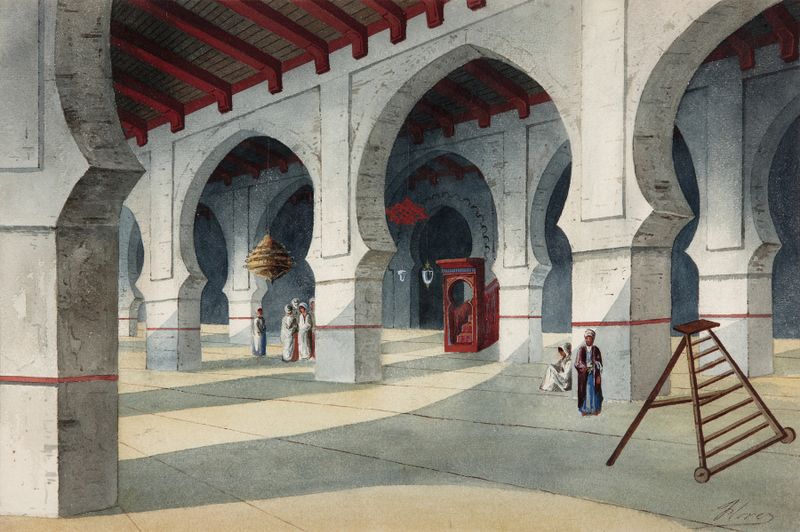
The Algerian’s Cafe — History & Facts
The layers of complexity within the artwork mirror the depths of human experience, where prosperity often coexists with struggle. In this piece, the vibrant hues and whimsical forms beckon the viewer to delve deeper, unearthing the stories hidden beneath the surface. Look to the center, where an interplay of warm and cool tones draws your eye to the figures seated in the café. Notice how the light cascades across their faces, illuminating both joy and sorrow in equal measure.
The contrasting colors evoke a sense of tension—deep blues juxtaposed with fiery oranges—as if the very atmosphere resonates with the weight of unspoken words. The composition gently cradles the viewer, inviting them to explore the intricate details that give life to this shared moment. Beneath the surface, the café is a microcosm of a larger narrative, embodying the duality of existence; laughter fills the air while an undercurrent of unrest simmers just below. The presence of alcoholic drinks suggests both celebration and escape, hinting at the complexities of life in a time of revolution.
Each figure’s posture and expression reveals a story of longing and remembrance, suggesting that the beauty of this moment is layered with the pain of what lies beyond the café walls. Eduardo Flórez Ibáñez created this work during a time of significant social and political upheaval, though the exact date remains unclear. His career flourished in a period marked by the exploration of identity and culture, particularly in the wake of colonial influences. In this context, the café serves as a poignant reminder of the dualities inherent in life and societal change, capturing a fleeting moment of beauty amidst chaos.