
A Mountain Stream — History & Facts
When did color learn to lie? The vibrant hues of blue and green in this piece evoke a sense of tranquility, yet they conceal an underlying emptiness that resonates deeply within the soul. Look to the left at the gentle curve of the stream, where the water flows serenely through lush foliage. Notice the subtle variations in the painter's brushwork—each stroke seems to breathe life into the scene yet hints at something elusive. The interplay of light and shadow captures the moment with delicate precision, guiding the viewer's gaze towards the horizon, where the sky meets the distant mountains. As you delve deeper, the contrasting elements emerge.
The lively colors of the stream’s surface stand in stark opposition to the static, muted tones of the rocks lining its banks, suggesting a tension between motion and stillness. This duality speaks to the human experience, where beauty often veils a profound solitude. The empty spaces within the landscape compel introspection, inviting contemplation of what lies beyond the visible. François Louis Thomas Francia painted this work in 1801 during a time of burgeoning Romanticism, embracing nature's sublimity.
Living in France, he was influenced by the changing artistic landscape, moving away from neoclassical precision toward an expressive portrayal of the natural world. This transition mirrored societal shifts, where the search for individual meaning began to surface amidst the turbulence of the era.
More Artworks by François Louis Thomas Francia
Browse all →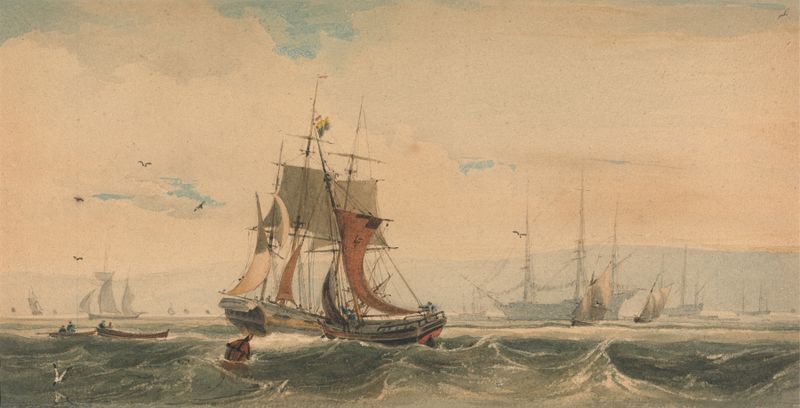
Shipping on the Medway, Kent
François Louis Thomas Francia
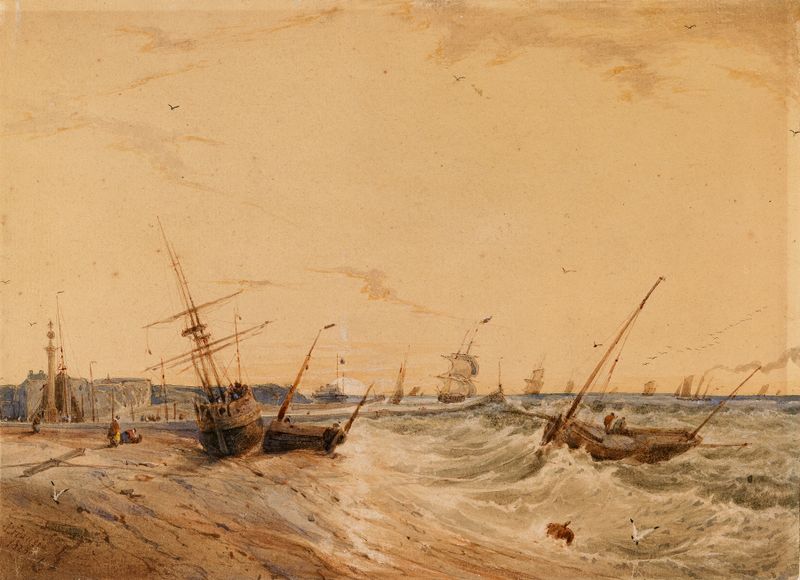
Calais Harbour
François Louis Thomas Francia

Boulogne Harbour
François Louis Thomas Francia
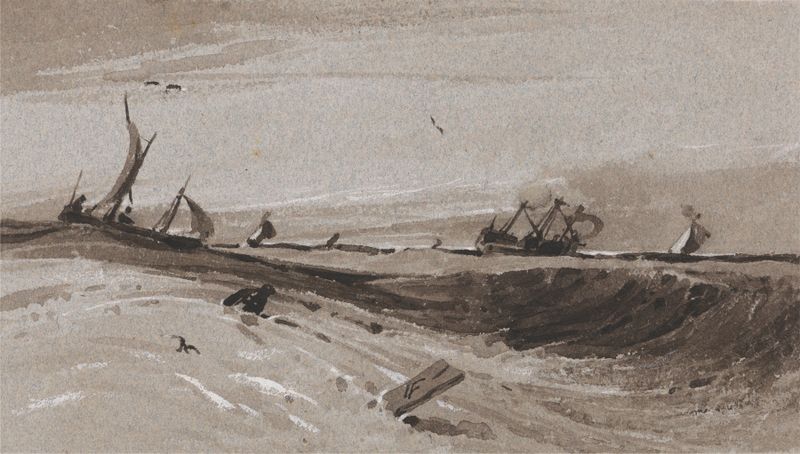
A Stormy Sea, Evening
François Louis Thomas Francia

A French Canal Scene
François Louis Thomas Francia
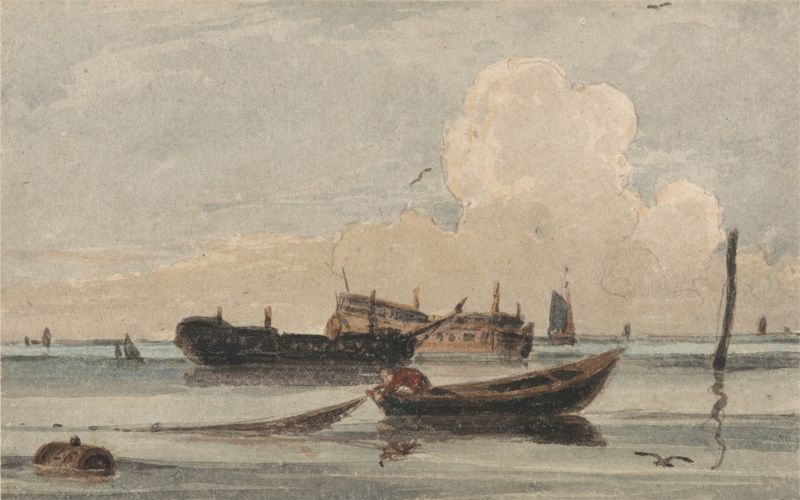
Boats on a Calm Sea
François Louis Thomas Francia
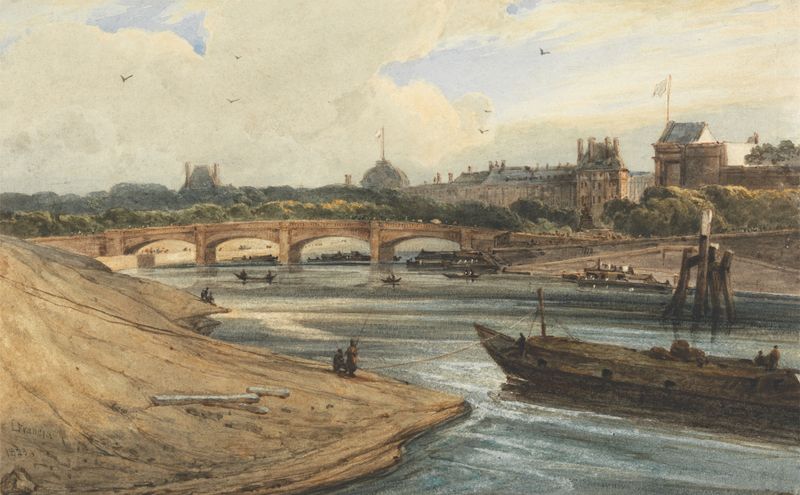
The Pont de la Concorde and Tuileries Palace from the Cours la Reine
François Louis Thomas Francia

Schepen voor de haven van Vlissingen
François Louis Thomas Francia

Wrak op hoge golven
François Louis Thomas Francia
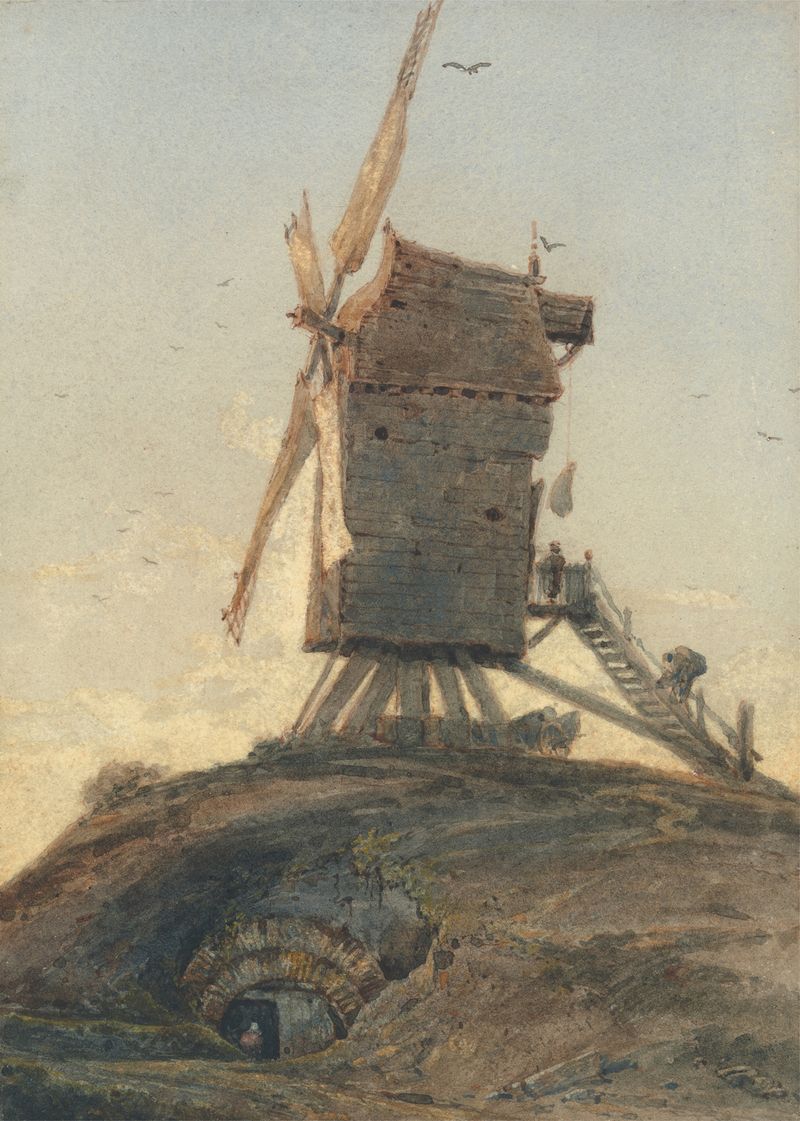
Windmill on a Knoll in a Landscape
François Louis Thomas Francia





