A rainy day in the Scottish highlands — History & Facts
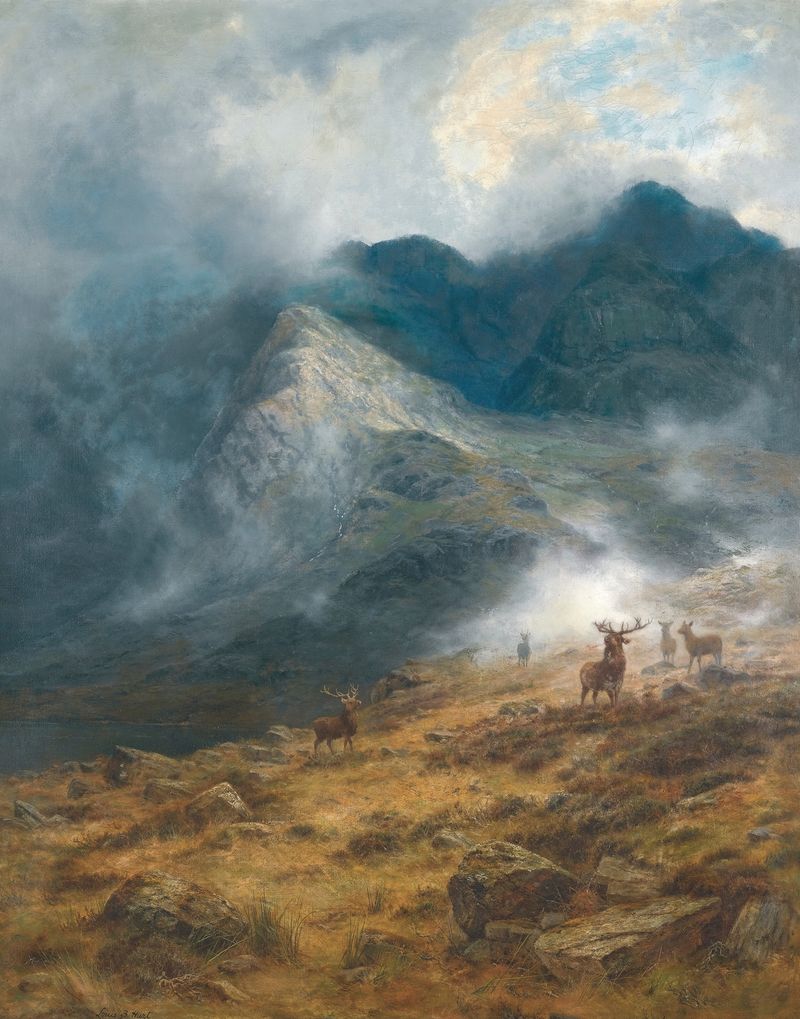
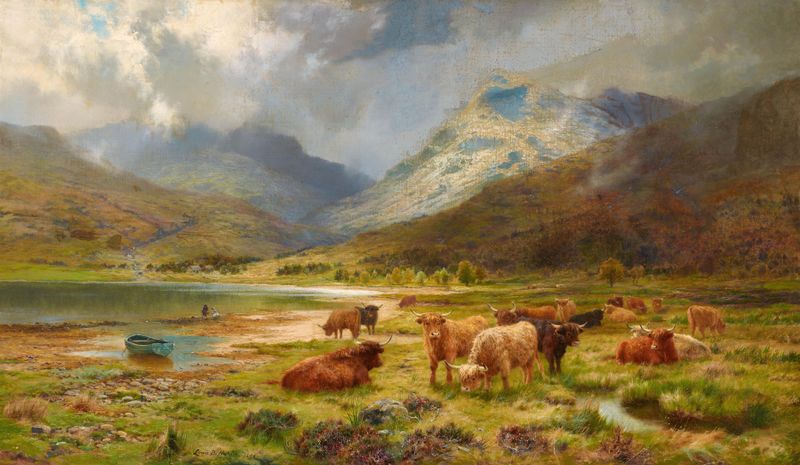
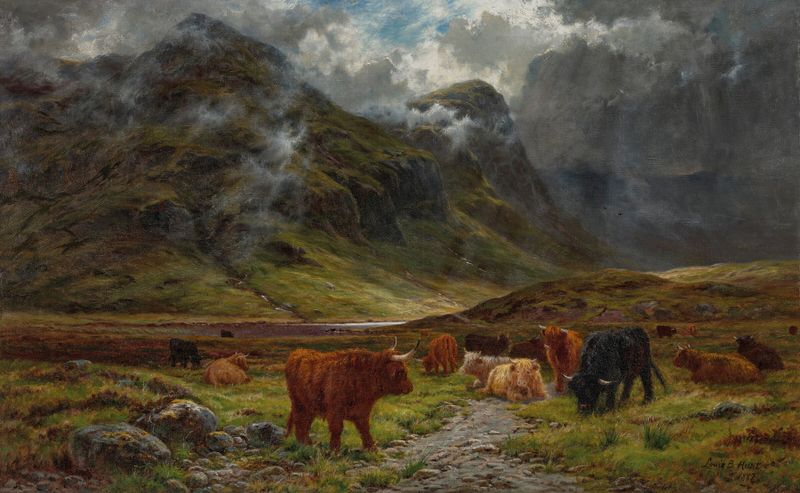
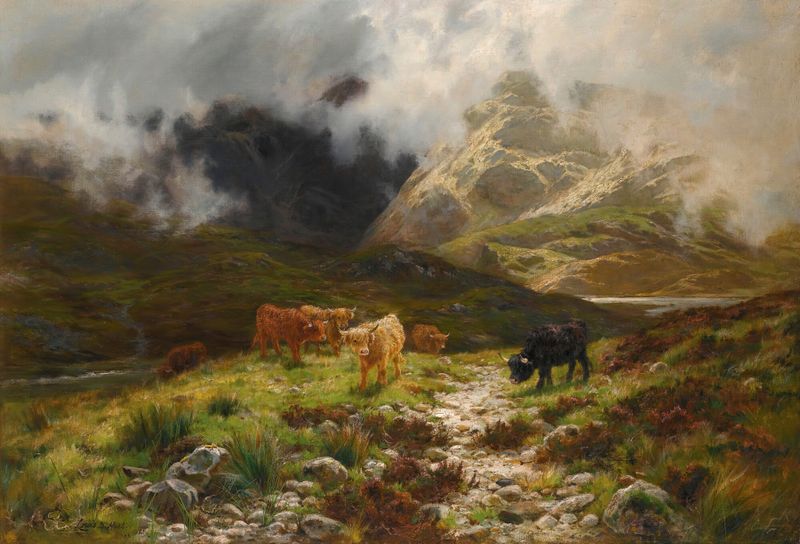
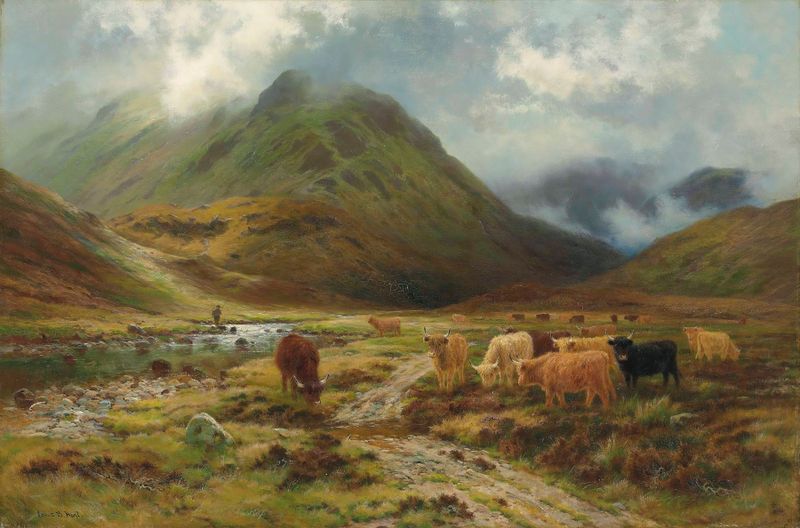
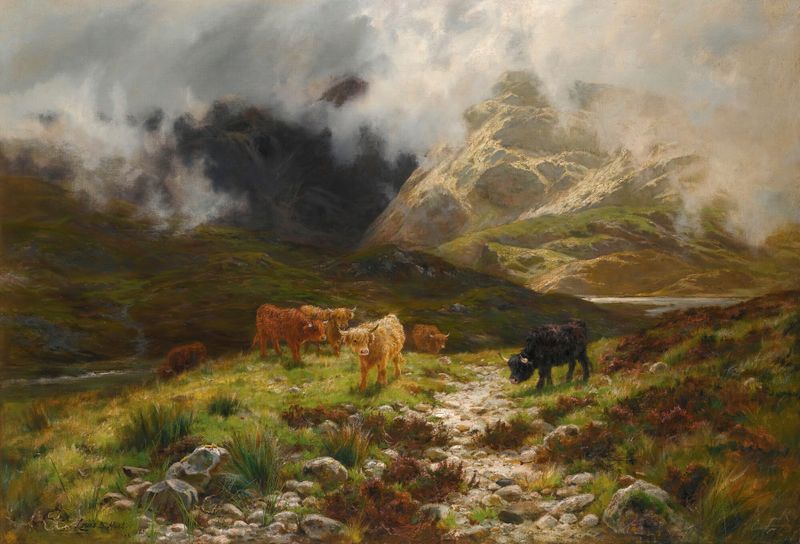
In the quietude of a storm, where the mountains cradle both beauty and sorrow, one can feel the weight of loss linger in the air. Every brushstroke holds a whisper of what was, evoking memories of fleeting moments, forever suspended in time. Focus your gaze on the horizon where dark clouds loom, their heavy bodies threatening to release a downpour. The muted palette of grays and greens captures the essence of a highland drenched in rain, while subtle hints of ochre peek through the mist, suggesting a land that still yearns for light.
Notice how the light dances across the glistening foliage, illuminating droplets that cling like fragile memories to the edges of leaves, each one a testament to the passage of time. Deep within the painting, contrasts emerge — the starkness of the rugged terrain juxtaposed against the softness of the rain. This tension reflects the emotional landscape of grief, where moments of quiet despair coexist with the resilience of nature. Each stroke evokes an unspoken narrative of longing and remembrance, a poignant reminder that beauty often resides alongside sorrow. In 1903, Hurt painted this evocative scene amidst a rich tapestry of artistic experimentation in Britain, where the Impressionist movement was gaining traction.
Living in a period marked by change, he sought to portray both the ethereal beauty of the Scottish landscape and the underlying emotional currents of human experience. This work reflects not only his mastery of light and color but also a sensitivity to the profound sense of loss that permeates life and art.