After The Shower – A Highland Brae — History & Facts
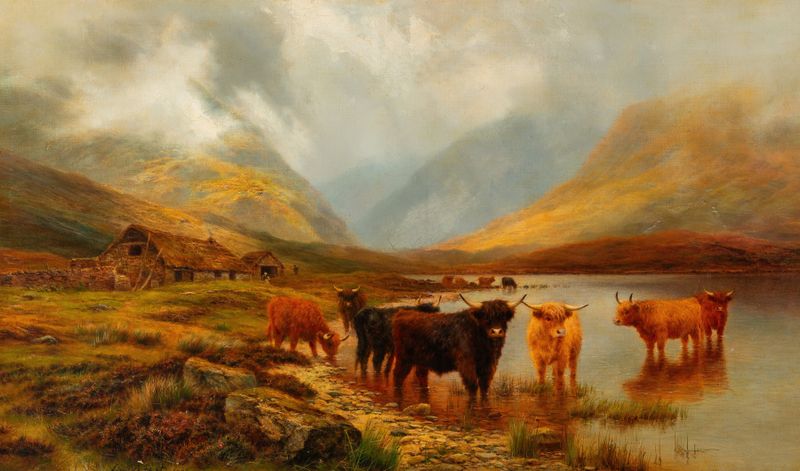
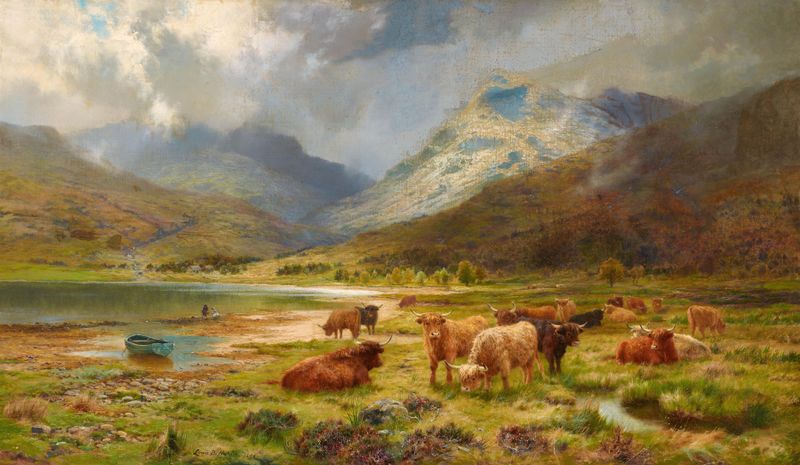
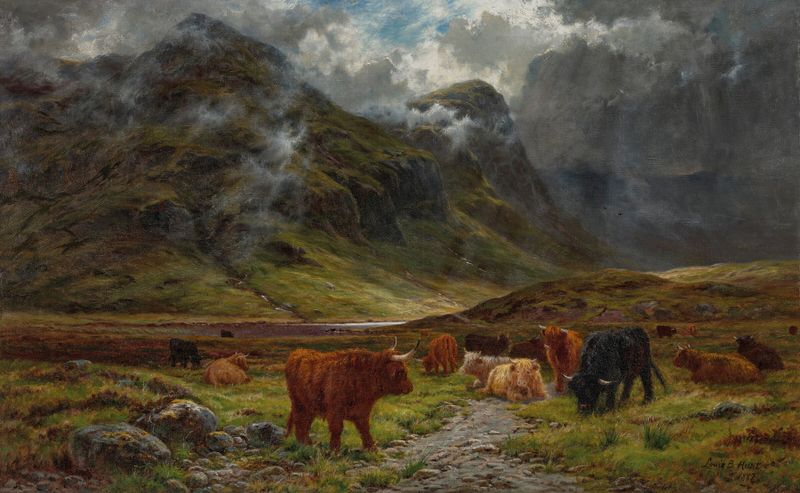
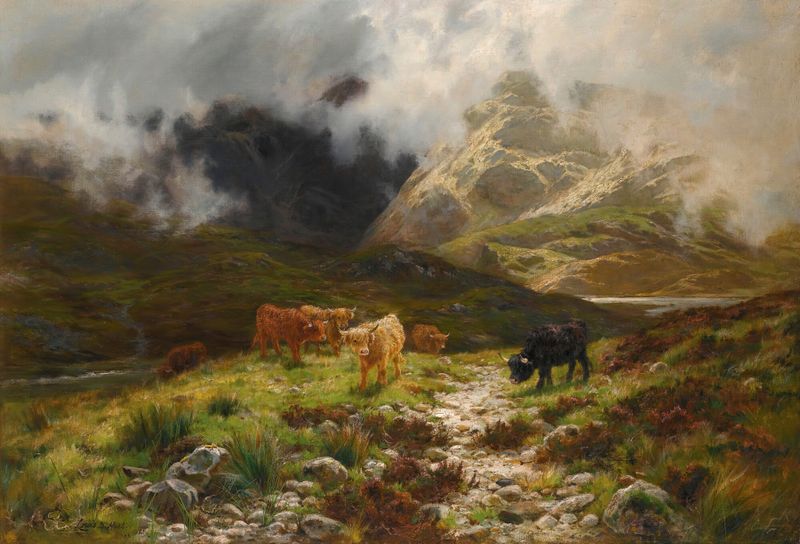
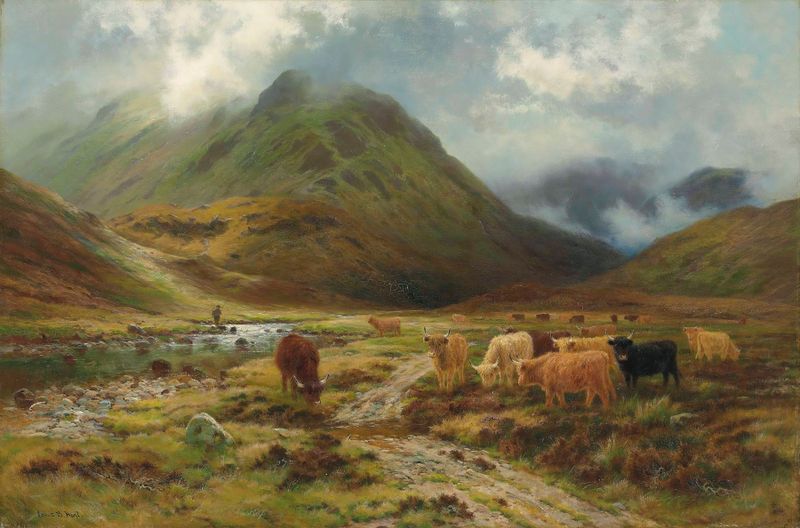
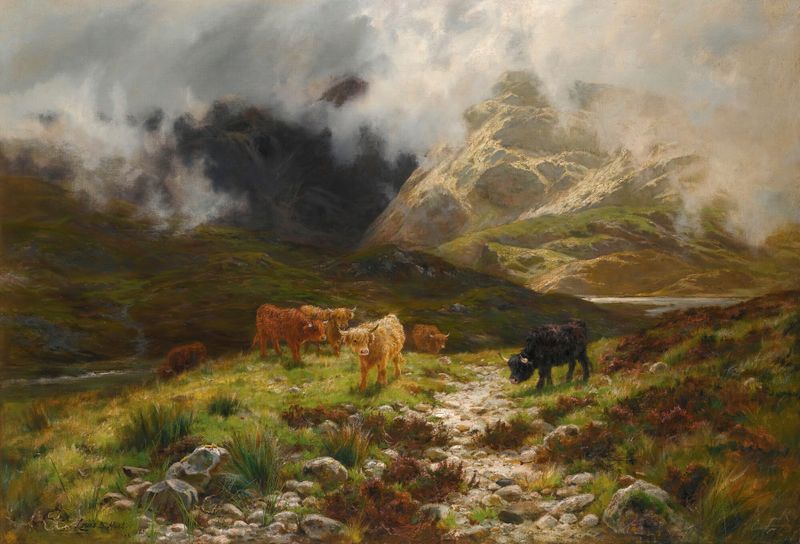
In the world of art, obsession unveils itself through vibrant strokes and countless layers, revealing the artist's inner turmoil and inspiration. Look to the center, where a soft, verdant hill rises from a shimmering pool of water, reflecting the cool blues and greens that envelop the landscape. Notice how the light dances on the surface, capturing a moment just after the rain, where droplets cling to grass like jewels. The muted palette breathes life into the scene, inviting you to wander through the lush, textured brushwork that details each blade and leaf, revealing Hurt's meticulous attention to nature’s intricacies. Yet, beneath this serene facade lies an urgency—an obsession with the interplay of light and shadow.
The way the clouds linger above, heavy with moisture, hints at both fragility and vitality. Look closely at the curling tendrils of mist that rise from the ground, suggesting a tension between the earth and sky, life and renewal. Each element, from the distant tree line to the foreground's rich foliage, is imbued with a sense of longing, as if the artist yearns to capture a fleeting moment in time. Louis Bosworth Hurt created this work in the late 19th to early 20th century, a period marked by a growing fascination with the natural world and its representation in art.
Living in England, Hurt found himself influenced by the Romantic ideals of nature, reflecting the broader artistic movements that celebrated the sublime beauty and emotional depth of landscape. This painting echoes those sentiments, standing as a testament to his dedication to portraying the grace found in nature's chaos.