A Ruined Temple — History & Facts
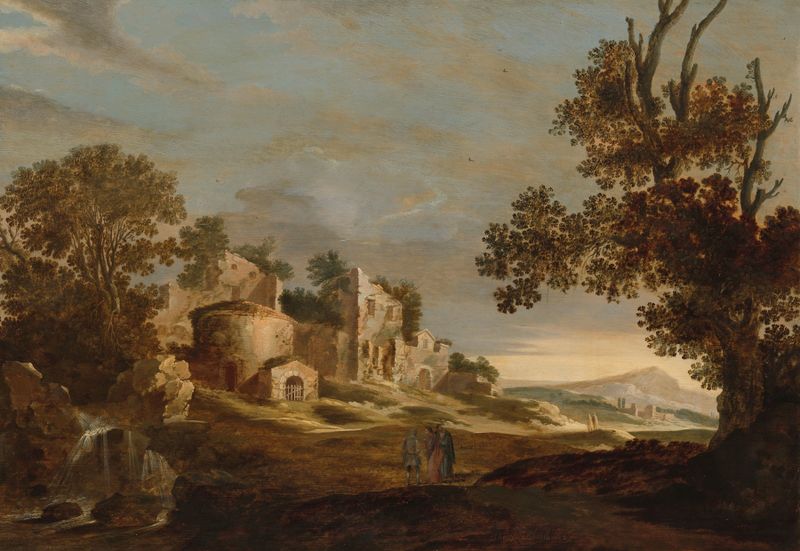
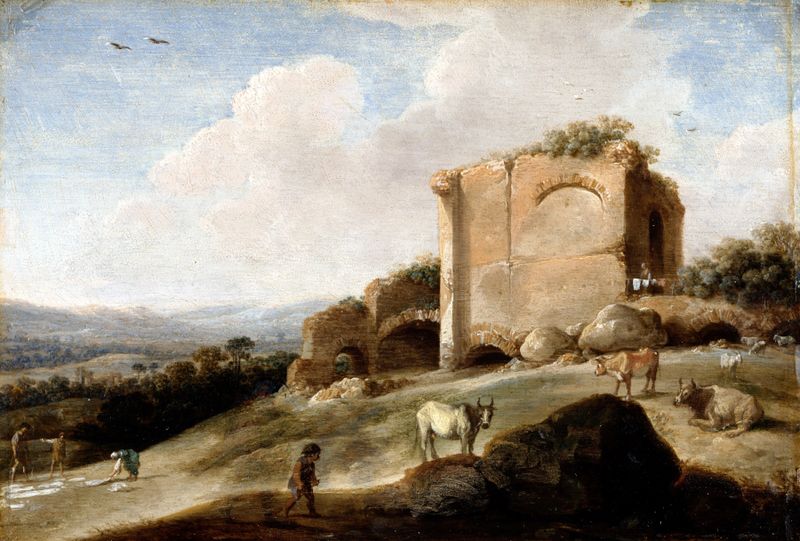
Who listens when art speaks of silence? In the echoes of history, a solitary moment unfolds, inviting contemplation of time and decay. Look closely at the center of the canvas, where the remnants of an ancient structure stand tall yet weary. The soft, muted tones of ochre and grey convey a sense of stillness, while the dappled light filtering through the trees creates an ethereal glow around the crumbling stone. Notice how the artist’s meticulous brushstrokes capture the textures of the weathered surfaces, allowing you to feel the weight of centuries resting upon them.
Each shadow hints at a forgotten story, urging the viewer to wander deeper into this world of quiet desolation. Hidden within the ruins lies a profound reflection on the passage of time. The delicate interplay of light and shadow symbolizes not just decay, but also the enduring beauty of what once was. Observe the scattered leaves and creeping vines; they serve as a poignant reminder of nature's reclamation of human endeavors.
This juxtaposition of man-made structure and the relentless force of nature evokes a tender melancholy, stirring thoughts about impermanence and the legacy we leave behind. Created during a time of artistic exploration in the 17th century, this piece reflects de Hooch's interest in capturing interior spaces that resonate with emotional depth. Working in the artistic milieu of the Dutch Golden Age, he sought to explore the relationship between architecture and human experience. Although the exact date of A Ruined Temple remains uncertain, it is evident that the artist was deeply engaged with themes of time and memory, mirroring the broader cultural fascination with the transitory nature of life and art.