A Rushing Gorge in the Highlands — History & Facts
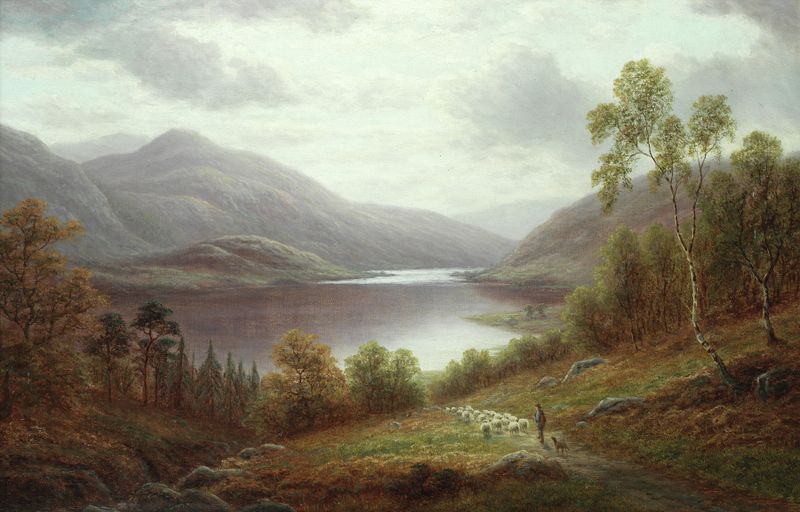
Where does light end, and longing begin? In the heart of the Highlands, a sense of both fear and beauty unfolds amidst the rushing waters, as nature’s elements clash in a wild embrace. Look to the lower left corner, where the turbulent river plunges into the gorge, its frothy white cascades contrasting sharply with the dark, looming rocks. The artist uses deep greens and muted browns to evoke the rugged terrain, grounding the viewer in a landscape that feels both majestic and foreboding. Notice how the light breaks through the clouds, illuminating the water’s surface, creating a dazzling shimmer that beckons yet warns.
This interplay of light and shadow captures the duality of the scene—the allure of the Highlands and the unpredictable, often treacherous forces of nature. As your eyes traverse the canvas, subtle details emerge—an isolated tree clings to the cliffside, its gnarled branches reaching out with a desperate grasp for survival. This gesture echoes the fear that permeates the work, hinting at the fragility of life in such a formidable environment. The swirling mist around the gorge adds an element of uncertainty, evoking a sense of the unknown lurking just beyond the visible.
The tension between beauty and peril runs through the fabric of the composition, reminding us of nature's unpredictable temperament. Mellor painted this piece, likely during the late 19th century, a time when the Romantic movement was in full bloom in Britain. His landscapes emerged from a deep fascination with the sublime and the raw power of nature, a counterbalance to the industrialization of the era. This work reflects not only his personal exploration of the Highlands but also the broader artistic dialogue surrounding humanity's place within an awe-inspiring yet fearsome natural world.