‘Thirlmere from the Hills, Cumberland’ — History & Facts
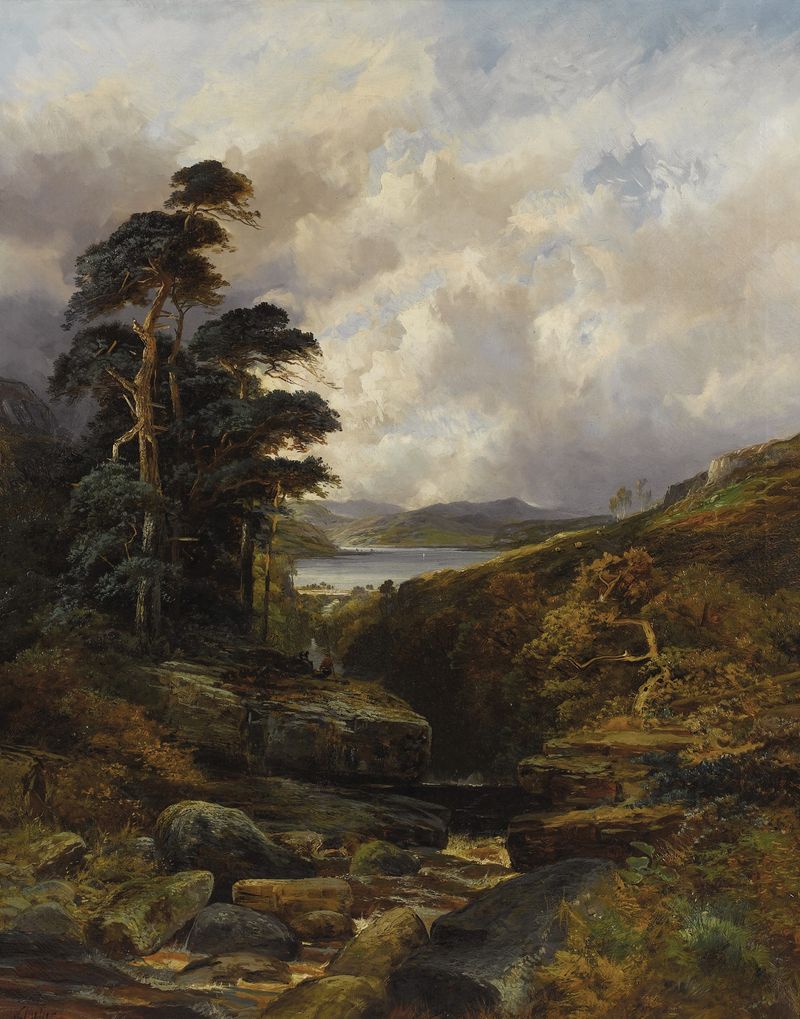
Could beauty survive in a century of chaos? Look closely at the interplay of shadows and light in this serene landscape. The rolling hills, cloaked in rich greens and soft browns, lead your gaze to the tranquil waters of Thirlmere. Notice how the clouds hover delicately above, their reflections mirroring the calmness below, creating a harmonious dialogue between sky and earth.
The gentle brushstrokes convey a serene stillness, capturing a moment where time seems to pause, allowing nature’s beauty to unfold. Yet, beneath this tranquil surface lies a tension between the idyllic and the tumultuous. The shadows play a crucial role, hinting at the unseen disturbances that persist just outside the frame. The darkened areas contrast with the bright patches of sunlight, suggesting a fragile balance between peace and despair.
Each element, from the distant hills to the mirrored lake, prompts contemplation about what lies beyond the picturesque scene, urging the viewer to consider the hidden complexities of life. William Mellor created this landscape during a period marked by significant change and uncertainty in the art world. Working primarily in the late 19th century, he sought to capture the beauty of the British countryside while responding to the shifts brought on by the Industrial Revolution. This painting reflects a longing for a simpler, untouched world amidst the encroaching chaos, embodying the broader Romantic movement’s fascination with nature and its emotional resonance.