
A Scene in the Bernese Highlands, Wetterhorn — History & Facts
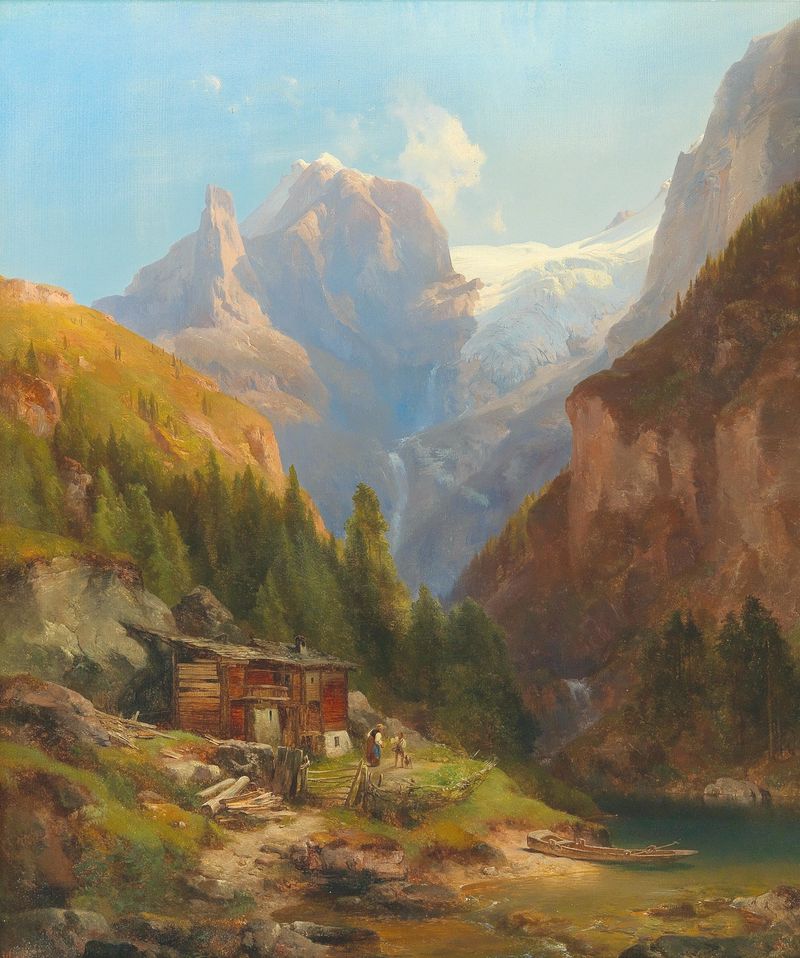
When did color learn to lie? In the vibrant hues of nature, there lies an unsettling truth about mortality that beckons us to reflect more deeply. Look to the center, where the majestic Wetterhorn rises, its snow-capped peaks piercing the sky, casting a regal shadow over the undulating green slopes below. Notice the interplay of light as it dances across the rugged terrain, illuminating patches of wildflowers bursting with life, their colors vibrating against the somber tones of distant mountains. The artist employs a meticulous brushwork technique that brings texture to both the foreground and the ethereal backdrop, inviting the viewer to traverse the painted landscape. Yet, within this picturesque scene, there exists an inherent tension between the beauty of the highlands and the inevitability of decay.
The vibrant flora, while alive and radiant, hints at the fleeting nature of existence, each petal a reminder that beauty is often ephemeral. The looming presence of the Wetterhorn stands as both a guardian and a reminder of the sublime, evoking a sense of awe that masks a darker reality—the transience of life against the permanence of nature. Created in 1868, this piece reflects Anton Hansch's explorations of the Swiss landscape during a time of great artistic transition. Living in a period marked by the rise of Romanticism, he sought to capture the sublime beauty of his surroundings, while also confronting the existential questions stirred by nature’s magnificence.
Despite the celebratory palette, the undercurrents of mortality resonate through his work, mirroring the complexities of the human experience amidst the breathtaking vistas of the Bernese Alps.
More Artworks by Anton Hansch
Browse all →
Eiger Mönch Jungfrau
Anton Hansch

Partie vom Hintersee mit Mühlsturzhorn (Bayern)
Anton Hansch

Blick Auf Den Gardasee (Lake Garda)
Anton Hansch

A Mountain Landscape With A Smithy
Anton Hansch

A Mountain Torrent
Anton Hansch
Blick Auf Den Goldeck Kees
Anton Hansch

Der Großglockner
Anton Hansch

A View of the Gurgler Eissee in the Ötztal Alps, Tyrol
Anton Hansch
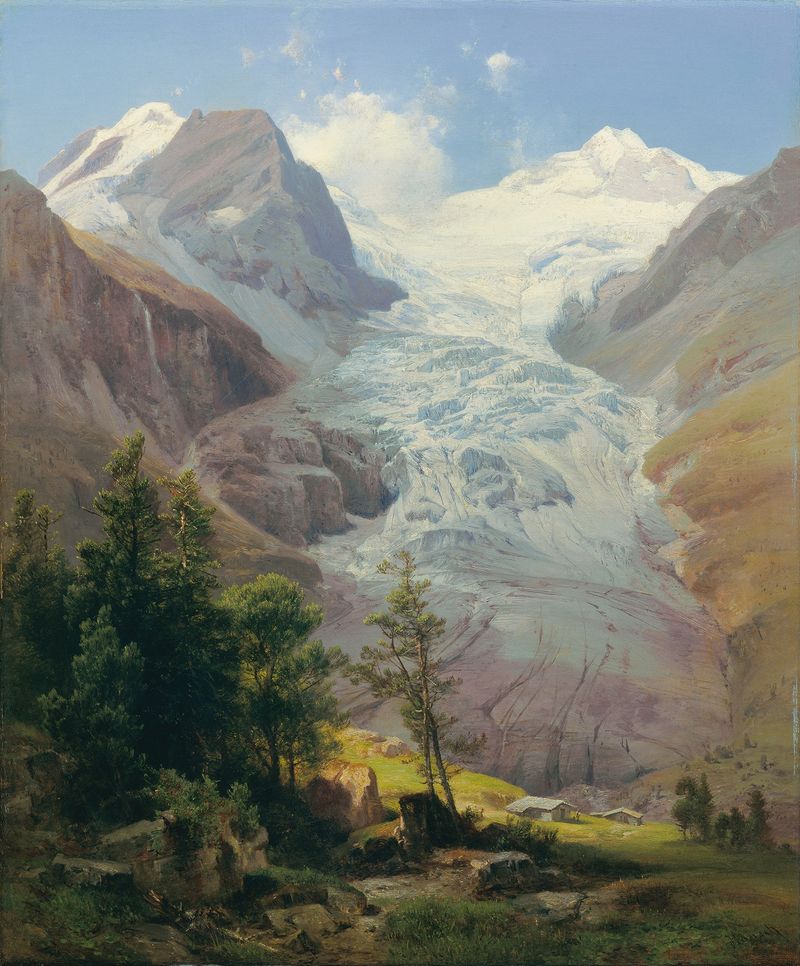
Der Palügletscher
Anton Hansch
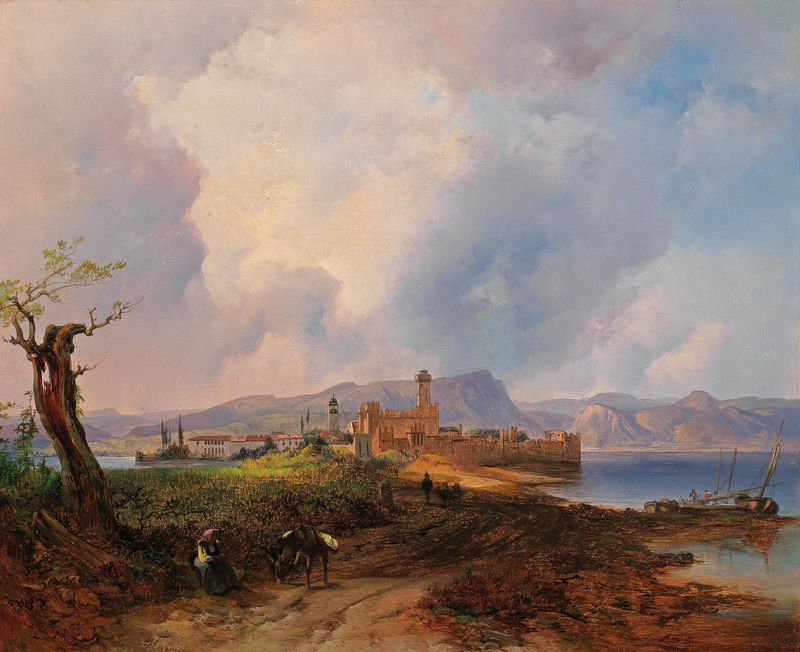
Sirmione
Anton Hansch





