
A settler’s new home near Dunedin — History & Facts
Could beauty survive in a century of chaos? In A settler’s new home near Dunedin, a serene glimpse into a new beginning unfolds against the backdrop of an untamed landscape, suggesting a fragile harmony amid the tumult of change. Look to the center of the piece, where the sturdy farmhouse stands resolute, surrounded by verdant hills and a vast sky. The warm earthy tones of the building contrast with the cool greens and blues of the landscape, drawing the eye to the heart of the scene, where new life is being nurtured. Notice how the light dances across the fields, illuminating the promise of growth and the hopeful venture of the settlers, as if the sun itself blesses this endeavor. Yet, there’s an underlying tension in this idyllic portrayal.
The isolation of the farmhouse speaks to the solitude and struggle faced by pioneers, while the encroaching wilderness hints at both beauty and danger. The vastness of the landscape evokes a sense of yearning, suggesting the settlers’ dreams come with the weight of uncertainty, as they carve out their lives in a world still defined by its rawness. In 1865, Nicholas Chevalier created this artwork during a period of transformation in New Zealand, with settlers arriving in droves, fueled by hope and ambition. As he painted in Dunedin, Chevalier was part of a burgeoning landscape of artists, capturing the sublime beauty of the New Zealand frontier while reflecting on the conflicts and changes that accompanied colonization.
More Artworks by Nicholas Chevalier
Browse all →
Coast near Dunedin
Nicholas Chevalier
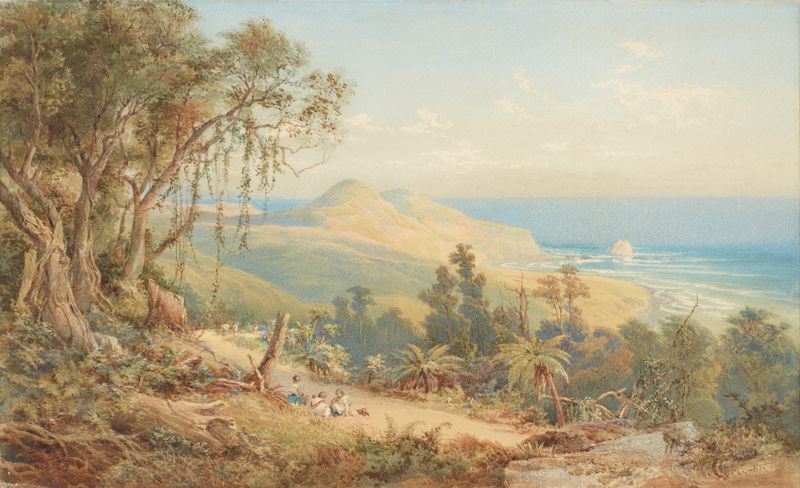
Sandfly Bay, Otago
Nicholas Chevalier

Buckler Burn at the head of Wakatipu Lake
Nicholas Chevalier

Mr MacKellar’s Station, the Waimea Plains, Southland
Nicholas Chevalier
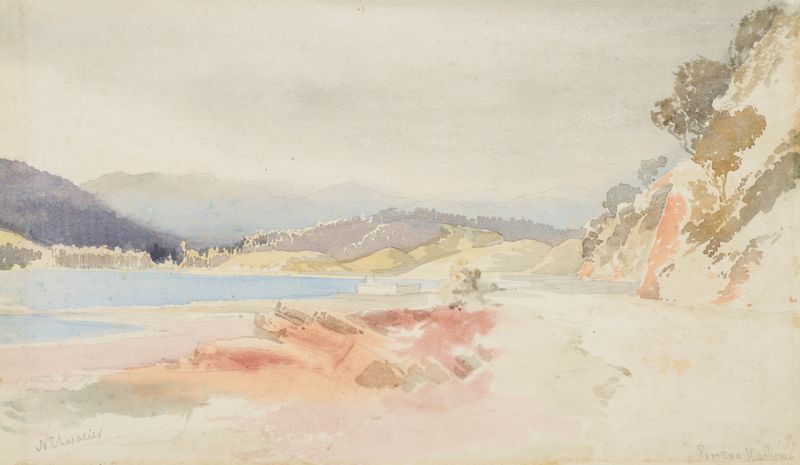
Porirua Harbour
Nicholas Chevalier
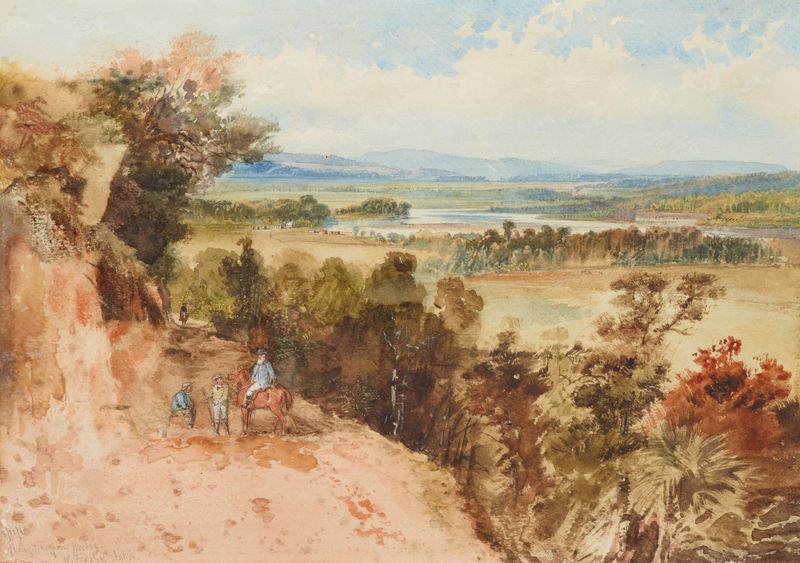
Rangitikei from Westoe, W. Fox Esq’s Station
Nicholas Chevalier

The Upper Rangitikei
Nicholas Chevalier
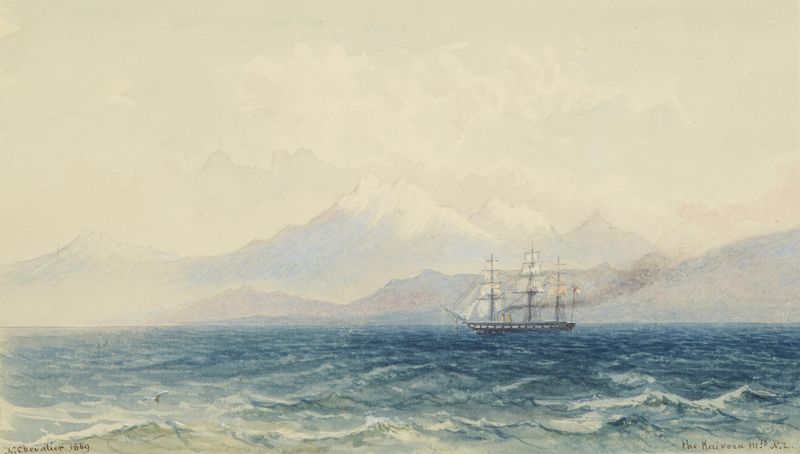
The Kaikoura Mountains, N.Z.
Nicholas Chevalier

Upper Hutt Valley
Nicholas Chevalier

The Tararua Mountains and the Waipoua River
Nicholas Chevalier





