A Summer Landscape — History & Facts
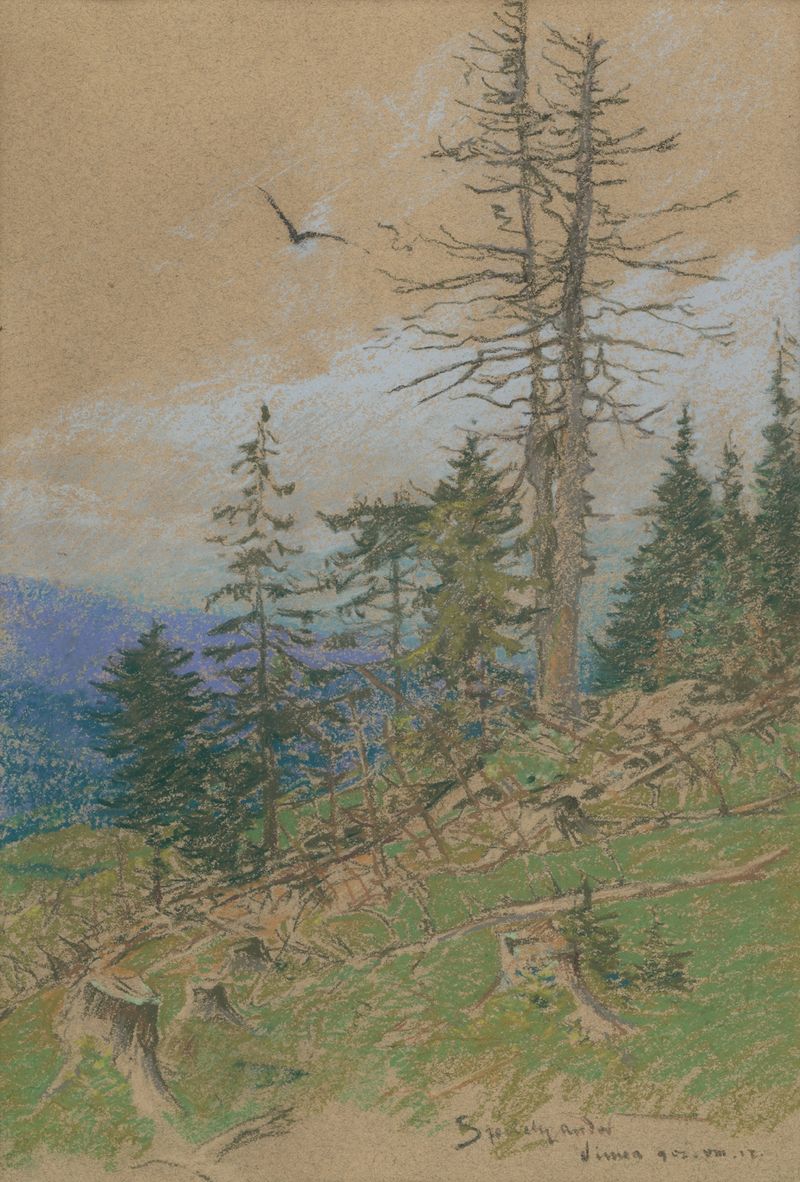
What secret hides in the quiet of the canvas? In A Summer Landscape, André de Székély captures a moment that feels both ephemeral and enduring, inviting us to peer into the fragility of nature itself. Look to the left where the meadow unfurls in a vibrant tapestry of greens and golds; the brushstrokes dance lightly, capturing a gentle breeze that seems almost palpable. Focus on how the sunlight spills across the landscape, illuminating the wildflowers with a golden hue that breathes life into the scene. The composition is balanced yet dynamic, with a meandering path leading the eye toward a distant horizon, suggesting both journey and destination. As you delve deeper, the delicate interplay between light and shadow reveals emotional undercurrents—an invitation to contemplate the transient beauty of summer.
The flowers, though bright and full of life, hint at fragility, their blooms destined to wilt. The distant mountains stand stoic yet muted, contrasting the vibrancy of the foreground with an air of timelessness, echoing the inevitable cycles of life and decay. Created in 1910, this work emerged during a pivotal period in Székély's career, as he was establishing his unique voice amidst the vibrant movements of early 20th-century art. Living in Europe, he drew inspiration from Impressionism and the burgeoning Modernist sentiments, reflecting the emotional landscape of a world on the brink of change.
His ability to encapsulate an idyllic yet fleeting moment speaks to a profound understanding of both nature and the human experience.