A Tree at the Edge of the Woods — History & Facts
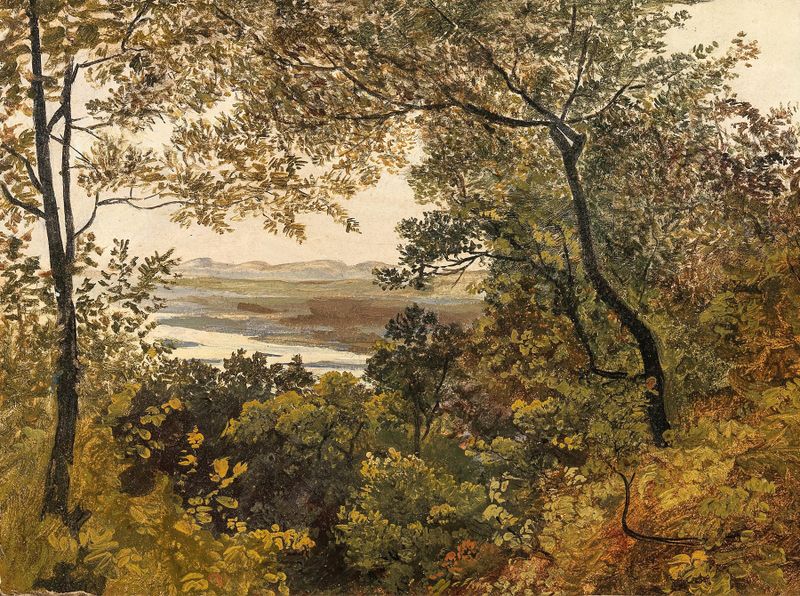
In this artwork, the illusion of serene nature belies a deeper, more complex truth. A solitary tree stands defiantly at the boundary between the comforting embrace of the woods and the stark vulnerability of the open landscape, inviting reflection on both beauty and solitude. Look to the left at the sturdy trunk of the tree, its gnarled bark textured with the weight of time. Notice how the warm light filters through the delicate leaves, casting dappled shadows on the forest floor, creating a dance of illumination and obscurity.
The composition holds a balance between the vibrant greens of the foliage and the muted earth tones of the ground, evoking a sense of tranquility while also hinting at a tension between growth and decay. Delve into the layered meanings within the scene: the tree, a symbol of resilience, stands at a threshold, embodying the conflict between the safety of the woods and the perilous openness beyond. The contrast between light and shadow conveys a moment caught in time, emphasizing both the fleeting nature of beauty and the permanence of solitude. This juxtaposition beckons viewers to ponder their own relationships with isolation and connection. The artwork is attributed to the Circle of Friedrich Gauermann, a group active during the 19th century, known for their romantic depictions of nature.
Although the exact date remains unknown, it likely emerged in a period when artists were exploring the sublime and the emotional resonance of landscapes, a response to the rapid industrialization transforming their world. The painting reflects the era’s deepening appreciation for the natural environment amid the encroaching changes of modern life.