A View at Terracina — History & Facts
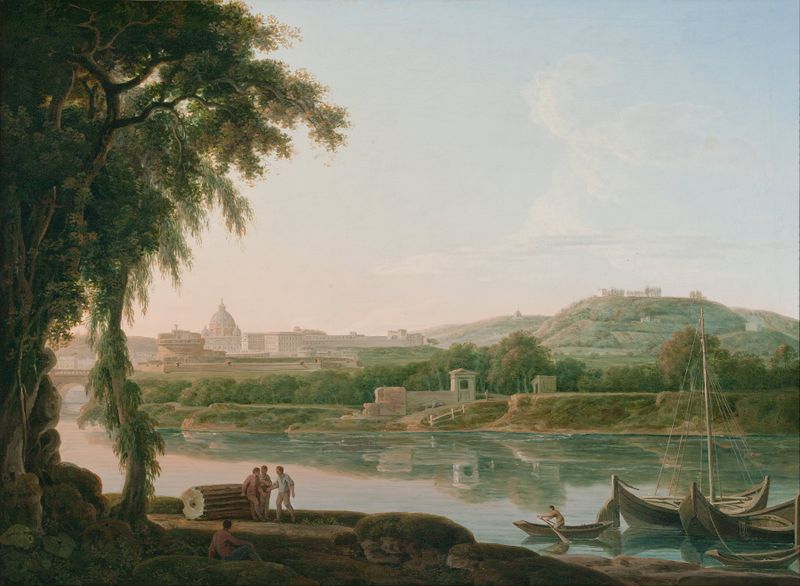
Could beauty survive in a century of chaos? Look closely at the serene landscape: a soft glow casts over the rolling hills, where gentle waves lap against the sun-kissed shore. Notice the pastel hues of twilight mingling with the vibrant greens, creating an illusion of peace that stands in stark contrast to the tumultuous backdrop of the world beyond. The brushwork, fluid yet deliberate, invites your gaze to dance across the canvas, capturing the fleeting essence of a moment untouched by strife. Delve deeper into the layers of emotion concealed within the painting.
The tranquil scene belies an undercurrent of tension; the distant mountains loom like silent sentinels, hinting at the chaos that brews beyond the idyllic vista. The juxtaposition of light and shadow evokes an unsettling harmony, where the beauty of nature coexists with the reminders of human conflict, subtly questioning the permanence of such serenity. Look for the solitary figure at the water’s edge, whose reflection merges into the sea—a silent witness to the violence that often disrupts peace. Jacob More created this work in 1778 while residing in Rome, a city that served as a cultural hub during the height of the Enlightenment.
At this time, Europe was grappling with political upheavals and revolutionary fervor, yet the artist embraced the classic ideals of beauty and harmony in nature as a counterpoint to the chaos of his era. His intent was to evoke a sense of timelessness, capturing both the allure of the landscape and the inherent fragility that beauty holds in the face of human turmoil.