A View in Subiaco — History & Facts
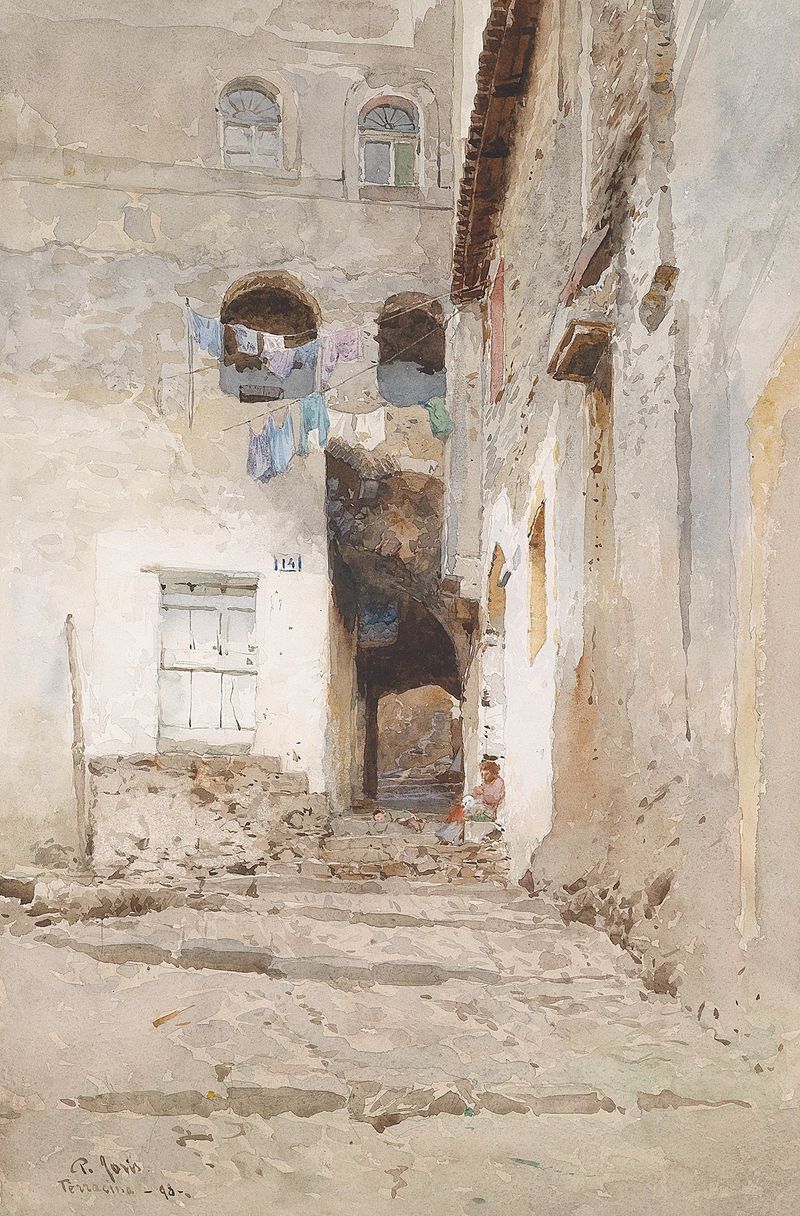
Could a single brushstroke hold eternity? In A View in Subiaco, the artist captures a fleeting moment that transcends time, inviting us to ponder the beauty of nature with an exquisite reverence. Look to the left at the sweeping hills, painted in soft greens and earthy browns. Notice how the light dances across the canvas, illuminating the delicate textures of foliage and the rugged charm of stone structures. The composition draws the eye towards the horizon, where a serene sky reflects a palette of tranquil blues and gentle whites, creating a harmonious balance between earth and sky.
Each brushstroke feels deliberate yet spontaneous, suggesting not just a scene but an emotional landscape. Delve deeper into the contrasts present within the work. The serene beauty of the landscape is balanced by the subtle hints of human presence—small figures in the distance, their insignificance against the grandeur of nature evokes feelings of awe and humility. The vibrant colors juxtaposed with muted tones speak to the duality of life; the fleeting moments of joy amidst the permanence of the scenery.
The artist invites the viewer to reflect on their own place within this vast and intricate world. In 1873, Pio Joris painted this landscape while residing in Italy, a period rich with artistic exploration and a growing appreciation for the natural world. As the Impressionist movement gained momentum, Joris sought to synthesize his love for realism with the emerging trends of capturing light and atmosphere in new ways. His work during this time reflects not only his personal journey but also the broader shifts occurring in the art world, where nature began to command both attention and reverence.