Häuser in Terracina — History & Facts
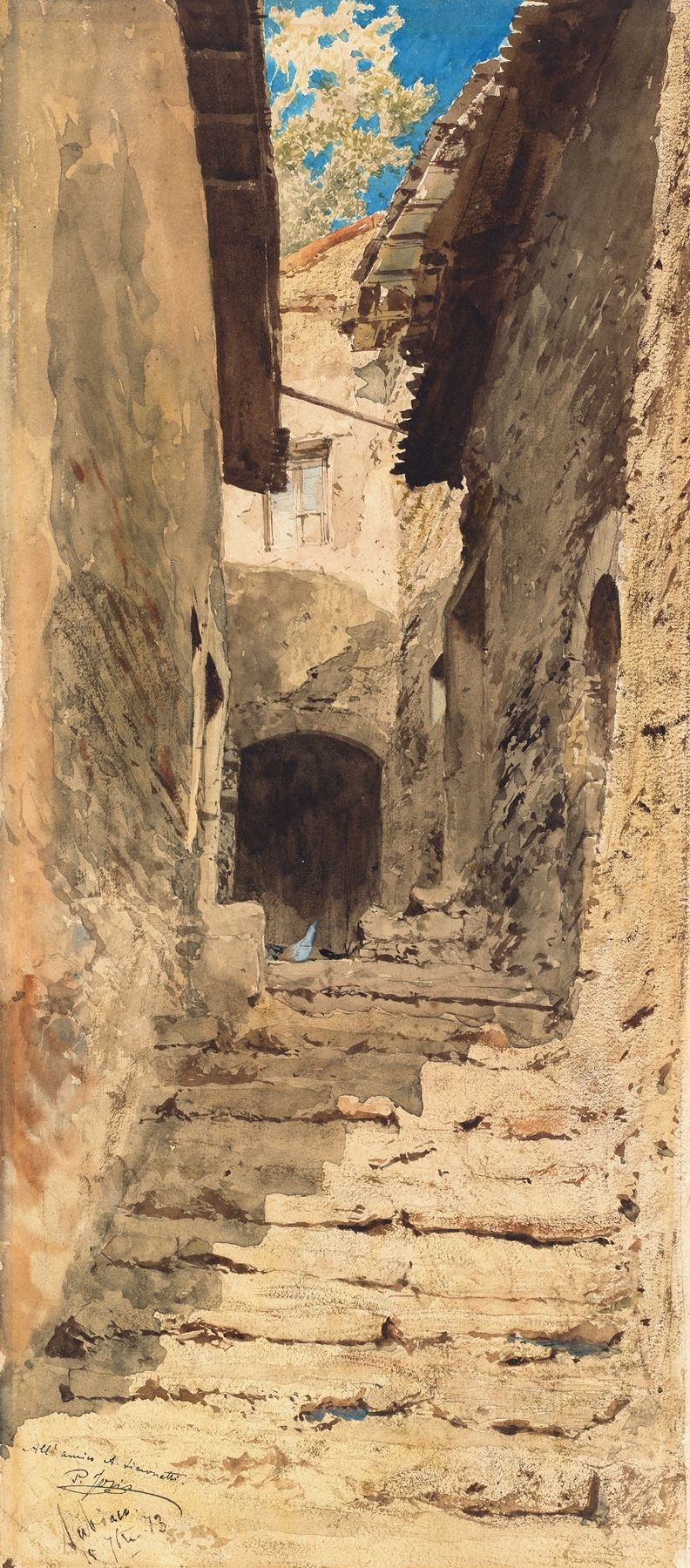
In a world constantly in flux, how does one capture the essence of transformation? Look to the left at the vibrant ochres and deep earth tones that weave together the sun-bathed facades of the buildings. The composition draws the eye along the narrow street, inviting exploration. Brushstrokes, both fluid and deliberate, create a textured interplay between light and shadow, illuminating the architectural details while hinting at the life that once animated these once-bustling homes.
Notice how the distant hills cradle the town, their gentle undulations contrasting with the strong vertical lines of the houses, symbolizing the passage of time and the stories inscribed in these walls. Within this scene lies a narrative of change and endurance. The peeling paint signifies not just decay but the beauty of imperfection and the resilience of existence. As nature encroaches upon the structures, it reflects a deeper commentary on humanity’s relationship with the environment.
The interplay of light suggests a moment suspended between day and dusk, a metaphor for transitions—both in the town's history and in the viewer's own experience of life. Pio Joris painted Häuser in Terracina in 1898 while residing in Italy, where he was influenced by the diverse landscapes and rich history around him. At this time, the art world was shifting towards Impressionism, and Joris sought to capture fleeting moments of beauty against a backdrop of modernity. His work serves as a bridge between tradition and innovation, encapsulating a longing to connect with the past even as he embraced the new.