A View of an Alpine Landscape — History & Facts
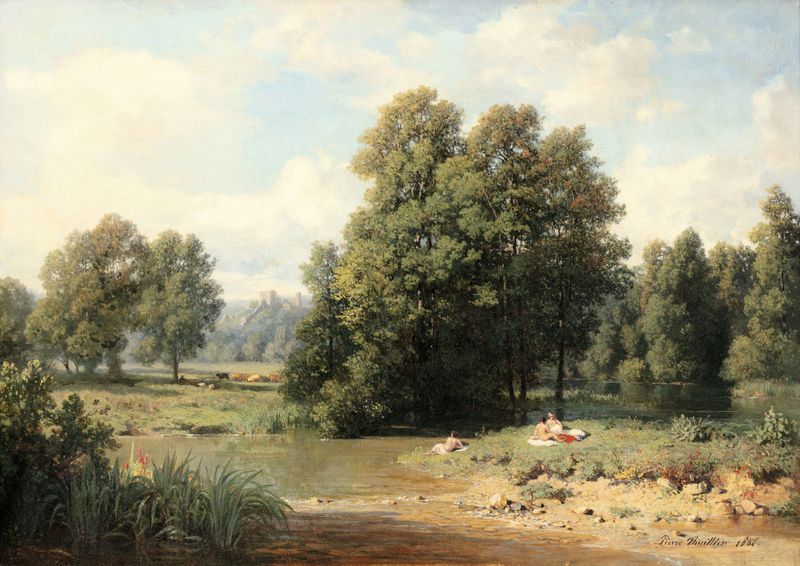
In the serene embrace of nature, beauty becomes both a sanctuary and a fleeting whisper, captured lovingly on canvas. Look to the horizon in A View of an Alpine Landscape, where majestic peaks rise against a tender blue sky, their slopes kissed by the golden light of a setting sun. Focus on the shimmering lake that reflects the grandeur of the mountains, inviting your gaze into its depths. Notice how the delicate brushstrokes merge greens and blues, creating an atmosphere of tranquility that feels almost palpable — a calming escape from the chaos of existence. Yet, within this picturesque scene lies a deeper tension.
The towering mountains, while magnificent, evoke a sense of isolation, as if they stand sentinel over the quiet beauty that surrounds them. The interplay of light and shadow hints at the transient nature of this idyllic moment, suggesting that beauty is both abundant and elusive. Wildflowers dot the foreground, their vibrancy contrasting with the cool serenity of the landscape, symbolizing the fragile balance of life and mortality. Pierre Thuillier painted this work in 1852 during a time when Romanticism was flourishing in Europe, where the majesty of nature was increasingly celebrated.
Living in France, Thuillier was influenced by the emerging movement that emphasized emotion, individualism, and the sublime, as artists sought to depict the natural world in ways that resonated with the soul. In this particular work, he captures the essence of beauty that transcends the passage of time and invites contemplation.