Landscape — History & Facts
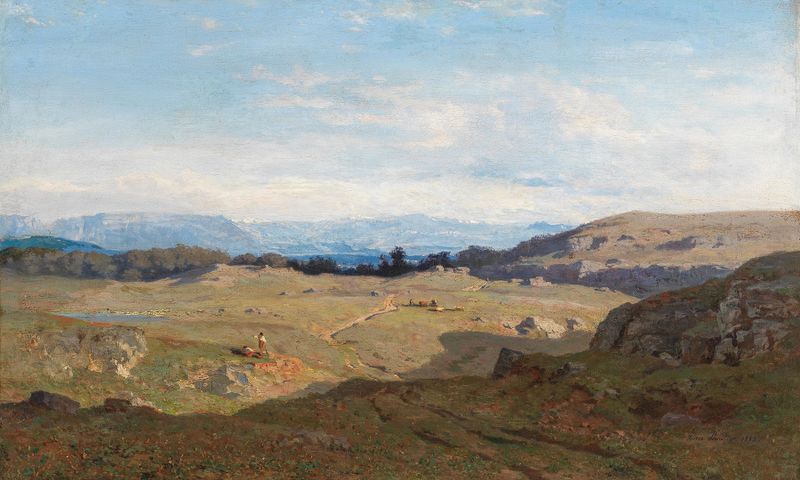
Is this a mirror — or a memory? The landscape before us seems to dissolve the boundaries between reality and the past, inviting reflection on what was and what may never be again. Look to the left at the gentle curves of the rolling hills, awash in soft greens and muted browns. The artist’s delicate brushstrokes create a sense of movement, as if the landscape breathes and sways with the wind. Notice how the distant horizon is kissed by a warm, golden light, highlighting the delicate interplay of shadows and soft illumination.
This masterful use of color evokes an ethereal quality that draws the viewer into a dreamlike state. Deeper layers of meaning emerge in the juxtaposition of the serene foreground and the hazy background, symbolizing the tension between the tangible present and elusive memories. The subtle transitions from vibrant hues to subdued tones reflect the bittersweet nature of nostalgia—beauty intertwined with loss. Small details, like the solitary tree standing resolute against the landscape, usher in contemplations about solitude, endurance, and the passage of time. Pierre Thuillier painted Landscape during a period marked by introspection and a search for identity in art.
Active in the late 19th century, he found himself amidst the Impressionist movement, yet his work often pivoted towards a more romanticized portrayal of scenery. At that time, artists were grappling with the rapid changes of modern life while seeking solace in the enduring beauty of nature, a theme resonant in this piece.