
A View of Putte — History & Facts
Could a single brushstroke hold eternity? In A View of Putte, each stroke captures the fleeting chaos of existence, revealing both beauty and violence intertwined within nature's embrace. Look closely at the foreground, where the delicate interplay of greens and browns draws your eye to the rolling hills. Notice how the light dances upon the surface of the water, reflecting the sky's soft blues and fiery oranges, creating a tension that sparks curiosity about the world beyond. The artist employs a dynamic composition, leading the viewer's gaze across the canvas, inviting them to explore the vibrant landscape while hinting at deeper narratives simmering beneath the tranquil surface. The contrasts within the painting are striking.
The serene water juxtaposes the rugged terrain, reflecting the duality of peace and turmoil. Wild brushwork suggests an undercurrent of violence that lurks beneath the idyllic façade, while hidden details—a lone figure in the distance—whisper of stories untold. Each element contributes to a narrative that resonates with the viewer, prompting introspection about the harmony and discord present in nature and life itself. During the years 1890 to 1894, Lamorinière painted this piece while navigating the changing tides of the art world.
Living in Belgium, he was influenced by the Symbolist movement, which was gaining traction at that time, pushing boundaries of representation. This was a period marked by exploration of emotional depth and personal experience in art, as well as political unrest in Europe, creating a rich backdrop for the creation of this poignant work.
More Artworks by Jean Pierre François Lamorinière
Browse all →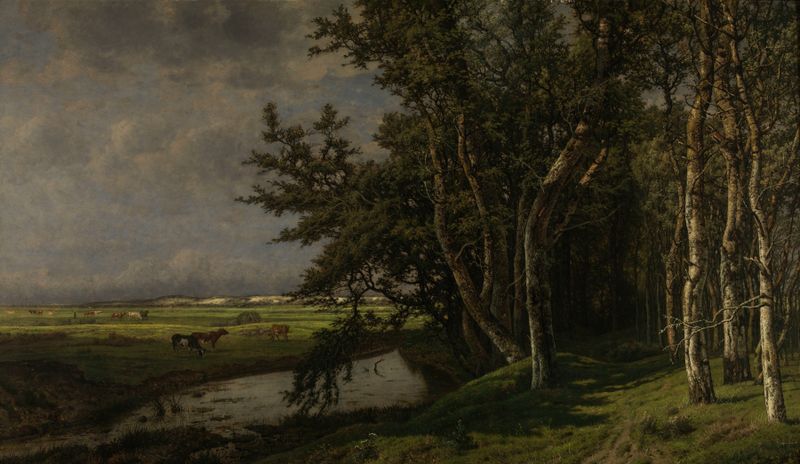
Prinsenvijver on the Isle of Walcheren
Jean Pierre François Lamorinière

A Forester Cottage in Putte
Jean Pierre François Lamorinière
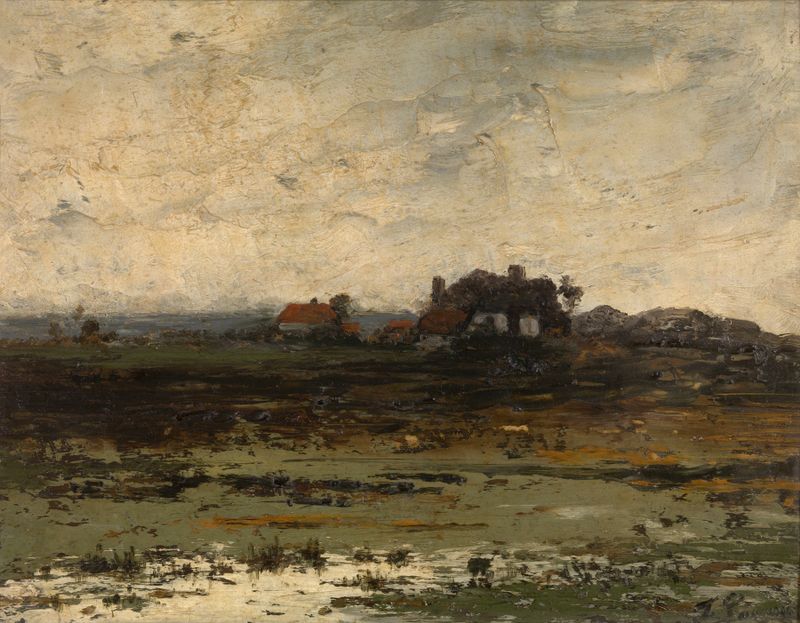
Farms at Sunset
Jean Pierre François Lamorinière
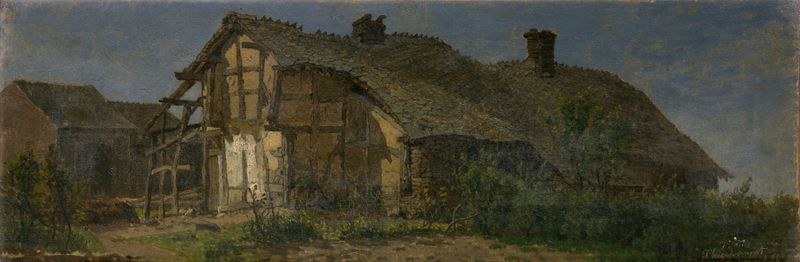
An Old Farm in Xhierformont
Jean Pierre François Lamorinière

Landscape with Herons at Sunset
Jean Pierre François Lamorinière

Marsh near Putte
Jean Pierre François Lamorinière
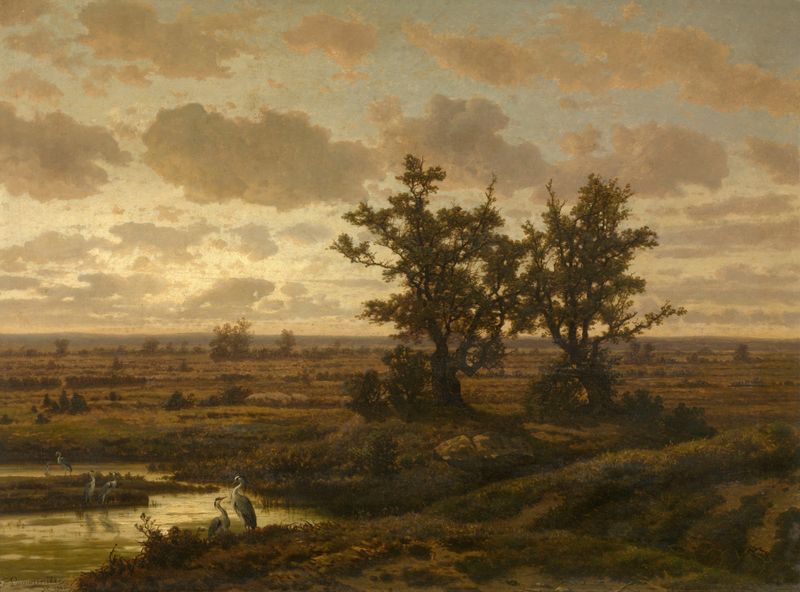
Fen in the Kempen
Jean Pierre François Lamorinière

Loneliness. Landscape in the Surroundings of Schilde
Jean Pierre François Lamorinière
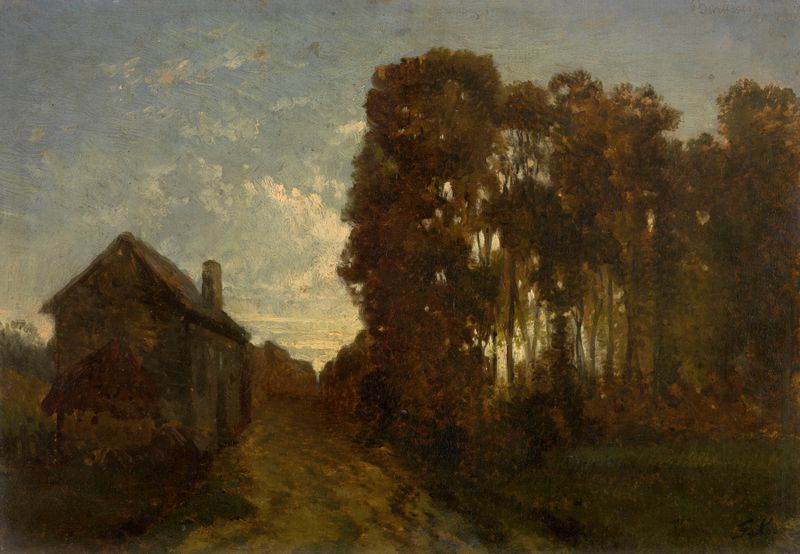
Barbizon at Dusk
Jean Pierre François Lamorinière
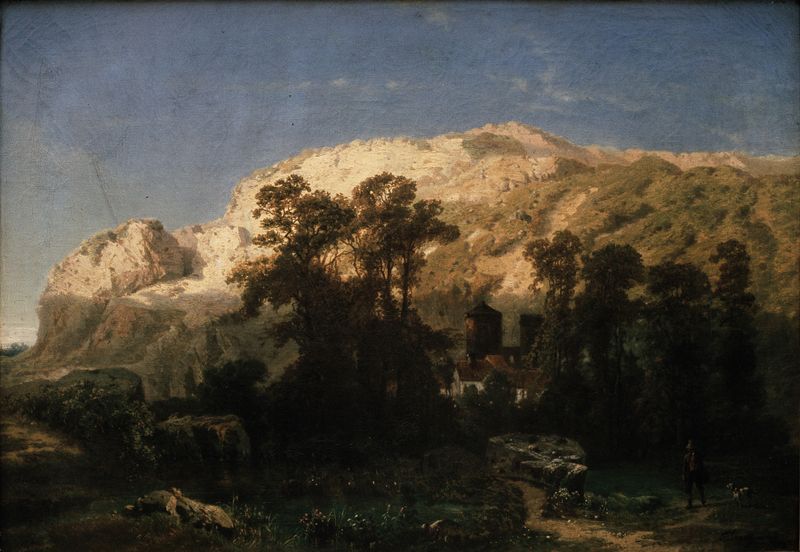
Rocky Landscape in Marche-les-Dames
Jean Pierre François Lamorinière





