
Fen in the Kempen — History & Facts
Did the painter know this moment would outlive them? As the gentle fog envelops the landscape, time becomes a silent witness to both the ephemeral and the eternal, captured within the frame of artistry. Look to the left at the soft greens of the marshland, where the delicate brush strokes create a lush, textured expanse that invites you deeper into the scene. Notice how the light filters through the mist, casting a spectral glow that blurs the boundaries of reality and imagination. The palette is muted, with earthy tones dominating, yet the subtle contrasts enable an interplay of shadow and illumination, echoing the transient nature of the moment itself. The stillness of the water reflects the sky’s ethereal hues, suggesting a dialogue between land and heavens.
In this tranquil setting, the absence of human figures amplifies the sense of solitude, evoking a profound yearning for connection with nature. Meanwhile, the gentle ripples in the water hint at unseen movements beneath the surface, perhaps an allegorical nod to the hidden currents of time passing quietly but inexorably. In 1865, Lamorinière painted this piece while living in Belgium, during a period marked by a growing influence of realism in art. The world was shifting as industrialization began to shape societies, yet artists like him sought refuge in the serenity of nature.
This work emerges as both a celebration of the natural world and a contemplative meditation on the passage of time, reflecting the artist’s desire to encapsulate fleeting beauty before it fades.
More Artworks by Jean Pierre François Lamorinière
Browse all →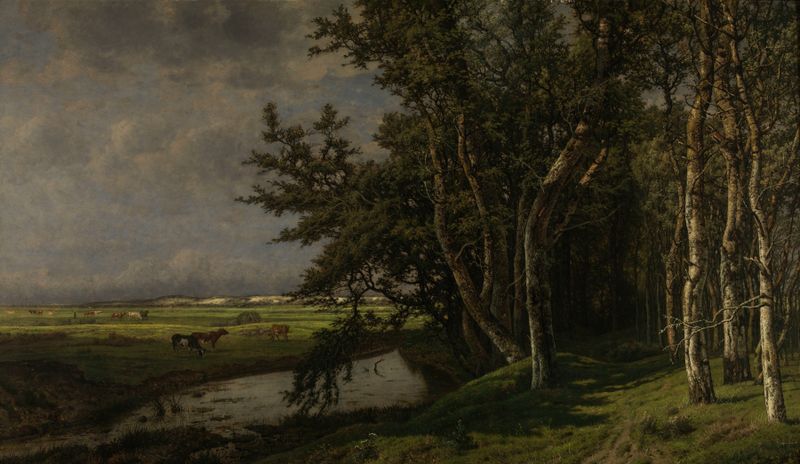
Prinsenvijver on the Isle of Walcheren
Jean Pierre François Lamorinière

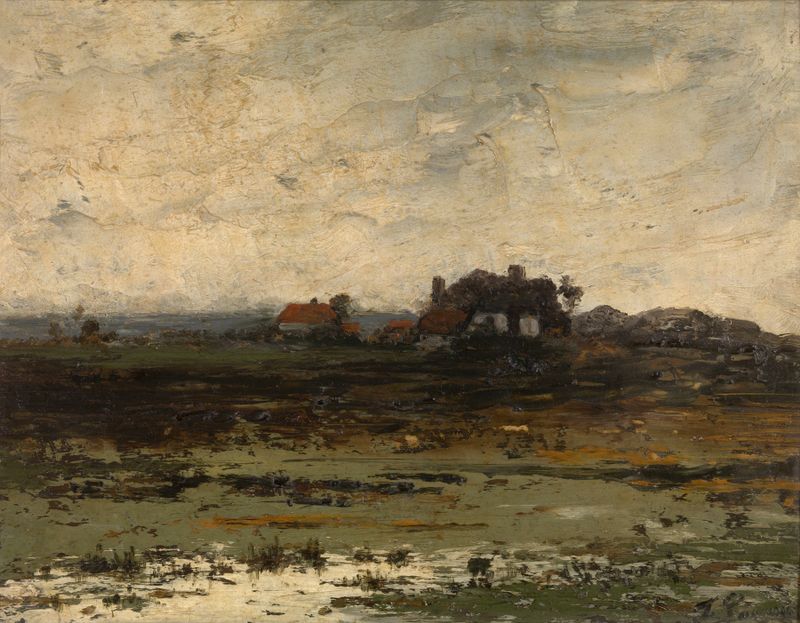
A Forester Cottage in Putte
Jean Pierre François Lamorinière
Farms at Sunset
Jean Pierre François Lamorinière
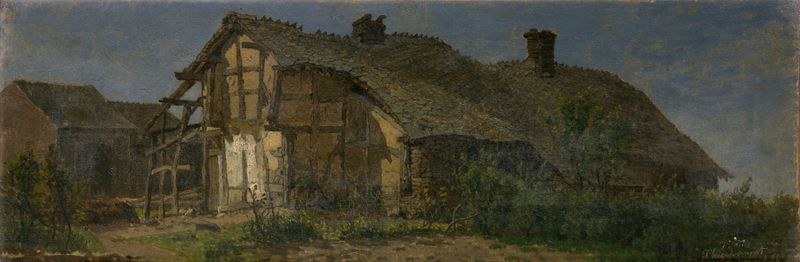
An Old Farm in Xhierformont
Jean Pierre François Lamorinière

Landscape with Herons at Sunset
Jean Pierre François Lamorinière

Marsh near Putte
Jean Pierre François Lamorinière

Loneliness. Landscape in the Surroundings of Schilde
Jean Pierre François Lamorinière
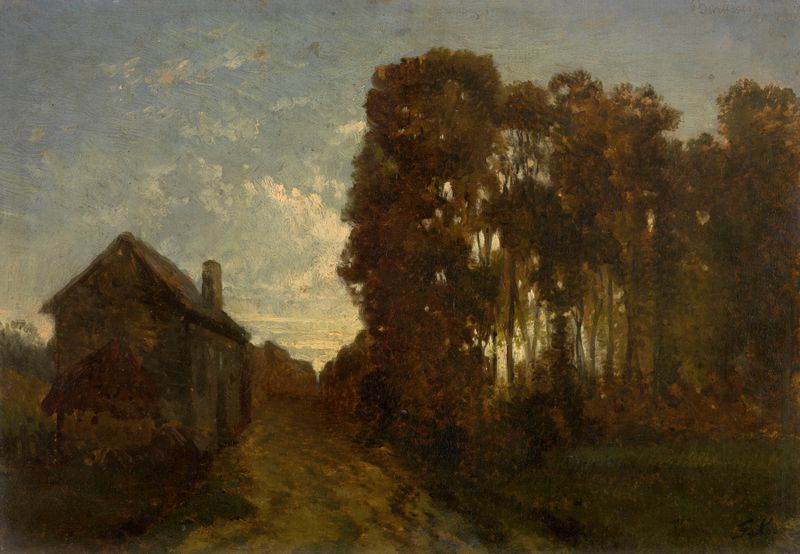
Barbizon at Dusk
Jean Pierre François Lamorinière

A View of Putte
Jean Pierre François Lamorinière
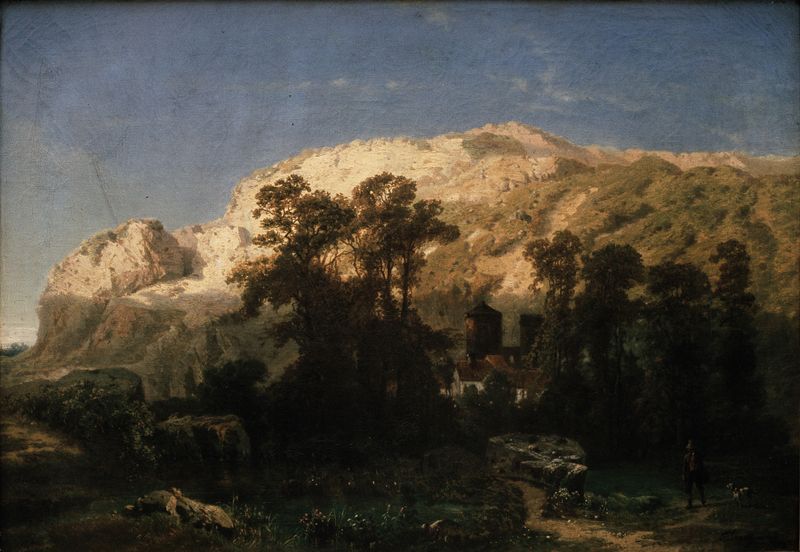
Rocky Landscape in Marche-les-Dames
Jean Pierre François Lamorinière





