
A View of Schönbrunn Palace — History & Facts
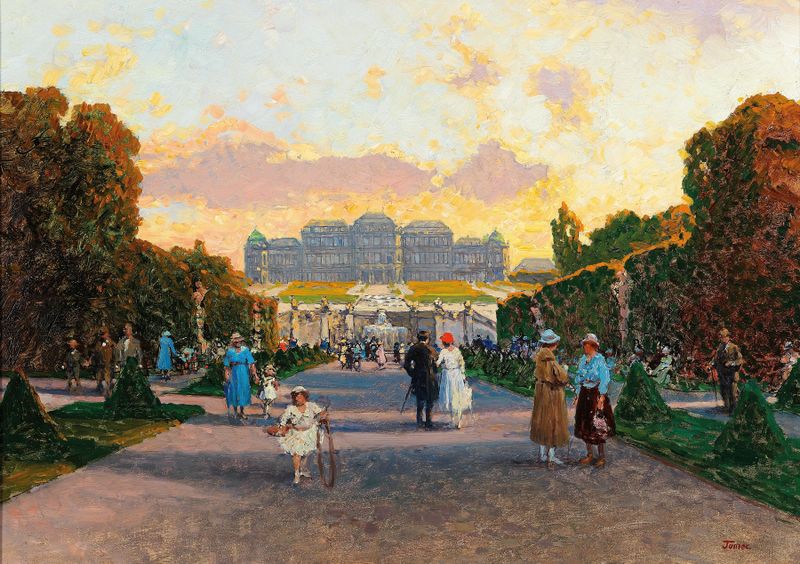
Could beauty survive in a century of chaos? This question resonates deeply within the serene portrayal of grandeur, capturing a moment when elegance stands defiantly against the turbulent currents of history. Look to the left at the regal façade of Schönbrunn Palace, its opulent architecture bathed in a gentle golden hue that evokes a sense of warmth and comfort. Notice how the meticulous brushwork delineates each ornate detail, from the sculpted figures adorning its roof to the lush gardens that cradle its base. The palette, a blend of soft pastels and rich earth tones, provides a harmonious balance, inviting viewers to wander through the scene and savor its idyllic tranquility. Yet beyond the surface lies a rich tapestry of contrasts.
The palace, a symbol of imperial power, coexists with the encroaching shadow of nature—a reminder that beauty can be fragile and fleeting. The soft ripples in the surrounding water reflect both the serenity and the hidden chaos of the world beyond the frame, suggesting a deeper narrative about resilience amid upheaval. Each leaf and flower serves as a testament to life’s persistence, even when the backdrop of the era is rife with uncertainty. Heinrich Tomec, during his time creating this work, existed in an art world that was beginning to grapple with the modern era's complexities.
The exact date of its creation remains elusive, yet it likely emerged during a period when the beauty of classical forms was being challenged by the rise of new artistic movements. Amidst this shifting landscape, the artist sought to capture a moment of stillness and grace, preserving the essence of beauty in an age marked by transformation.
More Artworks by Heinrich Tomec
Browse all →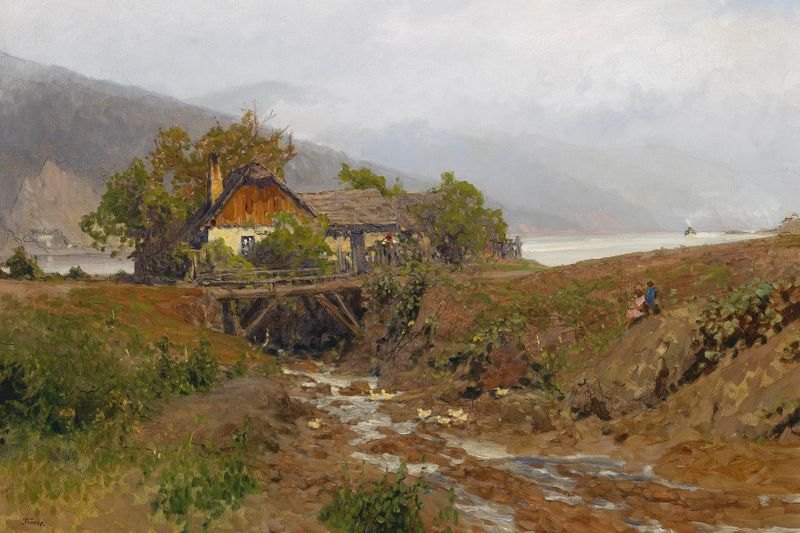
Blick bei Weißenkirchen über die Donau
Heinrich Tomec
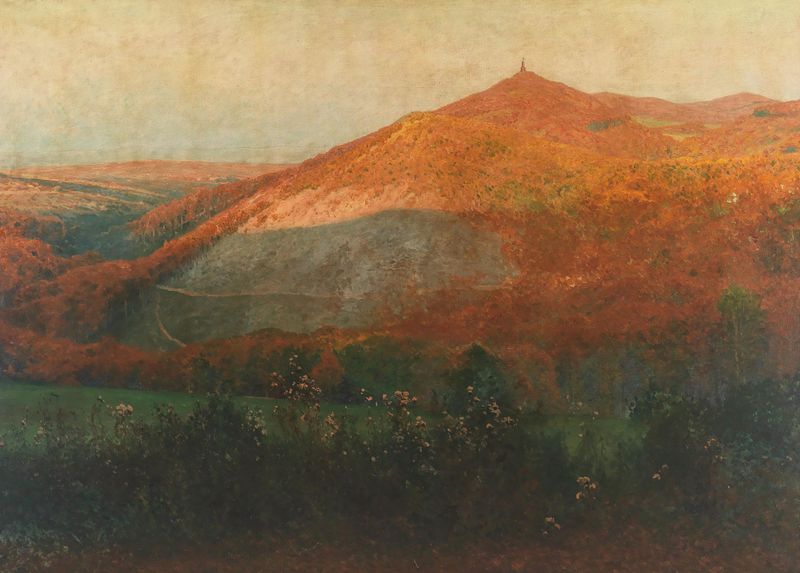
Hermannskogel with View of the Habsburgwarte
Heinrich Tomec
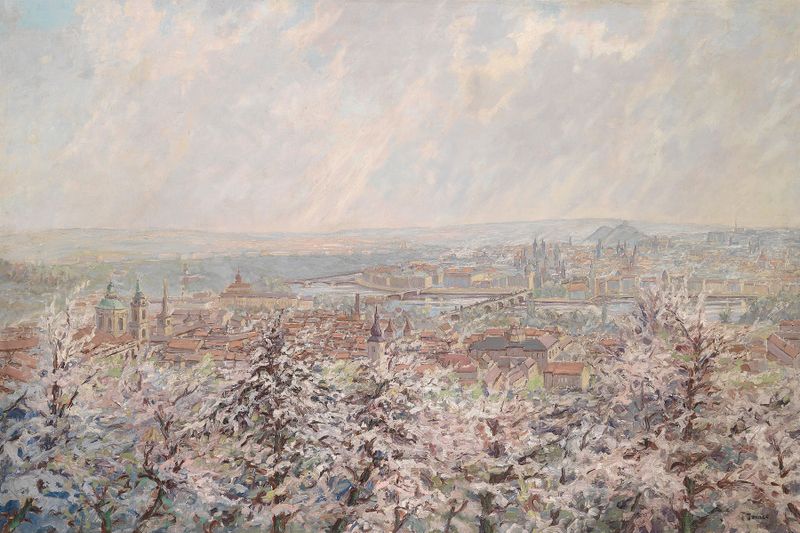
Panorama Prahy i Petrina
Heinrich Tomec
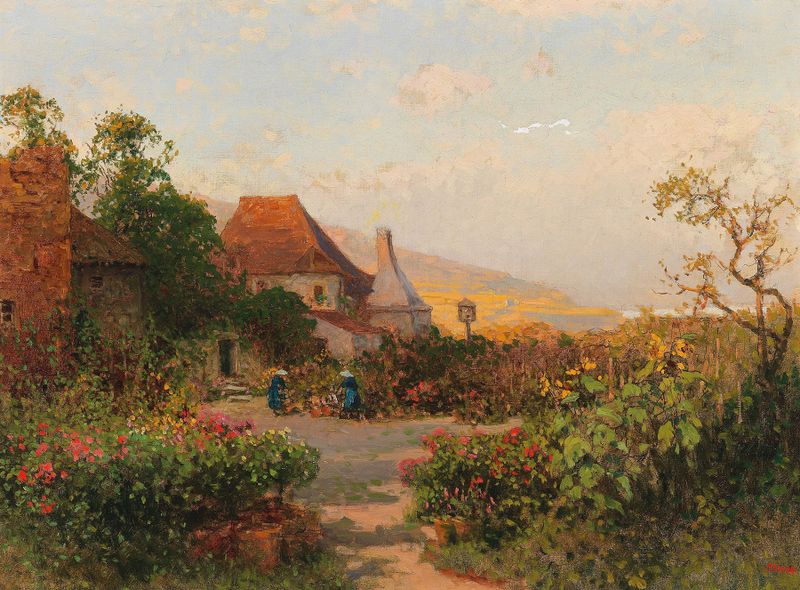
Partie in der Wachau
Heinrich Tomec
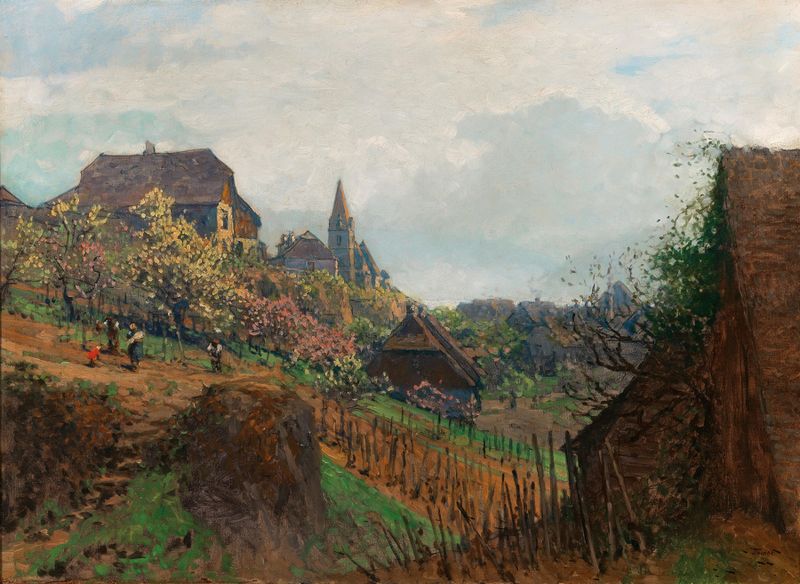
A View of Weißenkirchen from a Vineyard in the Wachau Region
Heinrich Tomec
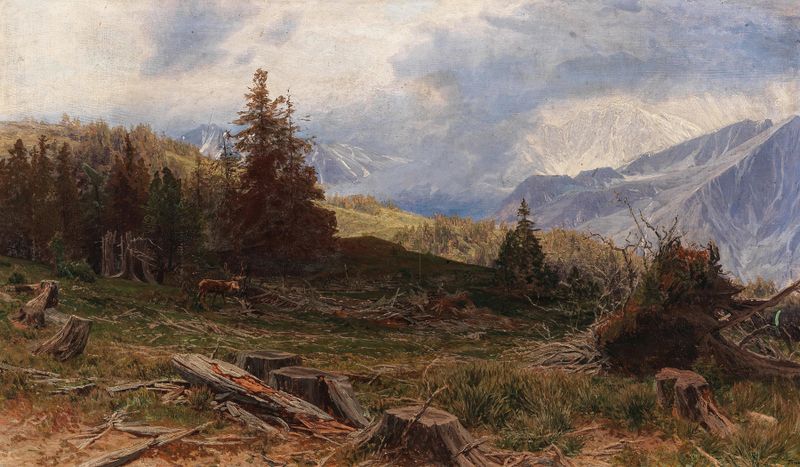
Hirsch in weiter Landschaft mit Windbruch
Heinrich Tomec
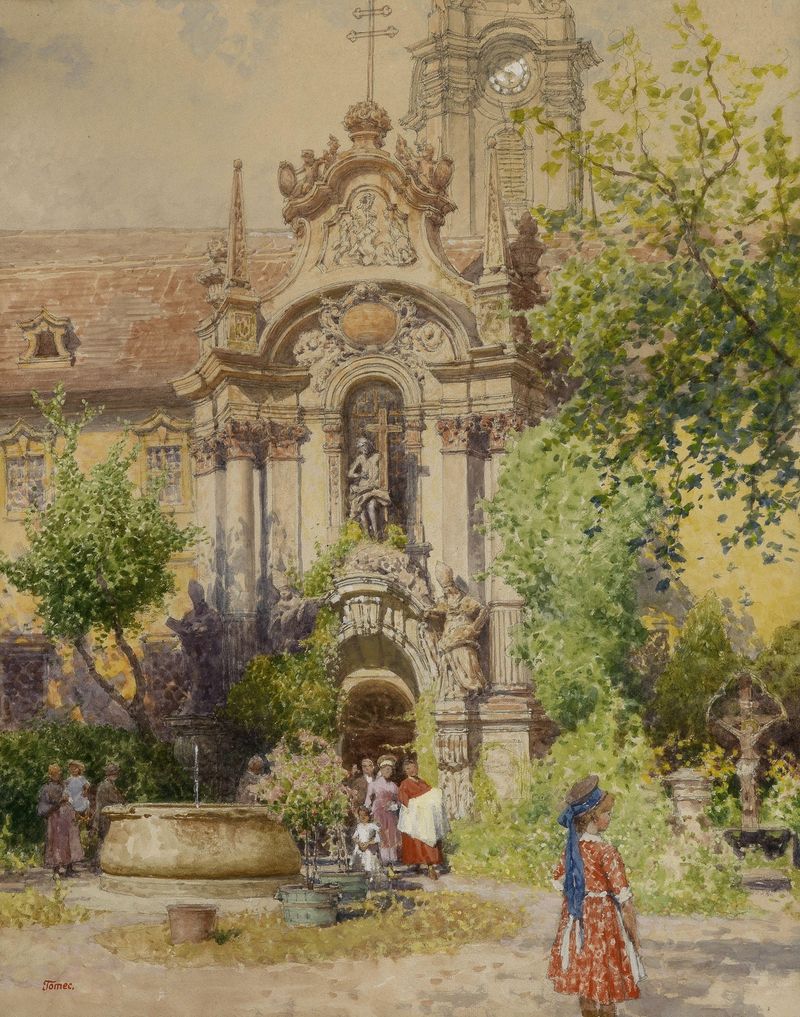
Taufe in Dürnstein
Heinrich Tomec
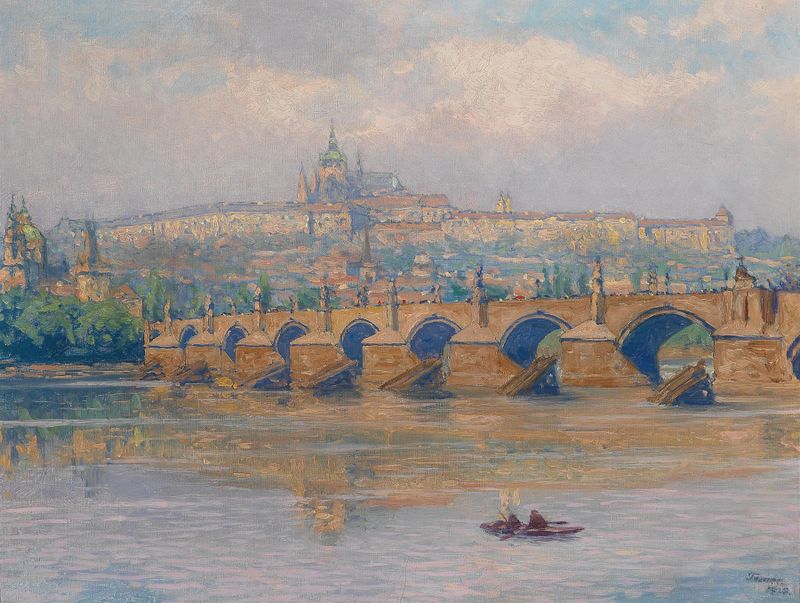
Prag
Heinrich Tomec
Belvedere
Heinrich Tomec
More Architecture Art
Browse all →
The statue of Liberty
Frédéric Auguste Bartholdi

View of Houses in Delft, Known as ‘The Little Street’
Johannes Vermeer

View of Houses in Delft, Known as ‘The Little Street’
Johannes Vermeer

The Cathedral in Rouen. The portal, Grey Weather
Claude Monet

The yellow house
Vincent van Gogh

The Church in Auvers-sur-Oise, View from the Chevet
Vincent van Gogh