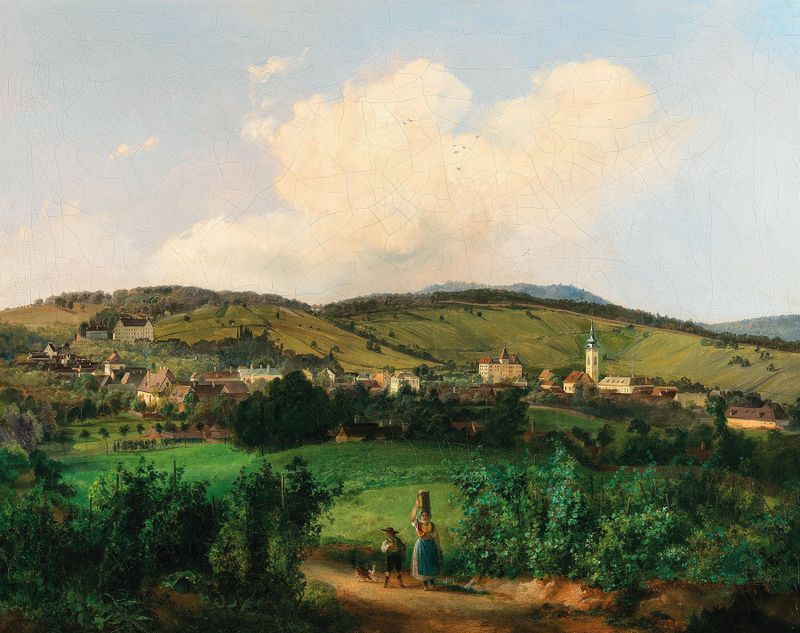
A View of the Churches of Kalksburg and Rodaun at Dawn — History & Facts
In the quiet hour before dawn, the world stands poised at the edge of rebirth, waiting for light to spill over the horizon and illuminate the shadows of yesterday. Focus first on the delicate interplay of colors—soft blues and pale pinks weaving through the sky, hinting at the warmth that is to come. Notice how the spires of the churches rise above the landscape, their silhouettes etched against the awakening light. The artist’s meticulous brushwork brings a sense of tranquility, as if time momentarily pauses, inviting contemplation of the beauty and promise that dawn holds. The contrast between light and darkness embodies a deeper narrative; the churches, symbols of faith and endurance, stand resilient against the encroaching shadows of night.
Look closely at the reflections in the calm waters below, which ripple gently, symbolizing the transient nature of life and the continuous cycle of hope and renewal. Each brushstroke captures a moment—both fleeting and eternal—that speaks to the heart of human experience. In 1842, Geyling painted this view from a vantage point that offered a glimpse into a world shifting under the weight of change. Living in Vienna, he was part of an artistic community grappling with the impacts of industrialization, while still clinging to the romantic ideals of nature and spirituality.
This work reflects a convergence of personal and collective awakening, encapsulating both the beauty of a new day and the complexities of an evolving society.