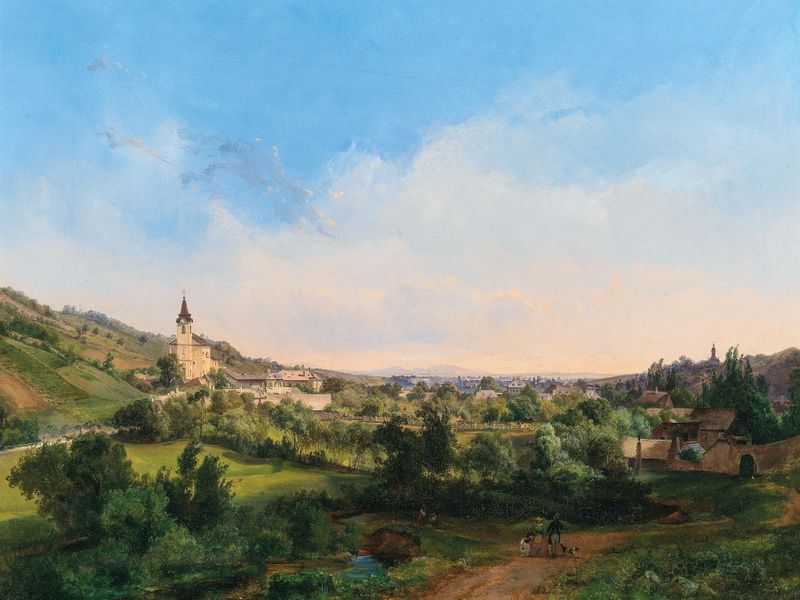
Vienna, a View of the Church and Barracks in Mauer seen from Lange Gasse — History & Facts
When did color learn to lie? The canvas presents a delicate illusion, inviting the viewer to explore the interplay between reality and artistic interpretation. Focus first on the central church, its spire stretching boldly into the sky, a beacon of resilience amidst the backdrop of softly rendered barracks. Notice how the light dances across the architecture, accentuating the intricate details of the stonework while offering a gentle contrast to the muted earth tones of the surrounding structures. The interplay of shadow and illumination creates a rhythmic balance, guiding the eye through the piece. As you delve deeper, the painting reveals underlying tensions.
The juxtaposition of the solemn church and the utilitarian barracks raises questions about faith versus duty, stability versus transience. The avoidance of vibrant hues emphasizes a sense of void, capturing the spirit of a time caught between the fervor of revolution and the calm of tradition. Each stroke of muted color speaks volumes, echoing the complexities of the 19th-century Austrian landscape. In 1843, Geyling painted this scene during a period of significant change in Vienna, marked by political strife and social upheaval.
His work reflects the artistic trends of the time, leaning into a Romantic sensibility that favored emotional depth and atmospheric mood. As he captured this view from Lange Gasse, Geyling was navigating his own place in a rapidly evolving art world, seeking to balance realism with the expressive potential of color.