A View of the Grand Canyon — History & Facts
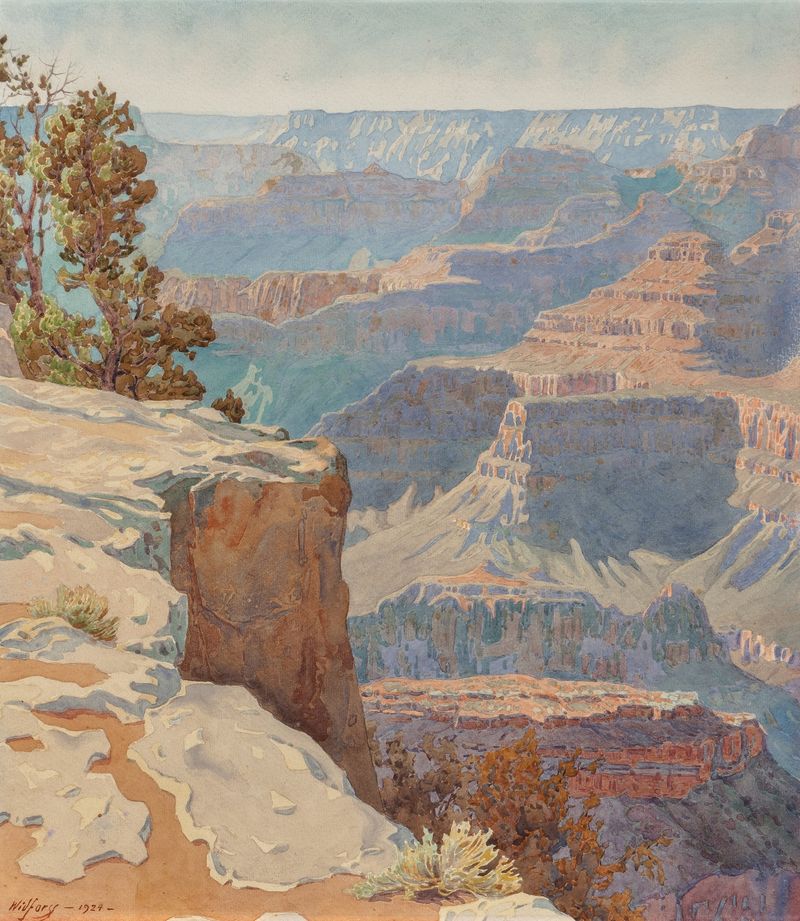
In the stillness of a landscape, motion stirs within the brushstrokes, inviting viewers to embrace the serenity and majesty captured on canvas. Look to the foreground, where the rugged earth meets vibrant vegetation that thrives against the canyon's vastness. The deep ochres and greens play against the expansive blues of the sky, creating a harmonious blend that draws the eye toward the horizon. Notice the delicate details of the foliage, painted with meticulous care, where every leaf seems to whisper the secrets of the natural world.
The light dances across the cliff faces, illuminating their jagged edges and emphasizing the grandeur of the scene. As your gaze wanders through the composition, deeper meanings emerge. The grandeur of the canyon reflects the contrast between the fleeting nature of life and the eternal beauty of nature. Each stroke evokes a sense of movement; the clouds drift and shadows shift, suggesting the relentless passage of time.
The stark cliffs, both formidable and beautiful, remind us of our own struggles against life's harsh realities, while also inviting us to find solace in the natural world. Gunnar Mauritz Widforss created this masterpiece during a time when the American West was being rigorously explored and documented in art. As a Swedish artist who emigrated to the United States, he sought to capture the grandeur of the American landscape in the early 20th century, a period marked by a burgeoning appreciation for natural beauty and the beginnings of the conservation movement. His works reflect this era's desire to connect with and preserve the sublime wonders of nature.