The Patriarchs, Zion National Park — History & Facts
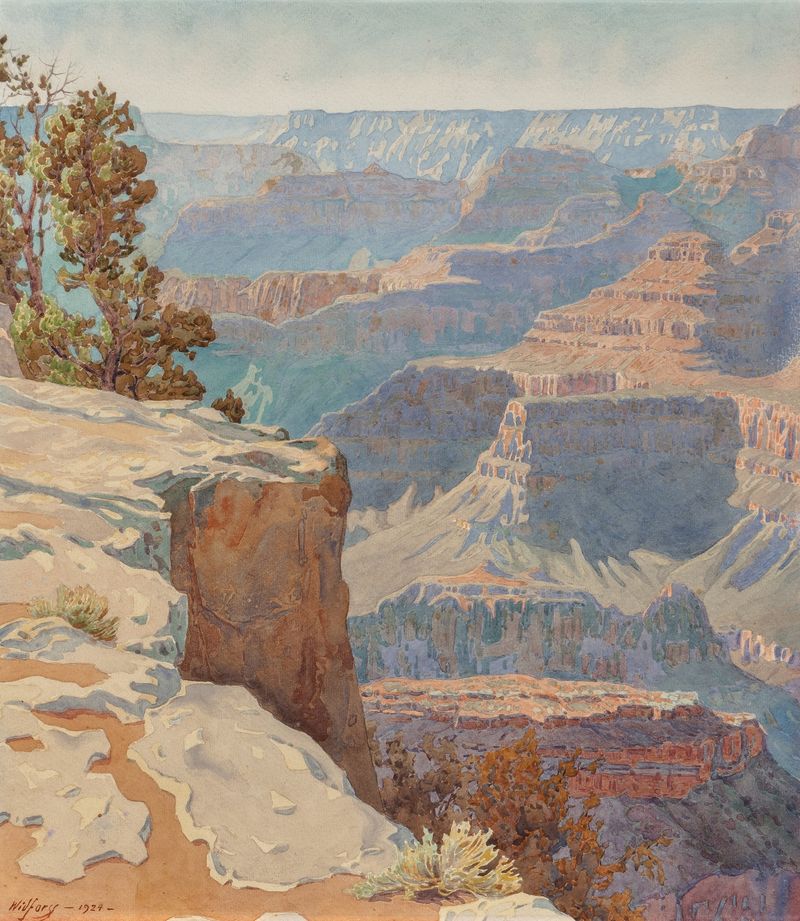
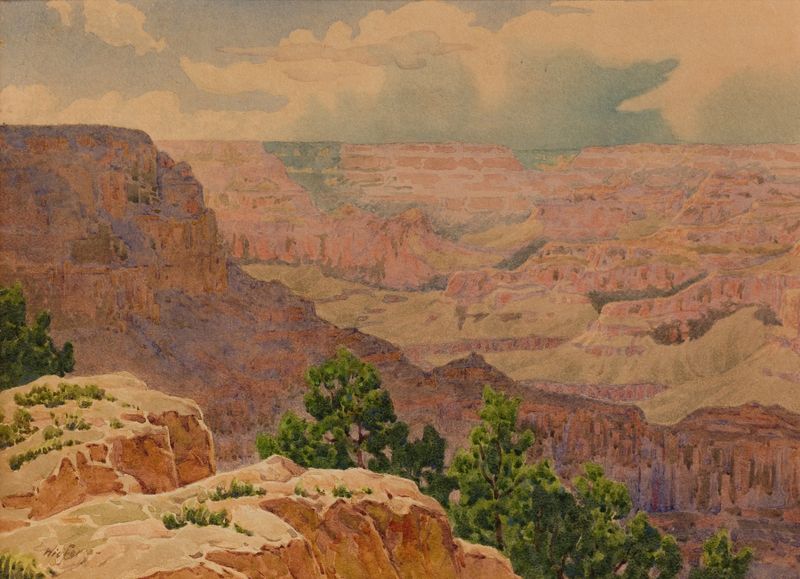
Can paint confess what words never could? In The Patriarchs, the silent grandeur of Zion National Park transcends the limits of language, inviting the viewer to commune with nature's ancient spirits. Look toward the sweeping cliffs, where deep russet and ochre hues coalesce in stunning geological formations. Notice how the sunlight bathes the rocky faces, casting an ethereal glow that seems to breathe life into the stillness. The subtle brushstrokes reveal the textures of the stone, while the sky's serene blue provides a stark contrast, pulling your gaze upward into the vastness above.
The composition leads your eye through the landscape, creating an almost meditative journey into the heart of the scene. Upon closer inspection, the artwork embodies a profound reverence for nature's timelessness, evoking feelings of both isolation and connection. The towering cliffs, resembling stoic guardians, assert their dominance while simultaneously offering solace to those who seek reflection. The interplay of light and shadow accentuates the passage of time, challenging the viewer to consider their own place within this majestic tableau.
Here, the enormity of the landscape serves as a reminder of the transient nature of human existence against the backdrop of eternal rock formations. Created in 1924, this piece reflects Gunnar Mauritz Widforss's deep connection to the American West as he sought to capture its sublime beauty. At the time, his work resonated with a growing appreciation for national parks, coinciding with the era's broader environmental movements. Widforss, an artist of Swedish descent who had settled in the United States, aimed to express the emotional impact of nature through his art, marking a significant moment in the evolution of landscape painting.