
A view of Venice — History & Facts
Who listens when art speaks of silence? In a city of whispers, where water ripples softly against the stone, the tension between beauty and violence lingers like an unspoken threat. Look to the left at the delicate brushstrokes that outline the Venetian architecture, each stroke capturing the intricate details of balconies and arches. Notice how the warm hues of ochre and terracotta bathe the scene in a golden light, evoking a sense of nostalgia. As your gaze travels towards the waterway, the depth of blue reflects both serenity and a tumultuous undercurrent, hinting at the darker histories that lurk beneath the surface. As you immerse yourself in the painting, consider the interplay of light and shadow.
The illuminated façades of buildings stand stark against the encroaching darkness, suggesting a fragile peace in a city that has seen turmoil. Subtleties abound—the rippling water that carries memories of both joy and violence, the absence of figures conveying a haunting solitude, and the way the horizon looms, a reminder that beauty can often mask unsettling truths. Henri Duvieux painted this work during a time when Venice was grappling with its own identity amid the changing tides of the 19th century. The city, once a thriving center of trade and culture, faced the encroachment of industrialization and modernity.
In this context, the artist sought to capture not only the scenic allure of Venice but also its underlying tensions, reflecting both the tranquility and the violence entwined in its rich history.
More Artworks by Henri Duvieux
Browse all →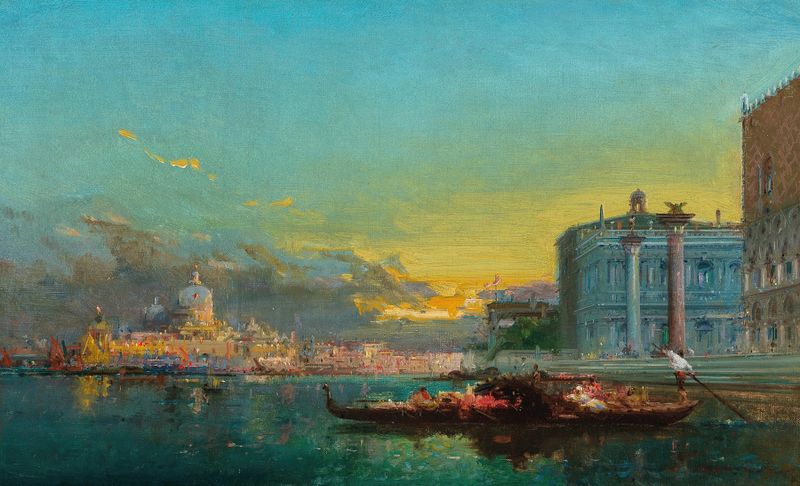
Venice, Scene at Dusk before Santa Maria della Salute
Henri Duvieux
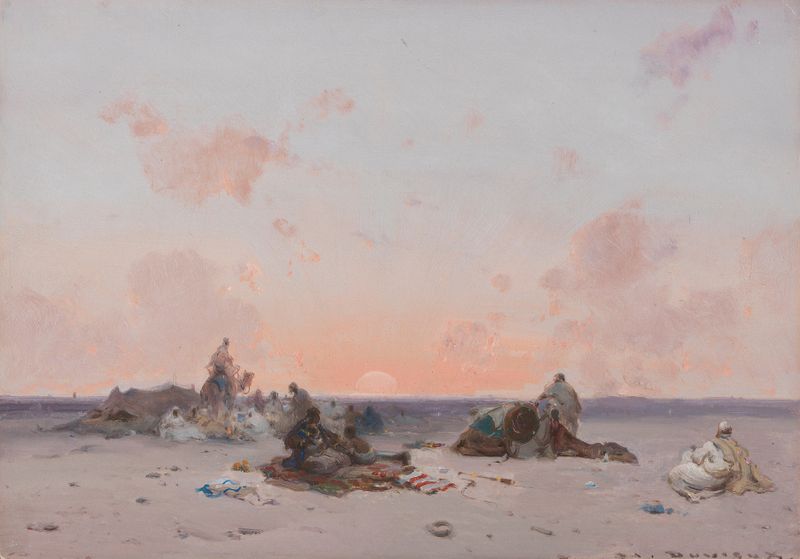
Sunset in the desert over a Bedouin camp
Henri Duvieux
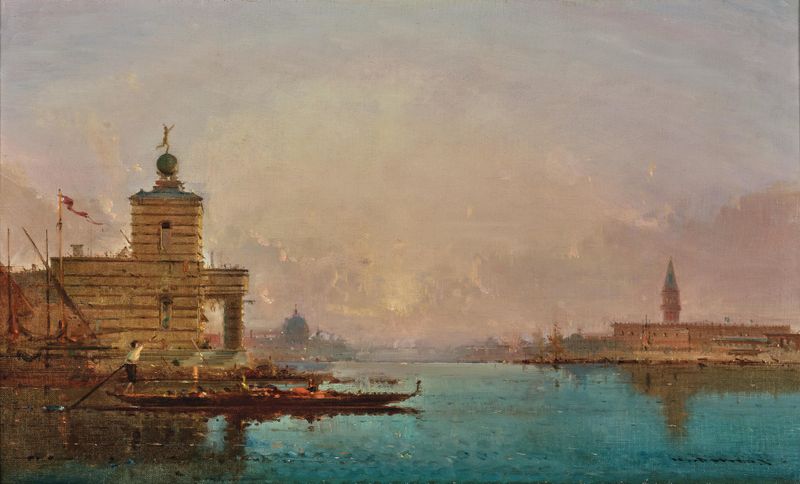
Venice, a View of the Grand Canal
Henri Duvieux
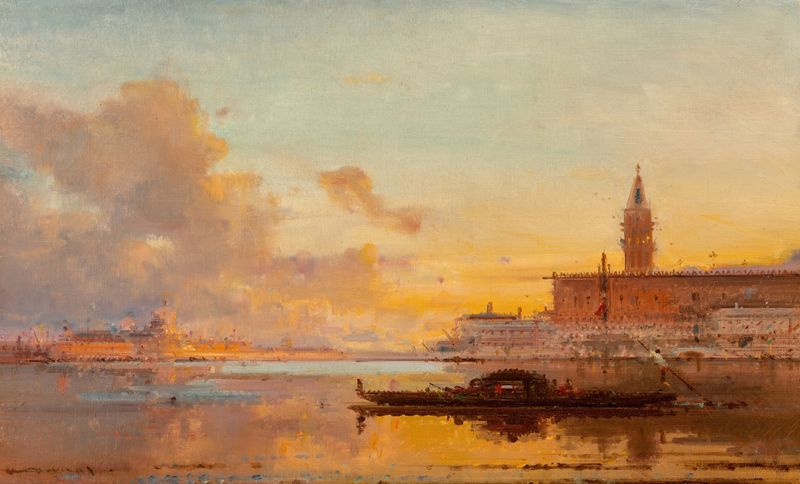
A view of the Doge’s Palace at sunset
Henri Duvieux
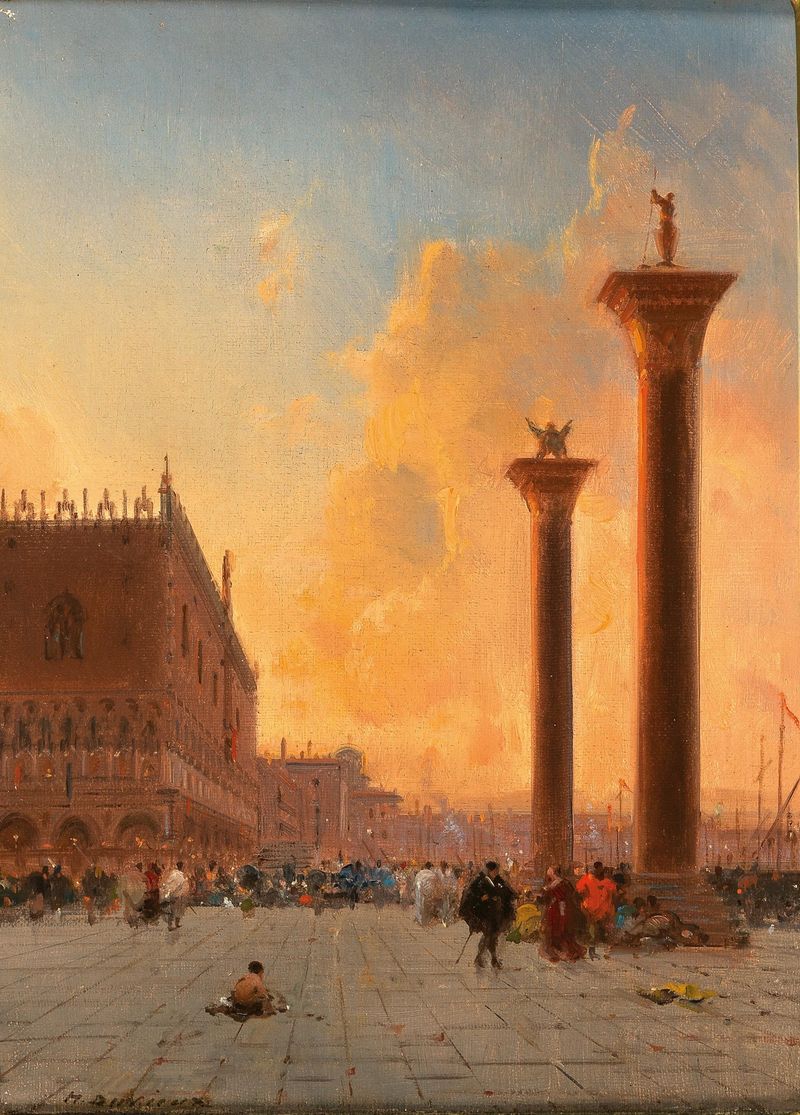
Venice, St Mark’s Square
Henri Duvieux
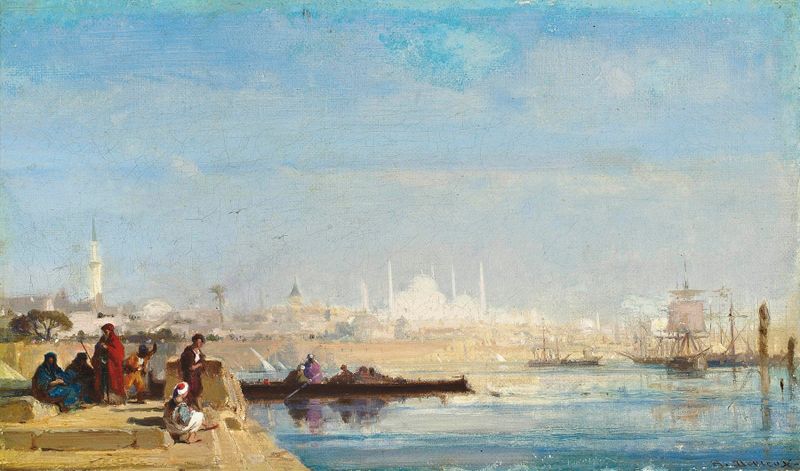
Turks waiting at a quay on the Bosphourus, Istanbul
Henri Duvieux
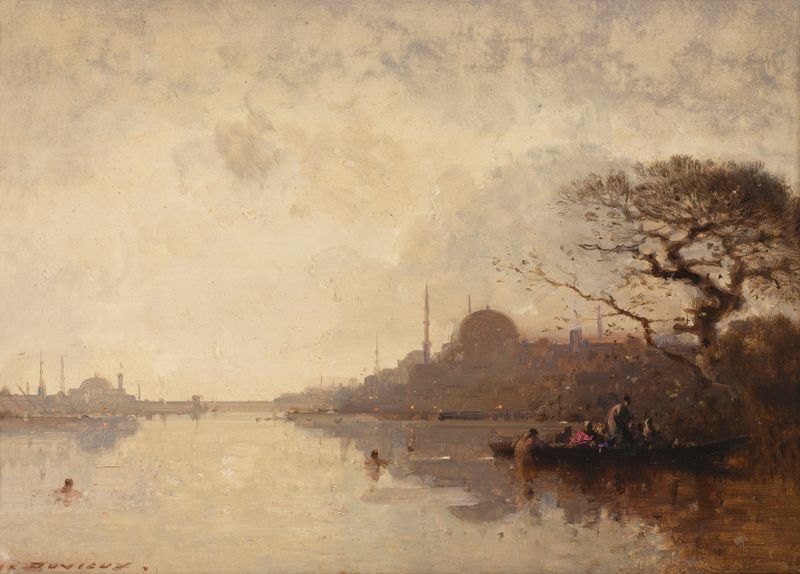
A view of the Bosphorus with Hagia Sophia, Constantinople
Henri Duvieux
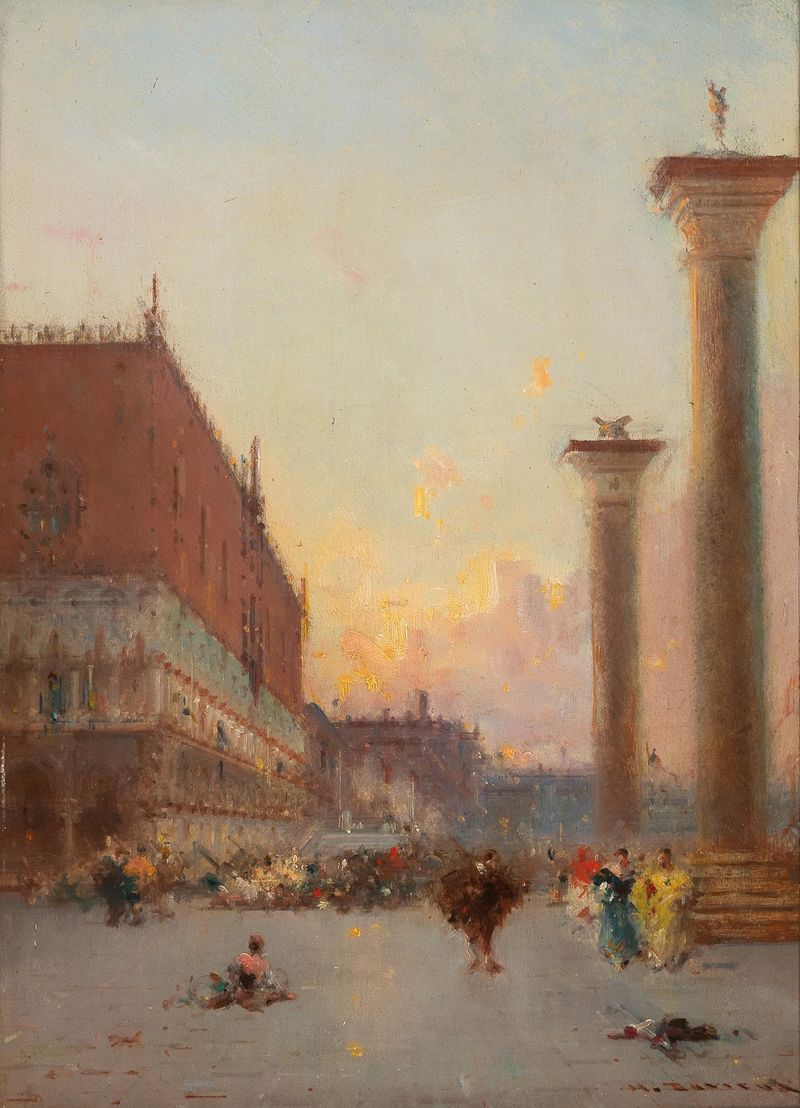
Venice, a View of the Palazzo Ducale and St Mark’s Column
Henri Duvieux
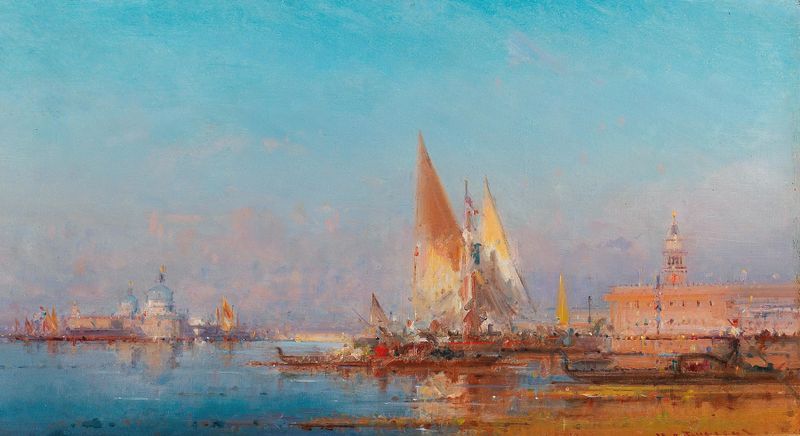
Venice, a view of Santa Maria della Salute at sunset,
Henri Duvieux
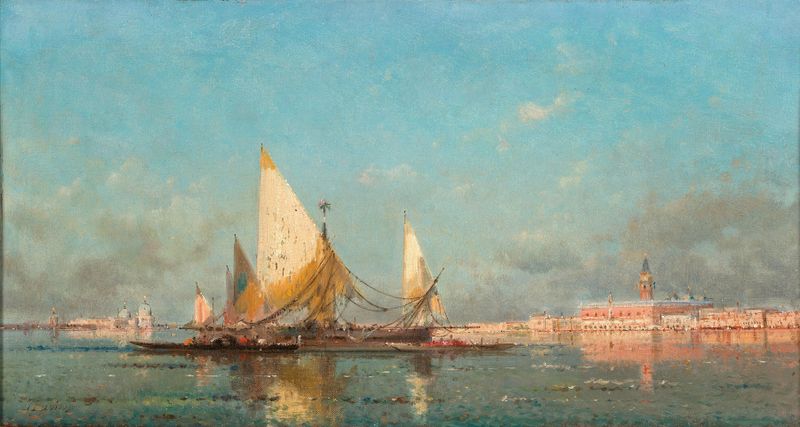
Venice, Sailors in the Bacino
Henri Duvieux
More Architecture Art
Browse all →
The statue of Liberty
Frédéric Auguste Bartholdi

View of Houses in Delft, Known as ‘The Little Street’
Johannes Vermeer

View of Houses in Delft, Known as ‘The Little Street’
Johannes Vermeer

The Cathedral in Rouen. The portal, Grey Weather
Claude Monet

The yellow house
Vincent van Gogh

The Church in Auvers-sur-Oise, View from the Chevet
Vincent van Gogh