
A View on the Campo Vaccino in Rome — History & Facts
Can beauty exist without sorrow? In the delicate interplay of light and shadow, the heart of A View on the Campo Vaccino in Rome unravels a narrative steeped in destiny. Look to the right at the ancient ruins that rise majestically against a cerulean sky, framed by the soft golden hues of a Roman sunset. The artist’s meticulous attention to detail invites your gaze to the weathered stones, each crack and crevice telling tales of time's relentless passage. Notice how the light falls upon the figures—travelers and laborers alike—who move through this timeless landscape, their gestures a blend of reverence and routine that underscores the coexistence of the past with the present. As you delve deeper into the composition, consider the emotional tensions woven within this serene tableau.
The juxtaposition of lively human activity against the stillness of the crumbling architecture evokes a poignant reflection on the transience of life. The distant hills, shrouded in mist, whisper of journeys yet to come, while the remnants of history remind us of the fragility of human endeavors. Each element seems to capture the essence of a moment where beauty and melancholy entwine, suggesting that destiny is both a canvas and a crossroads. Willem van Nieulandt the younger painted this work in 1611, amidst a flourishing period of Dutch art influenced by the Italian Renaissance.
Residing in Rome during this time, he absorbed the city’s cultural richness while his contemporaries sought to capture the spirit of their own landscapes. This painting reflects not just a moment in time but also the artist's exploration of human existence within the grandeur of history—a testament to the enduring relationship between art and life.
More Artworks by Willem van Nieulandt the younger
Browse all →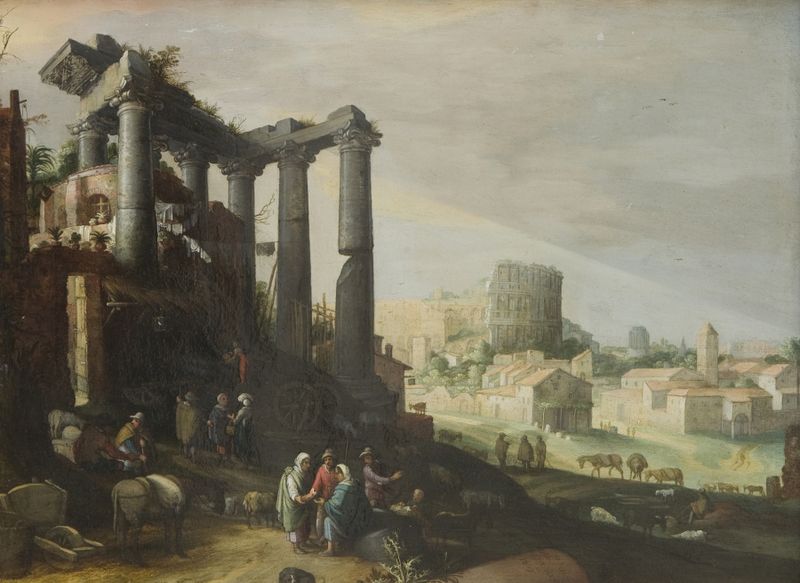
Landscape with a View of Campo Vaccino in Rome
Willem van Nieulandt the younger
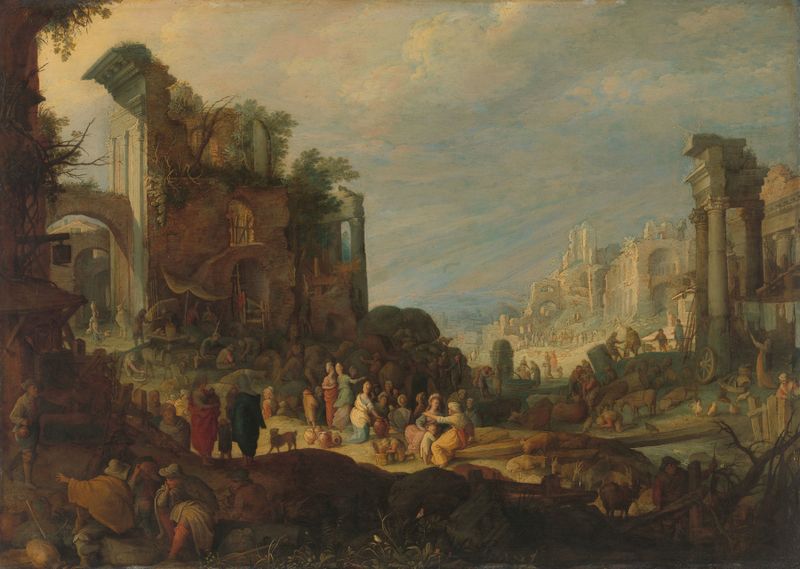
Travellers among Roman Ruins with Rebecca and Eliezer at the Well
Willem van Nieulandt the younger
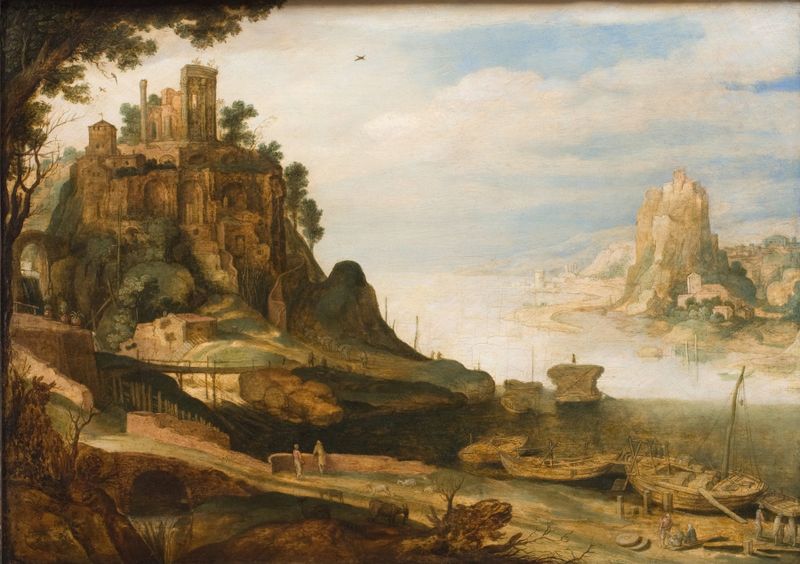
Coast Landscape with the so-called Temple of Sibyl at Tivoli
Willem van Nieulandt the younger
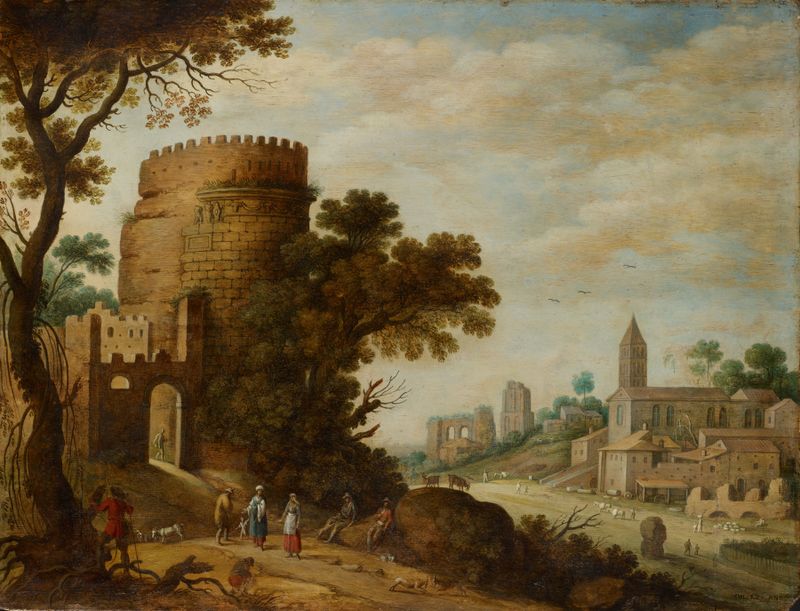
Roman Landscape with Shepherds
Willem van Nieulandt the younger





