
Roman Landscape with Shepherds — History & Facts
Could beauty survive in a century of chaos? The question lingers in the air, inviting contemplation as one gazes upon this idyllic landscape. Look to the left where the rolling hills cradle a tranquil scene, bathed in soft, golden light. The shepherds, draped in earthy tones, animate the canvas with subtle gestures, their activity harmonizing with the surrounding nature. Notice how the gentle curves of the landscape draw your eye towards the horizon, evoking a sense of movement that echoes the rhythm of pastoral life.
The clouds, brushed with delicate strokes of white, seem to float, while the deep greens and browns ground the composition, offering a serene escape from the turmoil outside the frame. Beneath the serene surface, contrasts emerge—between the stillness of nature and the fleeting lives of the shepherds, between the idyllic setting and the chaos of the era. The figures appear both connected to and removed from their surroundings, hinting at a duality that reflects human existence. Each detail, from the grazing sheep to the distant mountains, serves not just as a backdrop but as a commentary on the enduring power of nature amid human strife. This work emerged during a time when its creator navigated the shifting tides of art and society in the 17th century.
Painted in the Netherlands, a region experiencing both prosperity and conflict, the artist sought to capture the essence of pastoral beauty, perhaps as a refuge from the complexities enveloping the world. In an age marked by transformation, this landscape stands as a testament to resilience, the delicate balance of harmony and turmoil encapsulated within its frame.
More Artworks by Willem van Nieulandt the younger
Browse all →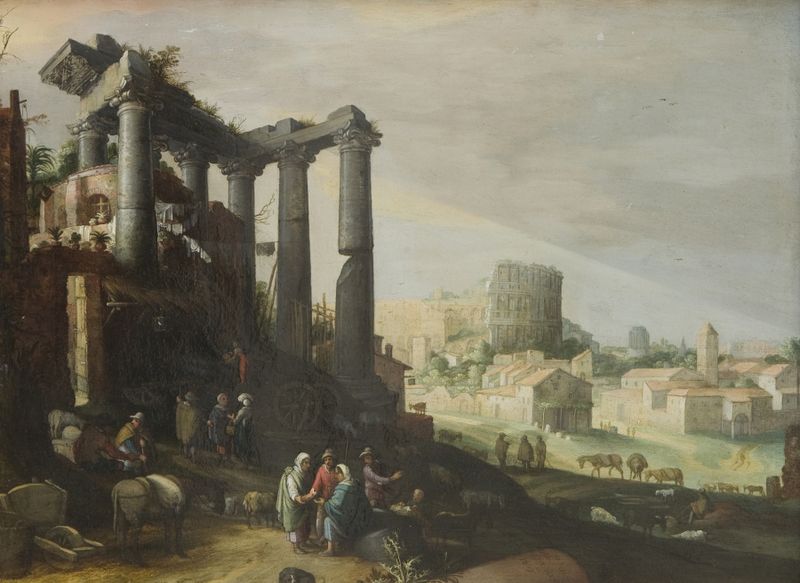
Landscape with a View of Campo Vaccino in Rome
Willem van Nieulandt the younger
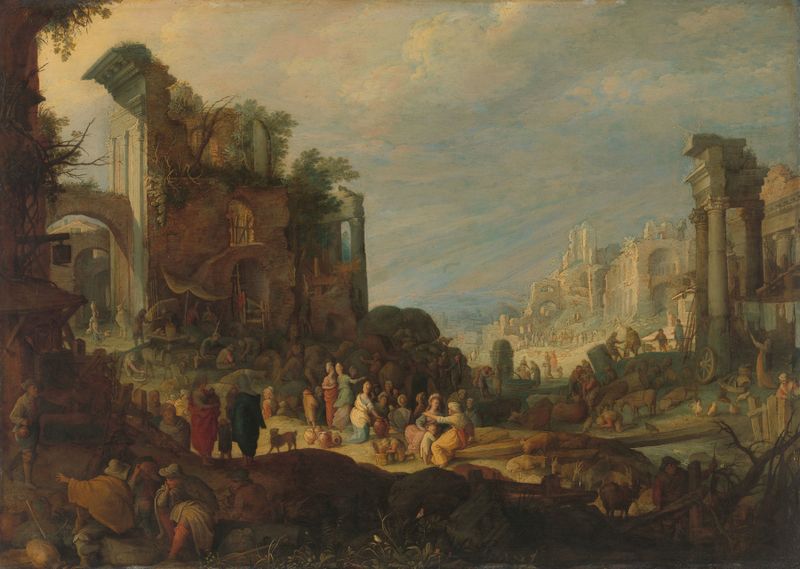
Travellers among Roman Ruins with Rebecca and Eliezer at the Well
Willem van Nieulandt the younger
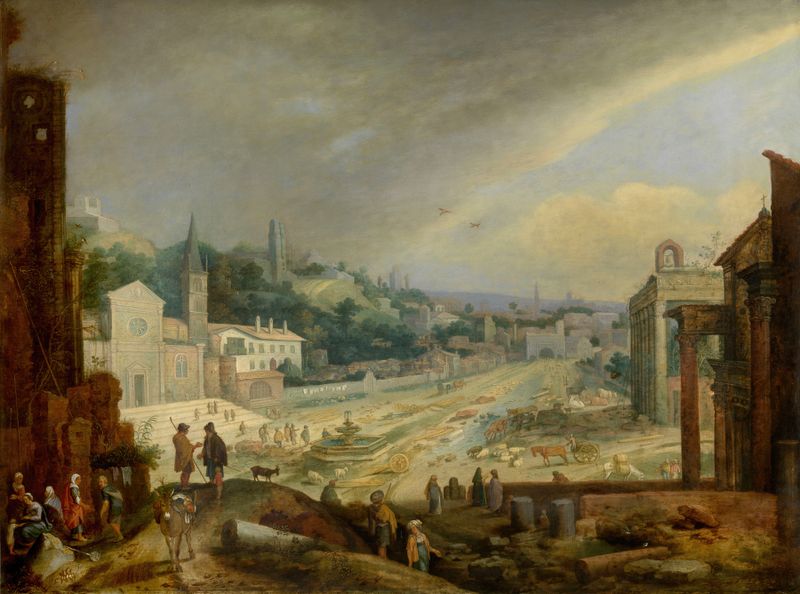
A View on the Campo Vaccino in Rome
Willem van Nieulandt the younger
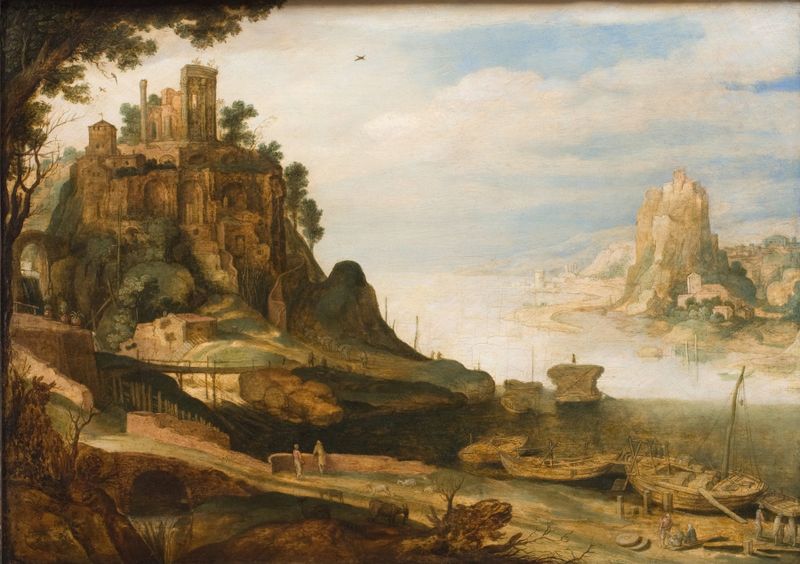
Coast Landscape with the so-called Temple of Sibyl at Tivoli
Willem van Nieulandt the younger





