A Water Fountain in the Tuileries — History & Facts
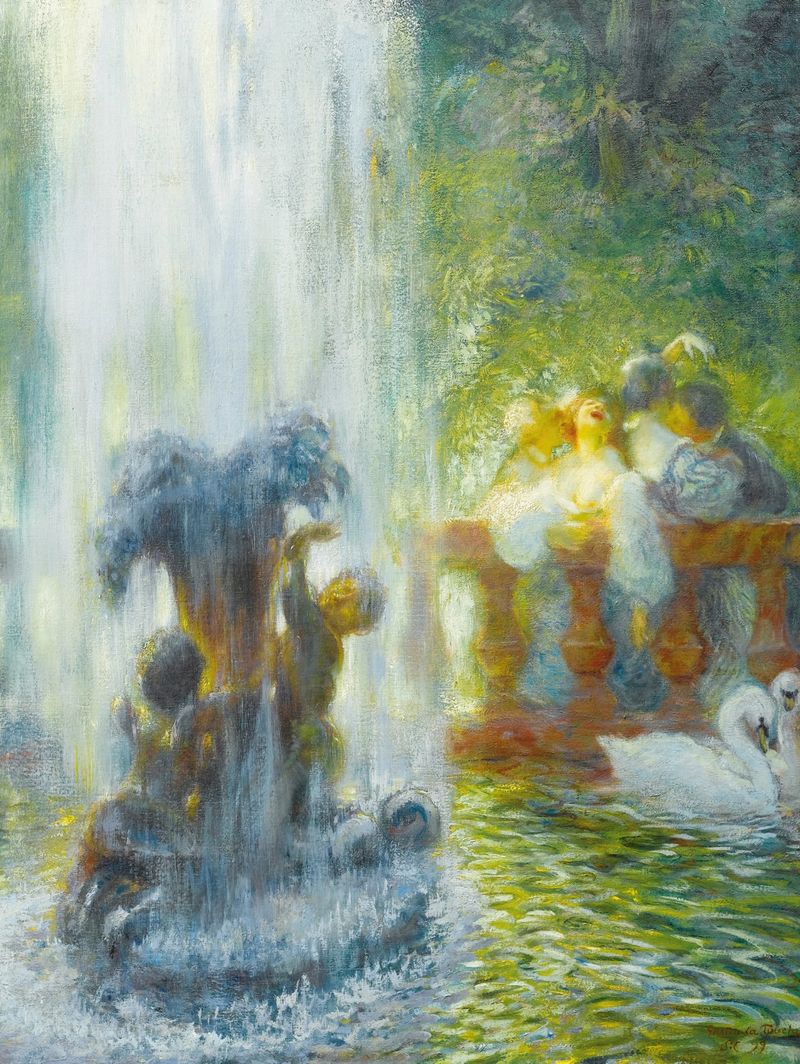
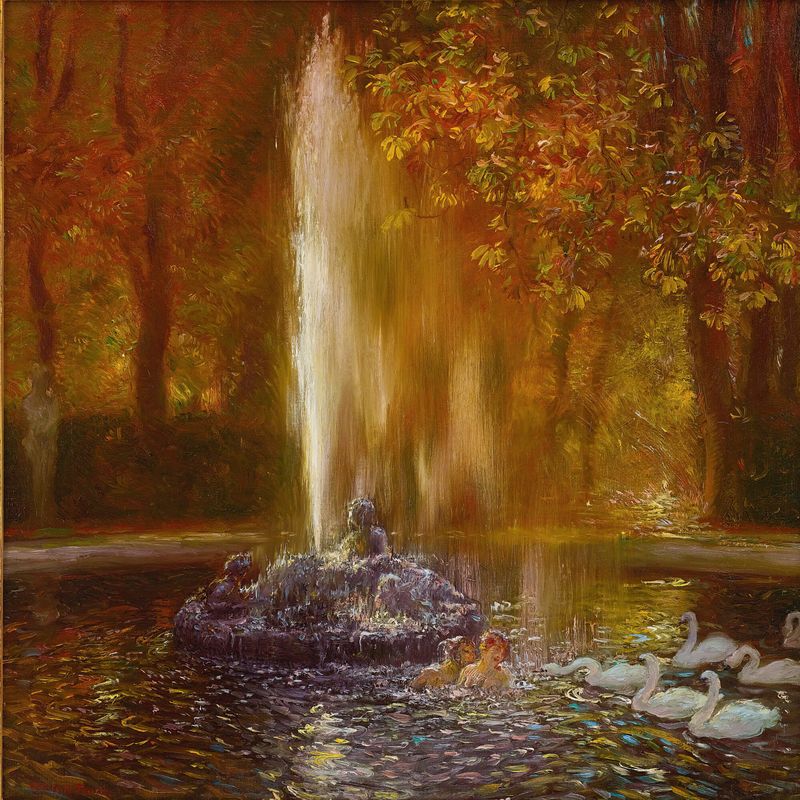
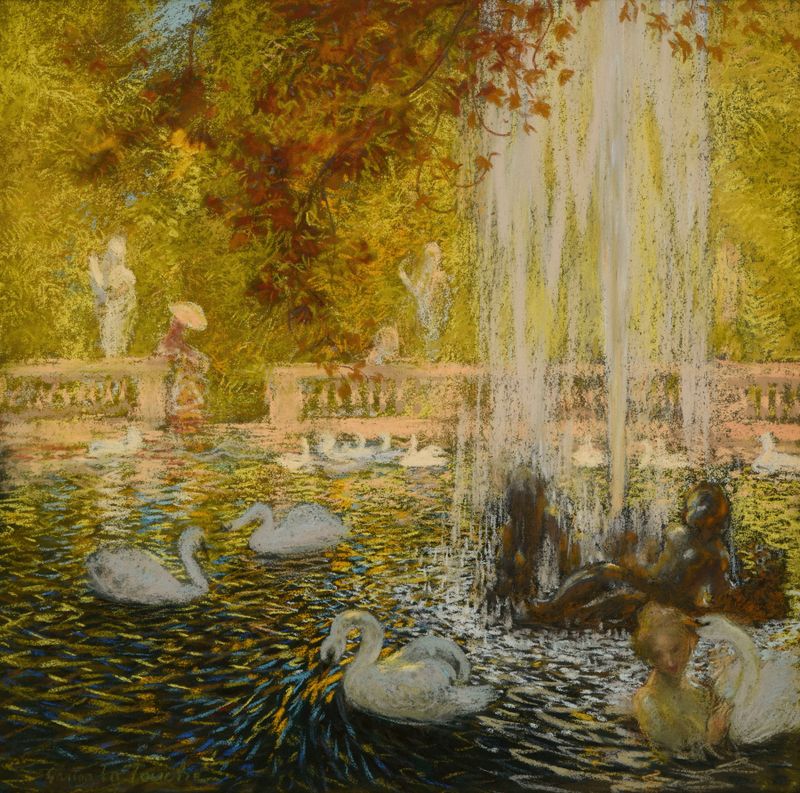
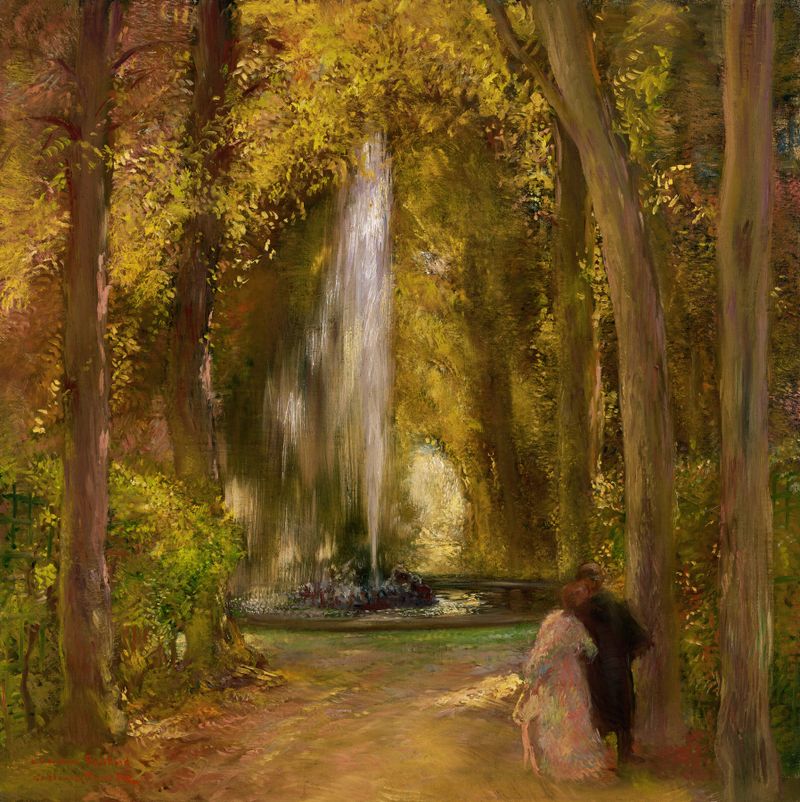
What secret hides in the quiet of the canvas? In the serene embrace of A Water Fountain in the Tuileries, tranquility intertwines with an undercurrent of unspoken grief, inviting reflection on loss and memory. Look to the left at the gentle flow of water cascading from the fountain, its glistening surface capturing the glint of light filtering through the canopy of trees. The palette, dominated by soft greens and the muted earthiness of the path, evokes a peaceful yet melancholic atmosphere. The figures in the foreground, seemingly absorbed in their own worlds, soften the hard edges of life with their leisurely postures, yet a sense of distance lingers among them, a poignant reminder of what lies beyond the visible. In this tranquil scene, contrasts subtly emerge.
The lively colors of the lush foliage stand in stark relief to the subdued, contemplative expressions of the park’s visitors, hinting at a shared sorrow that connects them invisibly. The fountain itself, a symbol of renewal, juxtaposes the stillness of grief, suggesting that even in moments of beauty, echoes of loss persist. The gentle ripples of water become a metaphor for memories that refuse to settle, forever shifting and evolving. Created during a period of artistic flourishing between 1890 and 1913, this work reflects Gaston La Touche's engagement with the quieter, introspective side of Impressionism.
Living in Paris, he found inspiration in its gardens while navigating personal challenges and societal changes. This canvas encapsulates that delicate balance of beauty and melancholy, resonating with a timeless sentiment that speaks to the human experience.