Pardon in Brittany — History & Facts
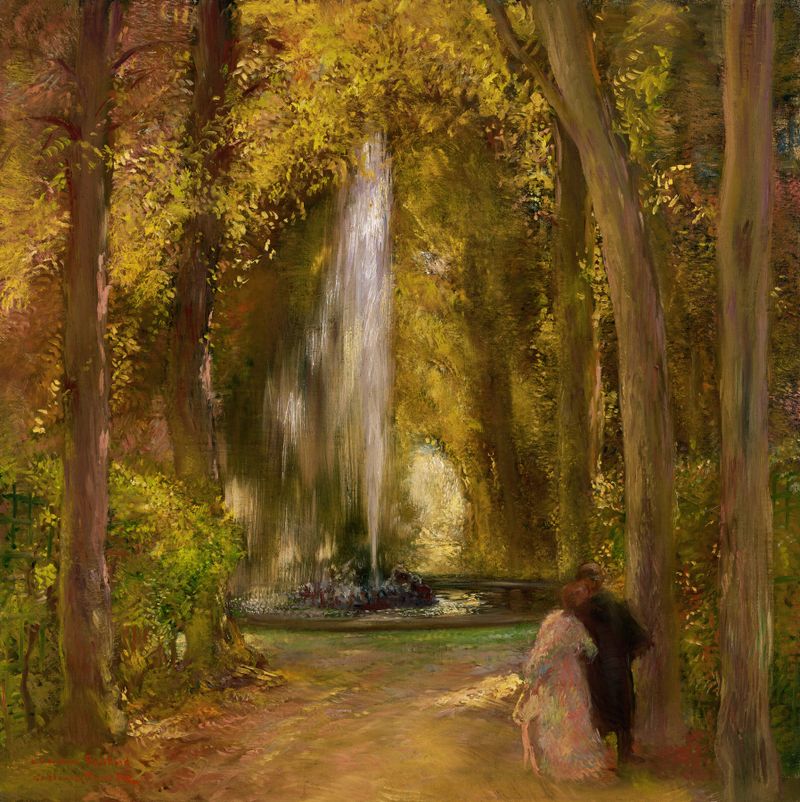
Is this a mirror — or a memory? The stillness of the landscape envelops the viewer, inviting contemplation, almost whispering secrets of the past. Look to the left at the soft, muted colors that conjure a sense of tranquility. The gentle brushstrokes depict rolling hills draped in lush greens and soft browns, while the sky above is a delicate canvas of pale blues streaked with wisps of white clouds. The central figure, draped in traditional attire, stands poised, both part of the scene and distinct from it, her gaze fixed on something beyond our view.
Notice how the light dances across the surface of the water, reflecting not just the environment but the silent essence of the moment captured. The painting’s emotional tensions are layered beneath its serene exterior. The contrast between the vibrant life of the landscape and the solitary figure evokes a poignant sense of isolation, as if she exists in a world of memories and unspoken thoughts. Each brushstroke seems to hold a pause, inviting the audience to embrace the silence and the weight of her introspection.
It begs the question of what she sees in the reflective waters — a past unfulfilled or a dream yet to blossom? In 1896, Gaston La Touche was immersed in the Impressionist movement, creating art that blended reality with ethereal beauty. Living in Brittany, a region rich in tradition and cultural depth, he drew inspiration from the raw landscape and its people. This period marked a significant moment in his career, where he began to distance himself from strict realism, allowing for emotional resonance and a dreamlike quality to permeate his work.