A waterway — History & Facts
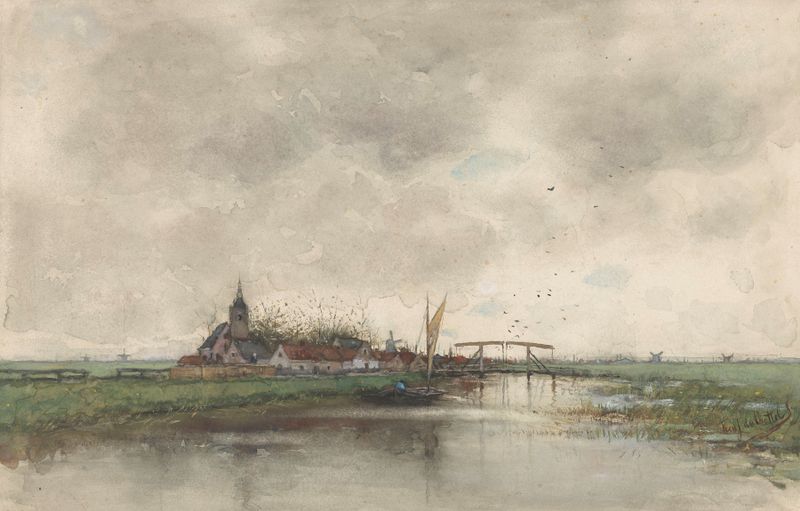
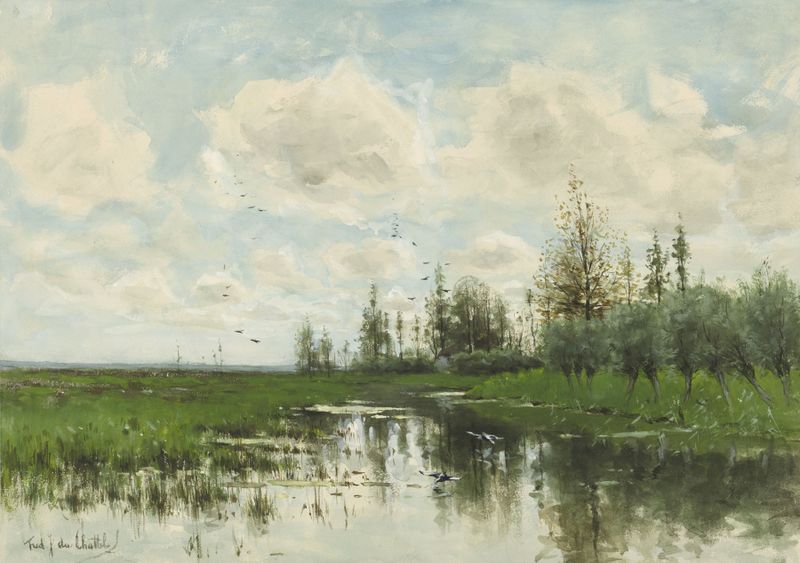
In this quiet moment, a profound yearning emerges, inviting us to explore the depths of desire that shape our lives and souls. Gaze upon the tranquil expanse of the waterway, where gentle strokes of blue and green draw your eye across the canvas. Notice how the artist expertly captures the shimmering surface, a delicate interplay of light and shadow that suggests a fleeting breeze. The soft hues blend seamlessly, evoking a sense of calmness while simultaneously hinting at the undercurrents of longing that flow through the scene. This artwork is rich with emotional tension; the stillness of the water juxtaposes the vibrant life surrounding it.
On the far bank, silhouettes of trees stand guard, their muted forms whispering secrets of the past, while a dappled light filters through, suggesting moments lost to time. The waterway itself symbolizes not just a passage, but a bridge between desires unfulfilled and dreams yet to be realized, creating an intimate dialogue between nature and the human experience. Fredericus Jacobus van Rossum du Chattel created this piece during an era marked by a growing fascination with landscape and emotional depth in art, though the exact date remains uncertain. Living in a time when Romanticism was gaining momentum, the artist sought to convey personal feelings through nature, reflecting a world increasingly attuned to the subtleties of human emotion and experience.