Poel met bomen en weiland — History & Facts
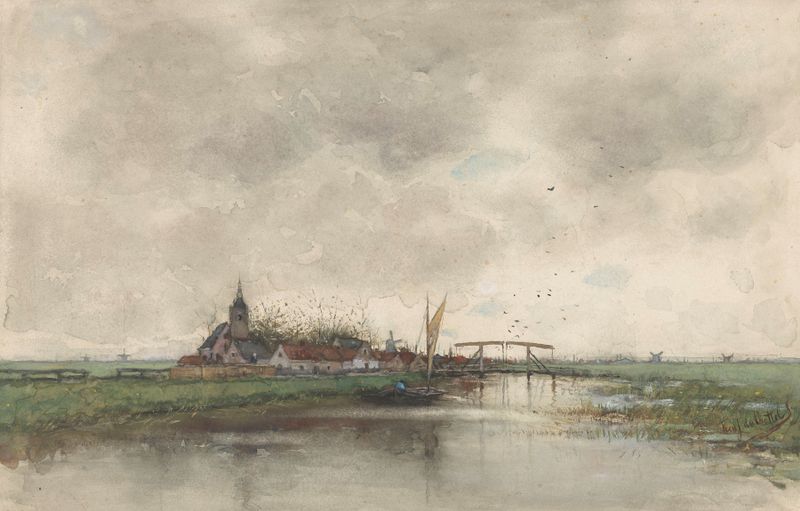
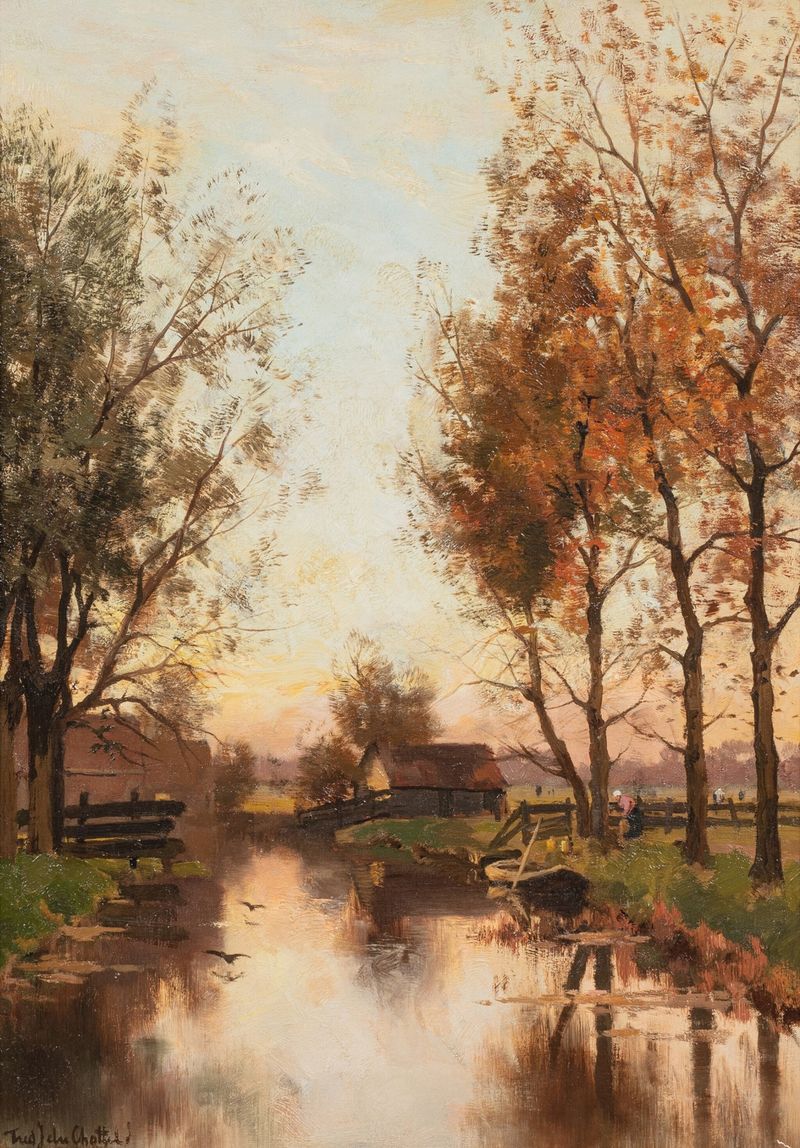
Is this a mirror — or a memory? The canvas invites us to reflect not only on its surface but on the depths of our own consciousness, evoking a sense of loss that lingers like an echo in the quiet landscape. Look toward the center of the painting, where a tranquil pool reflects the sky, framed by towering trees. The brushwork is delicate yet purposeful, capturing the soft ripples across the water's surface. Notice how the colors shift from vibrant greens to muted earth tones, creating a harmony that speaks to the passage of time and the inevitability of change.
The composition draws your gaze inward, suggesting a journey into the heart of the scene, where nature holds both beauty and melancholy. At first glance, the serene landscape may appear idyllic; however, a deeper exploration reveals the tension between the lushness of the greenery and the stillness of the water. The disparate elements of life and stillness conjure questions about what remains and what is lost. Each brushstroke seems to grasp at a fleeting moment, whispering secrets of nostalgia and absence, crafting a poignant dialogue between presence and void. Fredericus Jacobus van Rossum du Chattel painted Poel met bomen en weiland between 1866 and 1917, during a period marked by shifting artistic movements.
Living in the Netherlands, he was influenced by both Impressionism and the Dutch landscape tradition. As societal changes swept through Europe, his works emerged as a quiet commentary on the transience of life and the lingering beauty of memory, firmly rooted in the natural world around him.