
A Weir — History & Facts
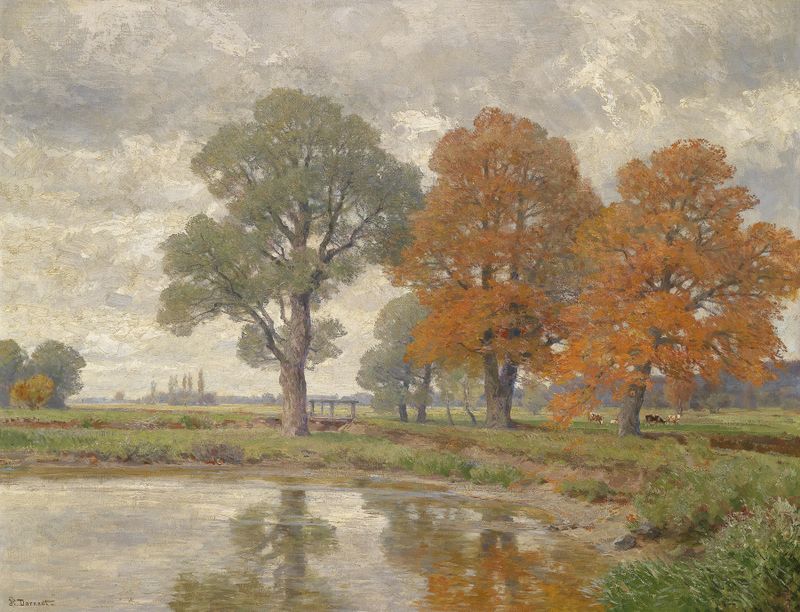
In the stillness of A Weir, a deep undercurrent of madness swells beneath the surface, revealing the fragility of the human psyche. The observer is beckoned to reflect on the complexities of sanity and insanity, where the mind can either create or unravel itself in quiet desperation. Look to the center, where the water flows gently over the weir's edge, its rhythmic movement both soothing and unsettling. The subtle play of light gives the scene a luminescent quality, casting shadows that dance across the stones and water.
This juxtaposition of light and shadow captures the essence of duality, inviting viewers to immerse themselves in the delicate balance between peace and chaos. Notice how the colors blend seamlessly, with muted earth tones contrasting against the vibrant blues and greens of the water. The turbulent whispers of the current suggest a hidden turmoil beneath the calm exterior. Small details, like the crumbling edges of the weir, speak of decay and impermanence, reflecting the fragility of mental stability.
Each element in the composition reveals layers of meaning, creating a tapestry of emotional tension that resonates deeply within the soul. Hugo Darnaut painted A Weir during a time when the art world was grappling with evolving concepts of emotion and perception. Working in the early 20th century, he explored psychological depth and the complexities of the human experience, often reflecting the tumult of his own time. Amidst a backdrop of modernist exploration, this piece emerges as a poignant commentary on the delicate boundary between clarity and madness.
More Artworks by Hugo Darnaut
Browse all →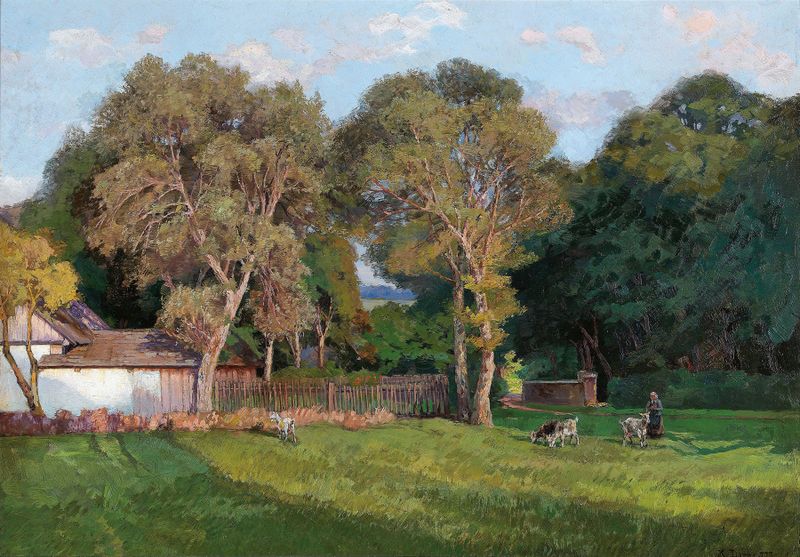
Aus dem Wienerwald
Hugo Darnaut
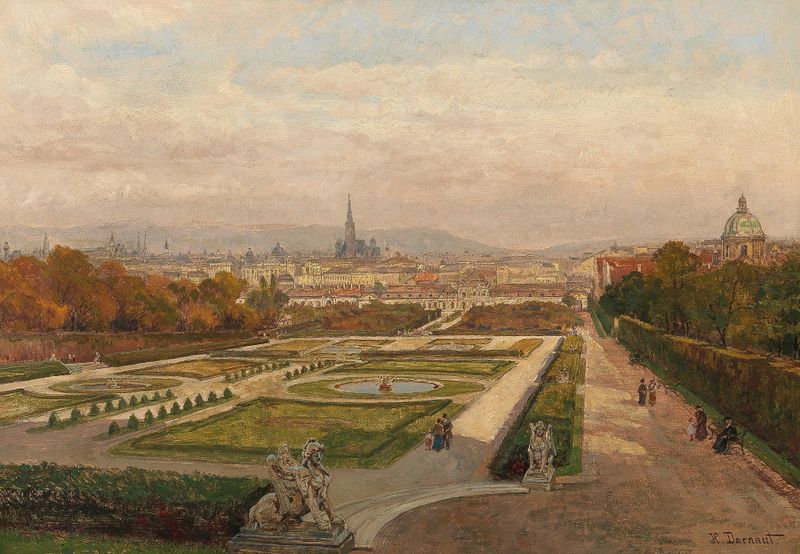
Blick vom Belvedere auf Wien
Hugo Darnaut

Motiv aus Plankenberg
Hugo Darnaut

In einem Wiener Garten (II., Praterstraße 60)
Hugo Darnaut

A Scene at Dusk in Late Autumn
Hugo Darnaut
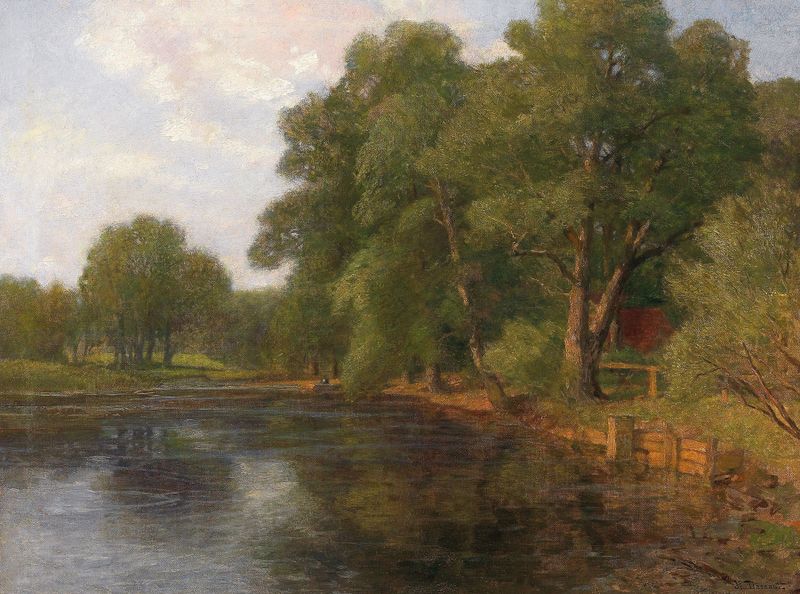
Motiv bei Plankenberg
Hugo Darnaut

Die Ruine Starhemberg im Piestingtal
Hugo Darnaut
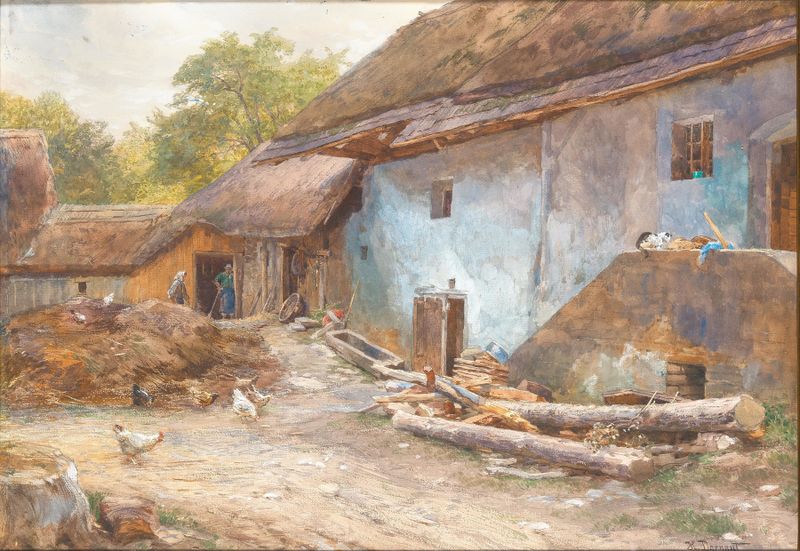
Niederösterreichischer Bauernhof
Hugo Darnaut

River Landscape with Small Herd of Cows and a Village in the background
Hugo Darnaut
Spätherbsttag
Hugo Darnaut





