A Wild Mountain Landscape — History & Facts
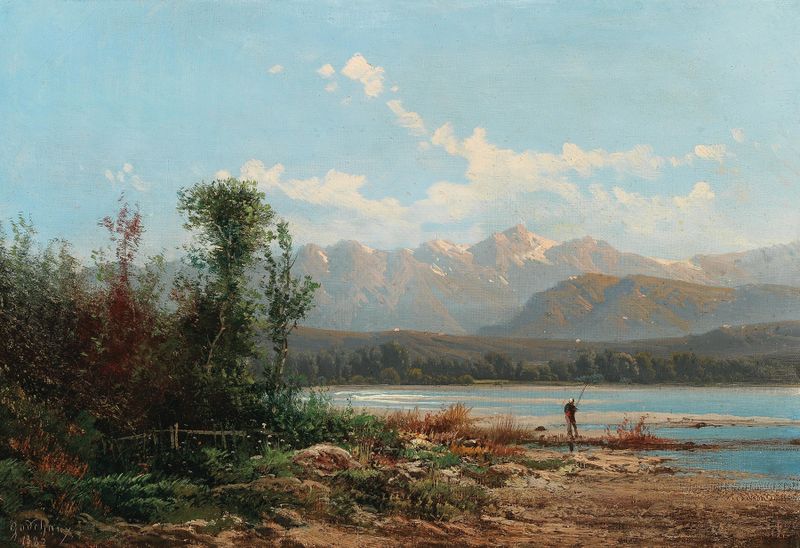
Can beauty exist without sorrow? In A Wild Mountain Landscape, the answer lingers like the mist upon the peaks, evoking a sense of longing that transcends simple admiration. The artwork invites contemplation, urging the viewer to explore the delicate interplay of nature's splendor and the unspoken melancholy that often accompanies it. Look to the horizon, where jagged mountains rise dramatically against a vivid sky, a blend of deep cobalt and soft cerulean. Notice how the artist captures the textures of the rocky terrain, each brushstroke conveying the raw power of nature.
The foreground features a lush expanse of verdant greens, a stark contrast to the rugged cliffs, grounding the composition in vivid color and life. The light dances across the landscape, accentuating the crevices and shadows, drawing the eye towards the peak that looms like a sentinel over the scene. Yet, it is the small details—the whisper of the wind through the trees, the way the sunlight touches the surface of a hidden stream—that impart a deeper emotional resonance. The juxtaposition of the serene valley against the imposing mountains reflects an internal struggle, a yearning for connection with both the beauty and the harshness of existence.
This tension resonates, reminding us that every breathtaking moment is often tinged with an ache, a reminder of what lies beyond our reach. The artist created this piece during an era marked by the rise of Romanticism, where nature was revered for its emotional depth and sublime qualities. Though the exact date remains unknown, Godchaux was active in the late 19th century, a time when artists increasingly sought to express personal experiences and feelings through their landscapes. This painting embodies that spirit, capturing a world both awe-inspiring and deeply reflective of the human condition.