Mountain Passage — History & Facts
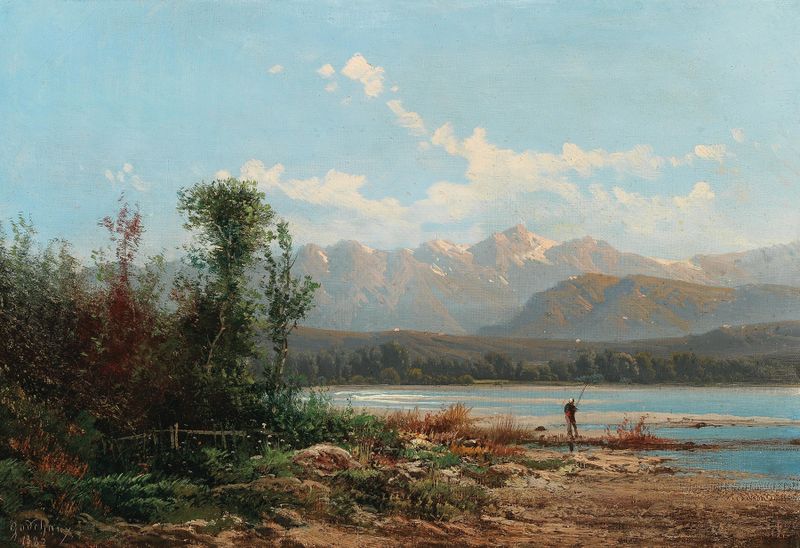
Did the painter know this moment would outlive them? The echo of desire resonates through the brushstrokes of this evocative work, inviting us to ponder the longing that fuels creation. Focus on the horizon, where the mountains rise majestically against a cerulean sky. Notice how the warm hues of ochre and gold intermingle with the cool blues, creating a dynamic tension that draws the viewer's eye upward. The rugged peaks, cloaked in soft wisps of cloud, stand both formidable and inviting, as if they beckon explorers to uncover their secrets.
The gentle play of light across the landscape adds a sense of immediacy, accentuating the contours and textures of the terrain. Beneath the surface, the painting speaks of a deeper struggle. The contrast between the serene beauty of the natural world and the isolation of the mountains mirrors the human experience of yearning for connection amidst solitude. Each brushstroke conveys a sense of urgency—a desire not just to witness the landscape, but to be part of it, to find solace in its vastness.
This existential longing pervades the scene, inviting viewers to reflect on their own quests for meaning and belonging. Alfred Godchaux created this piece during a period marked by significant artistic exploration and personal introspection. While the exact date remains undefined, it is likely that he painted during the late 19th century, a time characterized by the rise of the Impressionist movement. Godchaux was known for his landscapes, and during this phase of his life, he sought to capture the essence of nature and the emotions it evokes, positioning himself within a rapidly evolving artistic landscape.