
A windmill in Vlissingen — History & Facts
Could a single brushstroke hold eternity? In the quiet expanse of A Windmill in Vlissingen, the essence of awakening permeates every stroke, inviting contemplation and reverie. Look to the left at the windmill, its sails poised against a cobalt sky, swirling with hints of gold and ochre. The painter employs a delicate interplay of light and shadow, illuminating the structure while allowing its weathered texture to convey stories untold. The vibrant greens of the surrounding fields frame the scene, enhancing the windmill's significance as both a landmark and a symbol of resilience. Amidst the tranquil beauty, there lies a tension between nature and human endeavor.
The windmill stands steadfast, a monument to time and toil, while the life around it dances in a gentle breeze. The cool hues of dawn suggest not only a new day but also the promise of fresh beginnings, reflecting the artist's belief in the cyclical nature of existence. The crisp details and brushwork hint at the labor that shaped this landscape, creating a dialogue between humanity and the environment. Alfred Zoff painted this piece during a period of artistic exploration, likely in the late 19th or early 20th century, while living in the Netherlands.
This era was marked by a shift towards Impressionism, with artists increasingly focusing on light and atmosphere. Zoff, influenced by his surroundings, sought to capture the harmony between architecture and nature, positioning himself within a movement that celebrated the fleeting moments of daily life.
More Artworks by Alfred Zoff
Browse all →
Chioggia
Alfred Zoff

Riviera, Breaking Waves in Boccadasse
Alfred Zoff

Camaret. Küste bei Brest
Alfred Zoff
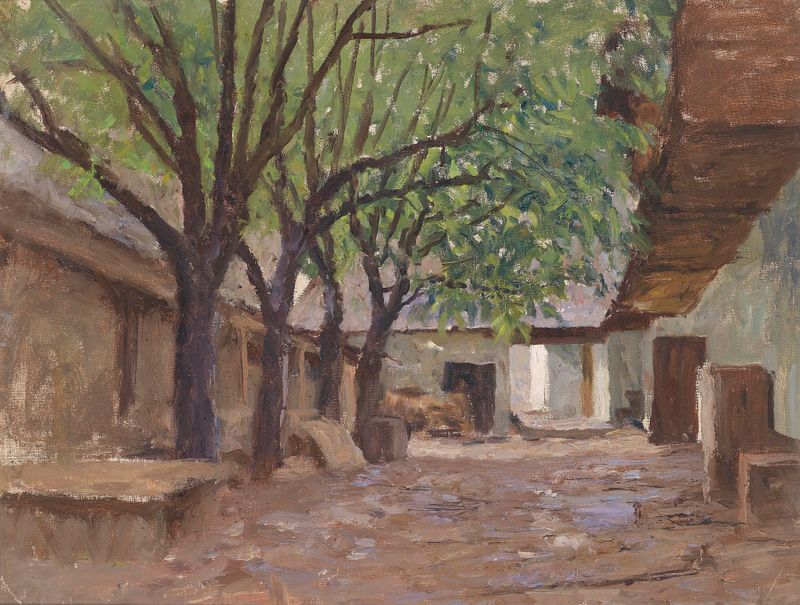
Bauernhäuser bei Klagenfurt
Alfred Zoff

Felsige Küstenpartie
Alfred Zoff

Ländliche Idylle
Alfred Zoff
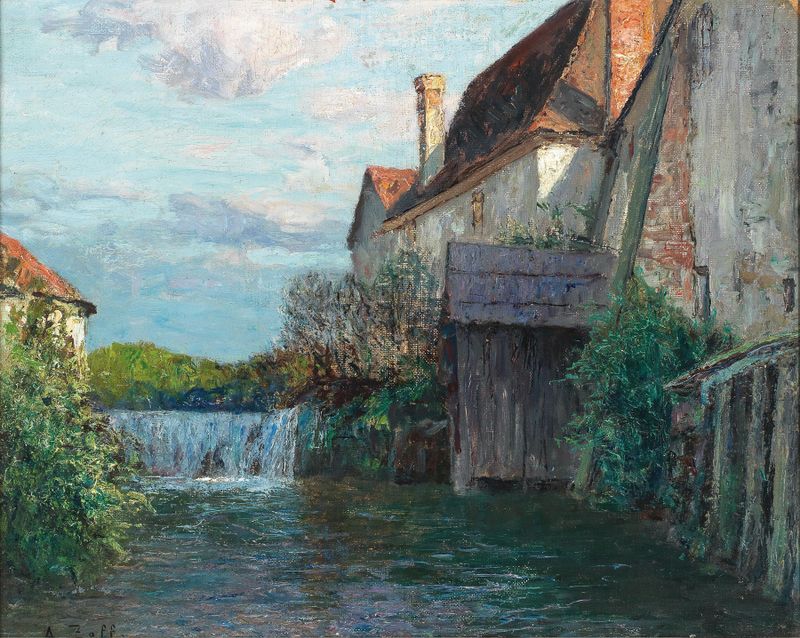
Motiv aus einem steirischen Eisenwerk
Alfred Zoff

Abendstimmung
Alfred Zoff
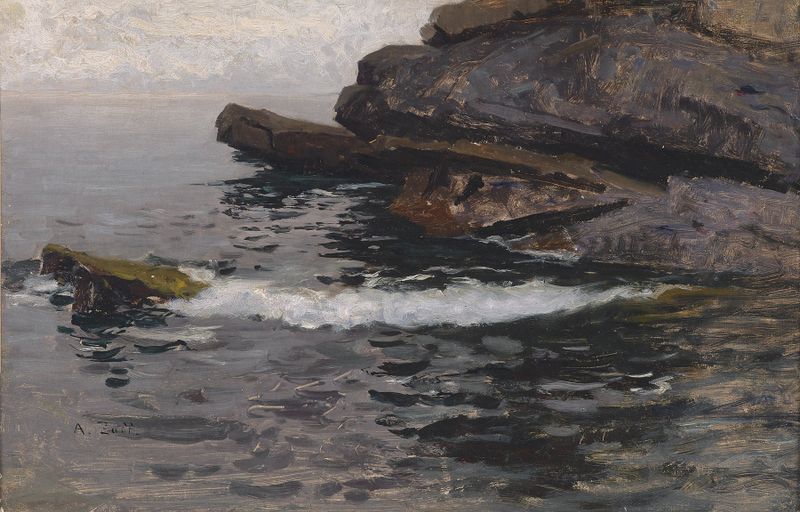
Felsküste bei Capo Lungo
Alfred Zoff

Fischerboote zur Zeit der Ebbe
Alfred Zoff





