A Winter Landscape with Ice Skaters and an Imaginary Castle — History & Facts
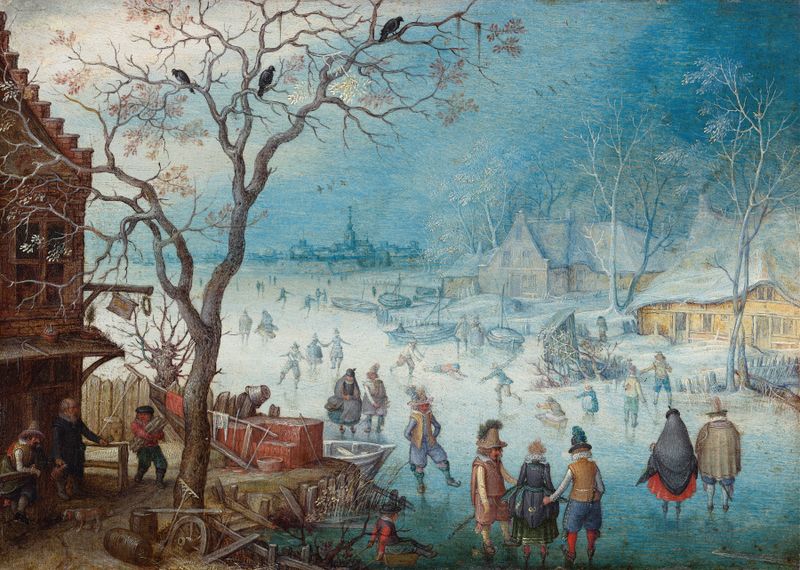
In the quiet of the winter landscape, the frozen expanse speaks volumes, revealing truths hidden beneath layers of ice and snow. Each figure glides and tumbles, etching their experiences into the canvas of stillness, while the imaginary castle looms, both a dream and a mirage amid the chill. Look to the foreground at the delicate skaters, their silhouettes gracefully captured against the stark whiteness. Notice the warmth of their clothing contrasted against the cool blues and silvers of the ice, a testament to the artist’s mastery of color.
The way the light glimmers off the frozen surface draws your eye and creates a sense of movement, as if the entire scene is alive with the joy and laughter of winter festivities, inviting you to step onto the ice. Amidst the serene beauty lies an emotional tension; the contrast between the vibrant activity of the skaters and the distant, solitary castle evokes feelings of longing and nostalgia. The castle, though imaginary, allows for interpretations of hope and dreams amidst the starkness of winter. Every brushstroke conveys the joy of togetherness among the skaters while revealing an underlying solitude that lingers in the air, reminding us of the duality of human experience. Created between 1615 and 1620, during a time of artistic exploration in the Netherlands, this work reflects Christoffel van den Berghe's engagement with both realism and fantasy.
The early 17th century saw the rise of winter scenes in art, celebrating the beauty of nature and the human spirit, which was a stark contrast to the political and religious turmoil of the era. This painting stands as a testament to the era's fascination with capturing life’s fleeting moments, both joyous and contemplative.