
A Winter’s Day — History & Facts
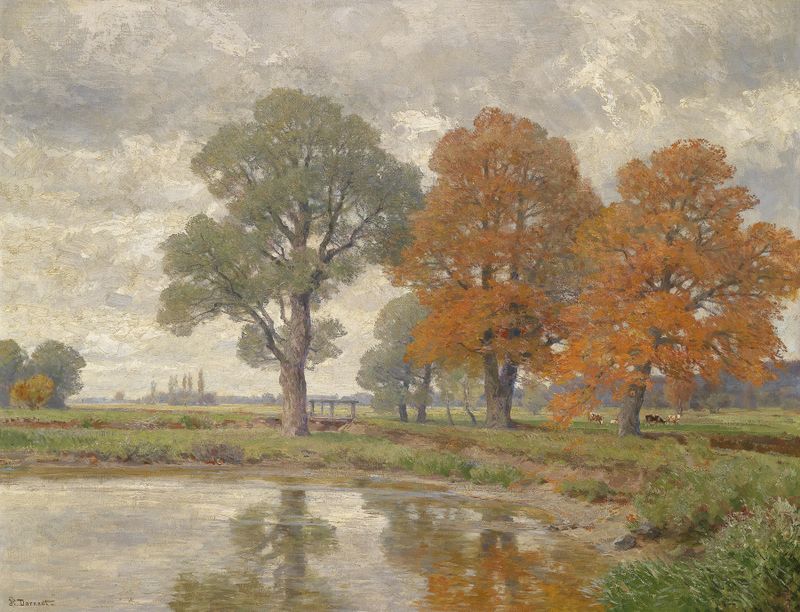
In the stillness of winter, a haunting emptiness lingers, beckoning the viewer to pause and reflect on the passing moments captured within the canvas. Begin by looking at the barren landscape that sprawls across the foreground, where muted whites and greys blend seamlessly, evoking a sense of desolation. The horizon, barely defined against the sky, suggests a world stripped bare, where texture and tone play together to create an eerie calm. Notice how the cool light bathes the scene, illuminating the frost-kissed ground and accentuating the lifeless trees standing sentinel in the distance, their branches stark against the soft, pastel sky. Within this seemingly simple composition lies a profound commentary on solitude and transience.
The absence of figures amplifies the sensation of isolation, allowing the viewer to feel their own presence—or lack thereof—in this frozen expanse. The juxtaposition of light and shadow hints at deeper emotional currents, suggesting a dialogue between hope and despair. Each brushstroke echoes the weight of time, inviting introspection on what it means to be alone amidst nature's quiet embrace. Created during an undefined period in Darnaut's career, A Winter’s Day reflects his exploration of the interplay between light, landscape, and emotion.
At this time, the art world was grappling with the aftermath of industrialization, and nature's stark beauty became a source of solace and inspiration for many artists. This piece encapsulates a moment not only in the artist’s life but in the broader context of a society seeking clarity in an increasingly chaotic environment.
More Artworks by Hugo Darnaut
Browse all →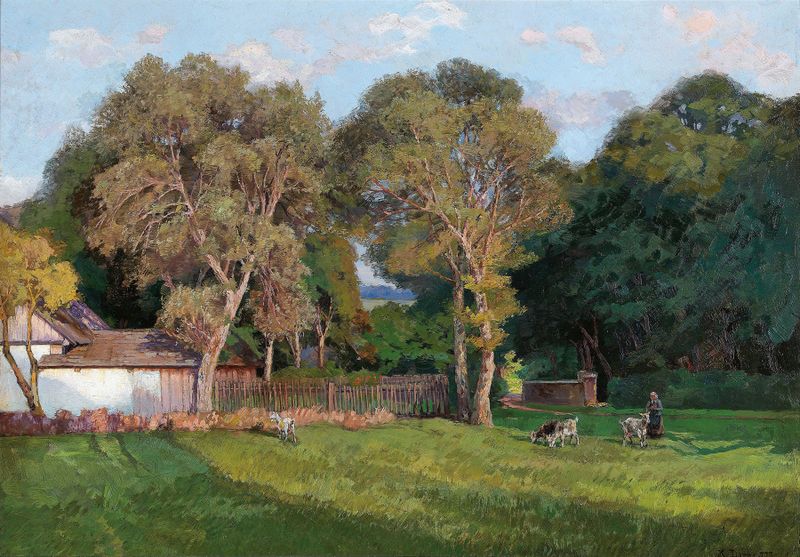
Aus dem Wienerwald
Hugo Darnaut
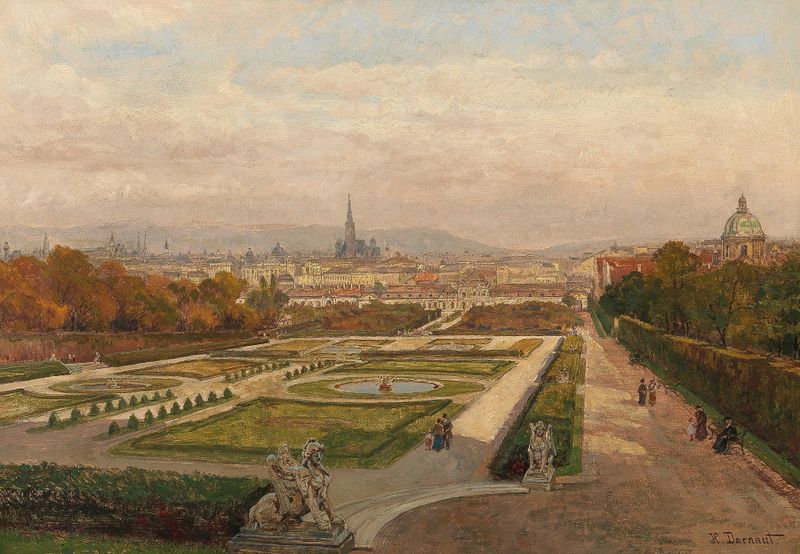
Blick vom Belvedere auf Wien
Hugo Darnaut

Motiv aus Plankenberg
Hugo Darnaut

In einem Wiener Garten (II., Praterstraße 60)
Hugo Darnaut

A Scene at Dusk in Late Autumn
Hugo Darnaut
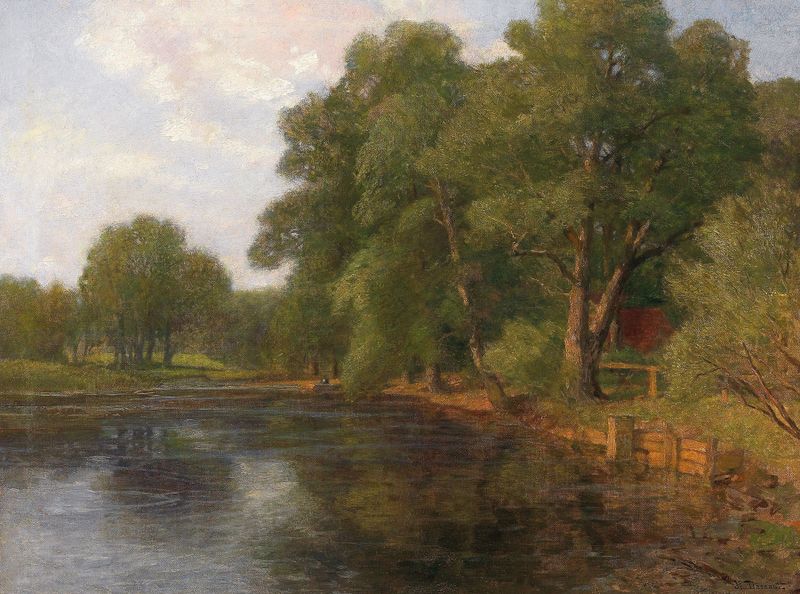
Motiv bei Plankenberg
Hugo Darnaut

Die Ruine Starhemberg im Piestingtal
Hugo Darnaut
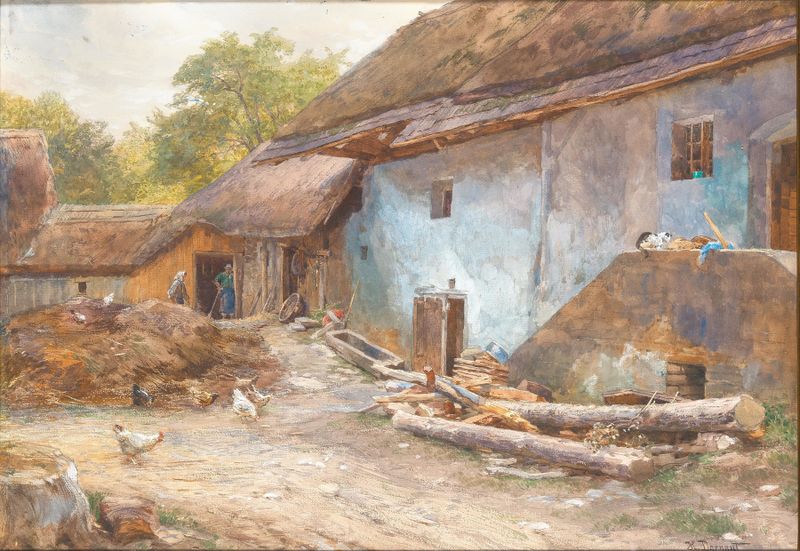
Niederösterreichischer Bauernhof
Hugo Darnaut

River Landscape with Small Herd of Cows and a Village in the background
Hugo Darnaut
Spätherbsttag
Hugo Darnaut





