A Wooded Landscape — History & Facts
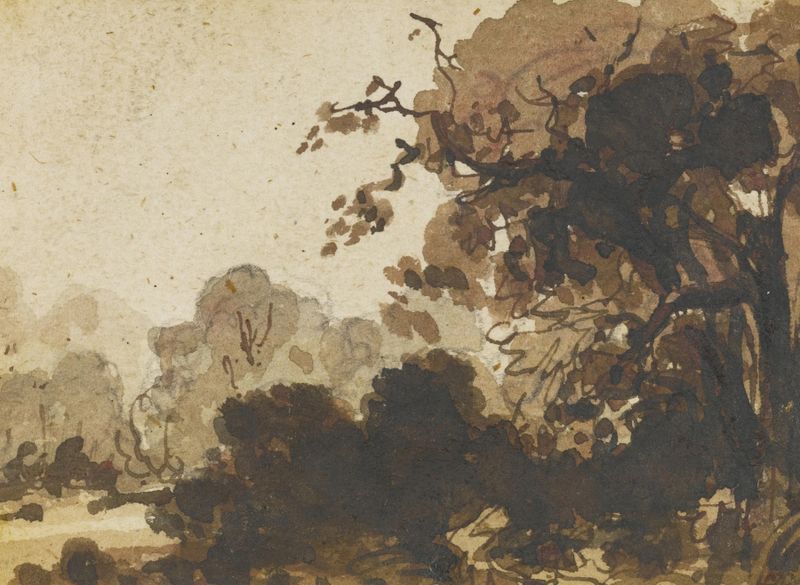
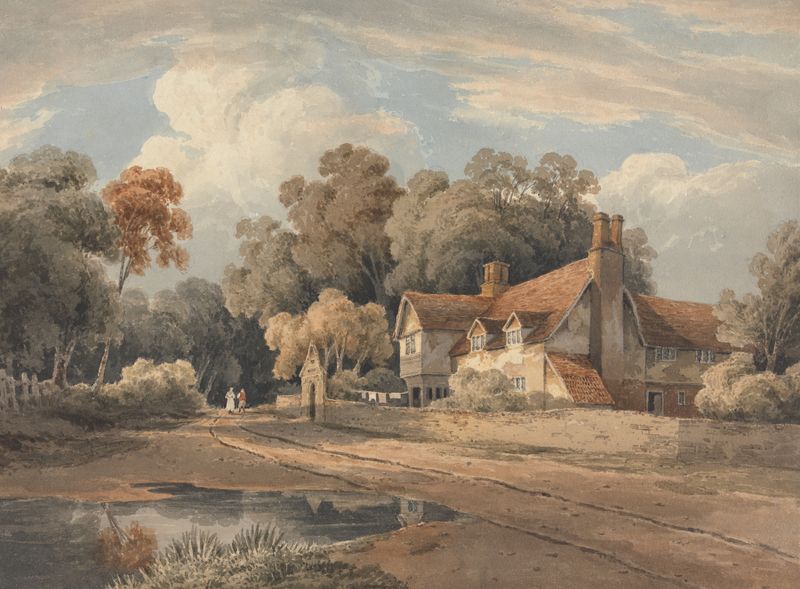
Where does light end, and longing begin? In this wooded landscape, the interplay of shadow and illumination evokes a visceral sense of ecstasy, as though nature itself sings in silence. Look to the left at the gentle cascade of sunlight filtering through the dense canopy, casting dappled patterns on the forest floor. Notice how the artist deftly captures the textures of the bark and leaves with a meticulous hand, the vibrant greens contrasting with the deep browns. The composition leads the eye through a winding path, hinting at hidden corners yet to be explored, while the cool blues of distant hills create a serene backdrop, evoking both peace and yearning. Beneath the picturesque surface, there are layers of emotional tension at play.
The juxtaposition of light and dark suggests a duality of joy and sorrow, as if the viewer is invited into an intimate moment of solitude, both comforting and melancholic. Hidden figures could be seen as shadows of the past, their absence felt yet unacknowledged, while the vibrant hues ignite a sense of longing for connection with the natural world. The artist, active in the early 19th century, created this piece amidst a shifting landscape of Romanticism, where art was beginning to explore the emotional depths of nature. Living in England during a time when the Industrial Revolution loomed, he captured a retreat into the wilderness, a response to the chaos of modern life, seeking tranquility in the beauty of the natural world.