Study of a wooded landscape with trees — History & Facts
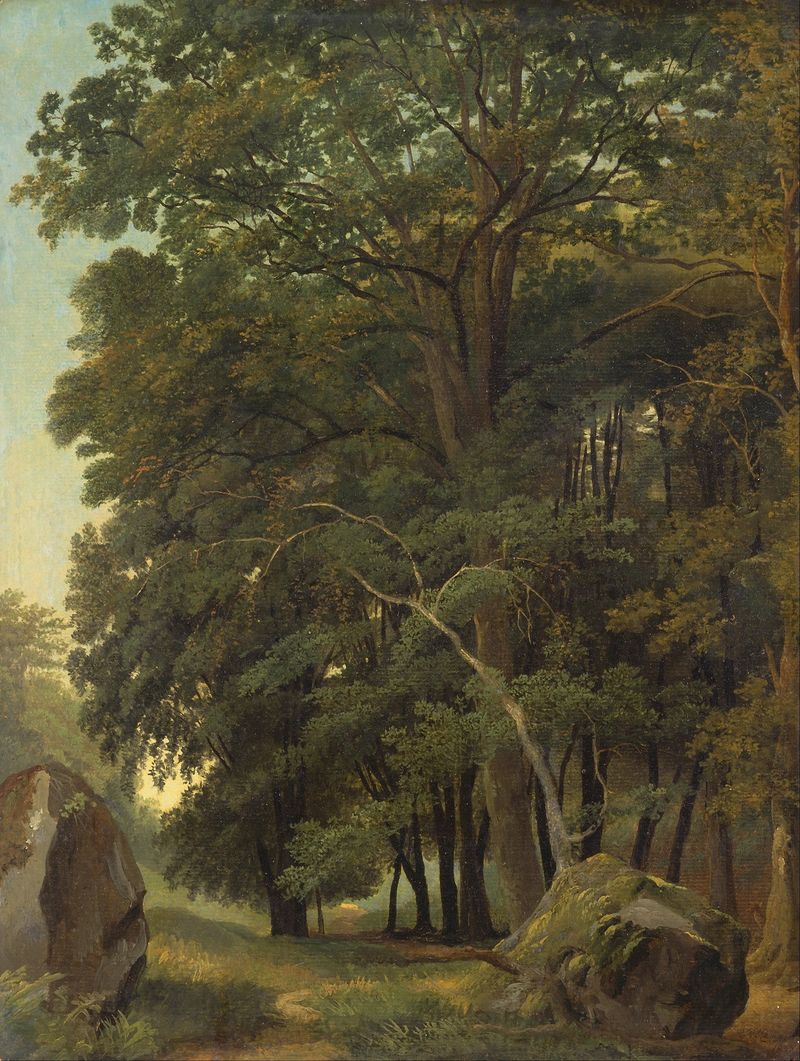
In the midst of nature's chaos, the mind dances between serenity and madness, captured in a tranquil wooded landscape. Look to the center of the piece, where vibrant greens pulse through the canvas, a cacophony of foliage harmonizing with soft browns and earthy tones. The trees, with their tangled branches, stretch skyward, inviting the gaze to wander through a realm untouched by time. Notice how the dappled light filters through the leaves, creating a mosaic of shadow and illumination that breathes life into the scene.
Each color choice appears deliberate, reflecting an underlying tension between calmness and the wildness of nature. Delving deeper, observe the juxtaposition of the thick underbrush and the airy treetops—a metaphor for the inner turmoil that often accompanies tranquility. The chaotic arrangement of leaves hints at the madness lurking beneath the surface, an echo of the artist's own psychological explorations. Each element, from the swirling clouds to the gentle bends of the paths, conveys a struggle between order and chaos, urging viewers to confront their own complexities and anxieties. Created during an uncertain period of artistic experimentation in the early 19th century, the artist explored both traditional landscape techniques and emotional depth.
While specific dates are elusive, this work reflects a broader movement in which artists sought to connect with nature intimately, often mirroring their inner conflicts through the natural world. As the art community began embracing Romanticism, this piece stands as a bridge between classical representation and the tumultuous emotions that would shape future landscapes.