
Abendlandschaft — History & Facts
In the realm of Abendlandschaft, time becomes a delicate dance of hues, inviting contemplation of moments lost and found within the brushstrokes. Look to the foreground where soft grasses sway, their muted greens and ochres whispering of twilight. The horizon stretches wide, embracing a symphony of blues and purples that blend seamlessly into a twilight sky. Notice how the light begins to dim, casting long shadows that suggest a pause between day and night, urging viewers to linger on the cusp of evening.
Each stroke draws you deeper into the serene landscape, evoking a sense of nostalgia for the fleeting moments of day’s end. As the sunset envelops the canvas, there lies an emotional tension—the contrast between the vibrant colors of the sky and the quiet earth below. This interplay works as a metaphor for the balance between chaos and calm, inviting an exploration of time's passage. The rising darkness gently beckons introspection, while the fading light hints at both endings and new beginnings—a poignant reminder of life’s cyclical nature. Eugen Jettel painted Abendlandschaft in the late 19th century, a period marked by the rise of Impressionism and a shift towards capturing the transient effects of light in nature.
Living in Vienna, he found himself amid a growing fascination with landscape painting, influenced by his contemporaries. This work reflects his mastery of color and light, capturing the essence of a moment that resonates with the changing times around him.
More Artworks by Eugen Jettel
Browse all →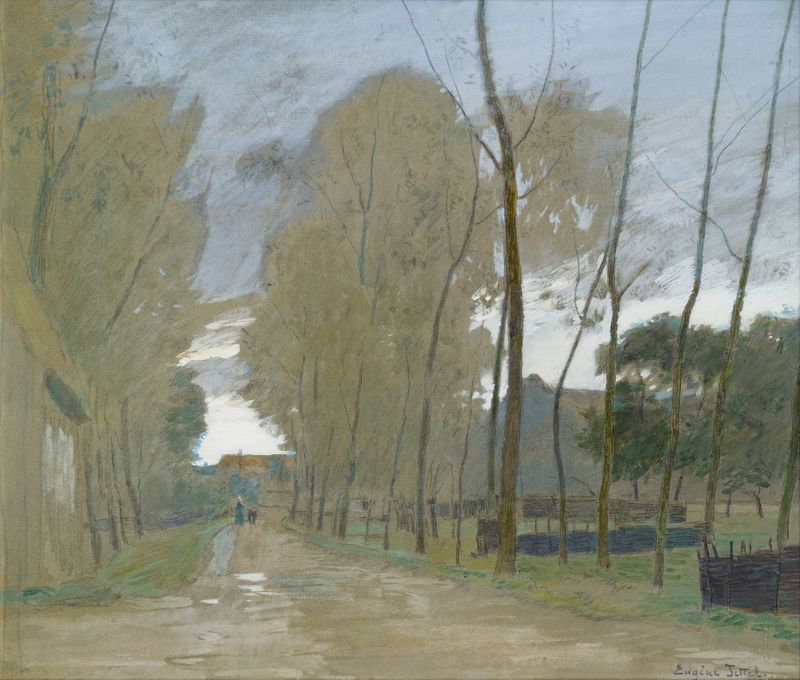
Motiv aus der Bretagne
Eugen Jettel
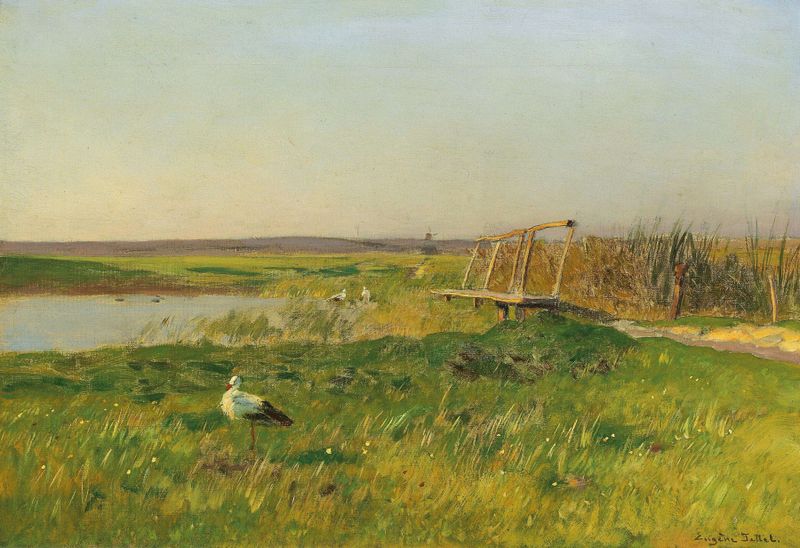
Frühlingslandschaft mit Störchen an einem Weiher
Eugen Jettel

Rinder auf Sommerwiese
Eugen Jettel
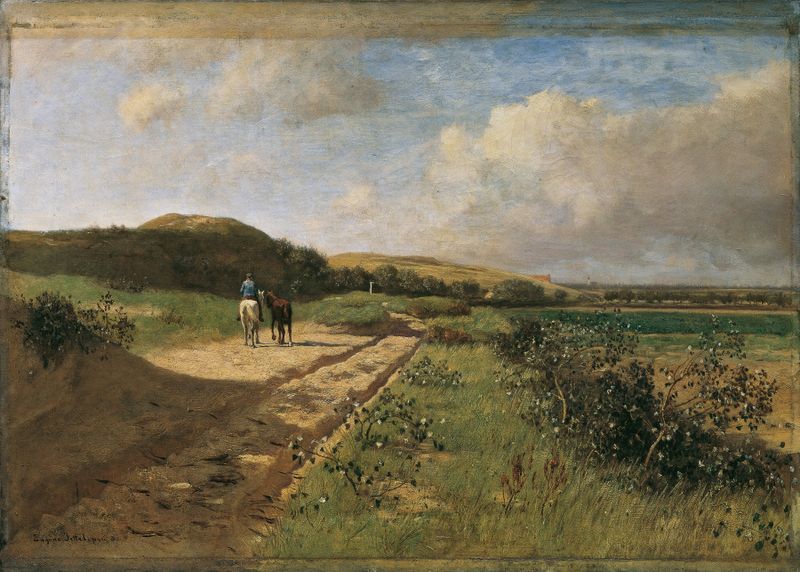
Dünen bei Katwijk
Eugen Jettel
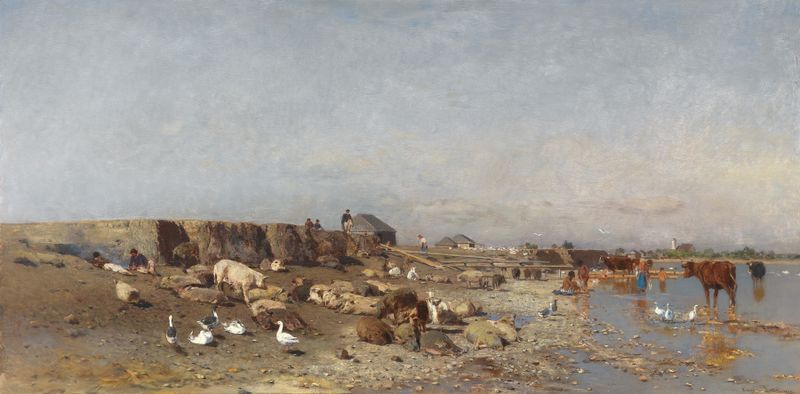
Motiv aus Szered an der Waag
Eugen Jettel
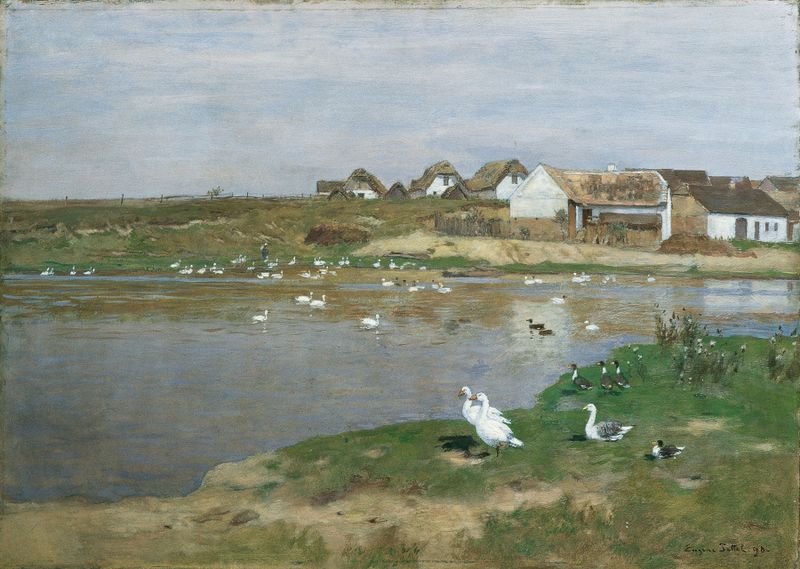
Der Gänseteich in Kotting-Neusiedl
Eugen Jettel

Flusslandschaft Mit Boot
Eugen Jettel

Flusslandschaft mit Kühen
Eugen Jettel

Dorfpartie Strohhütten aus Staatz
Eugen Jettel
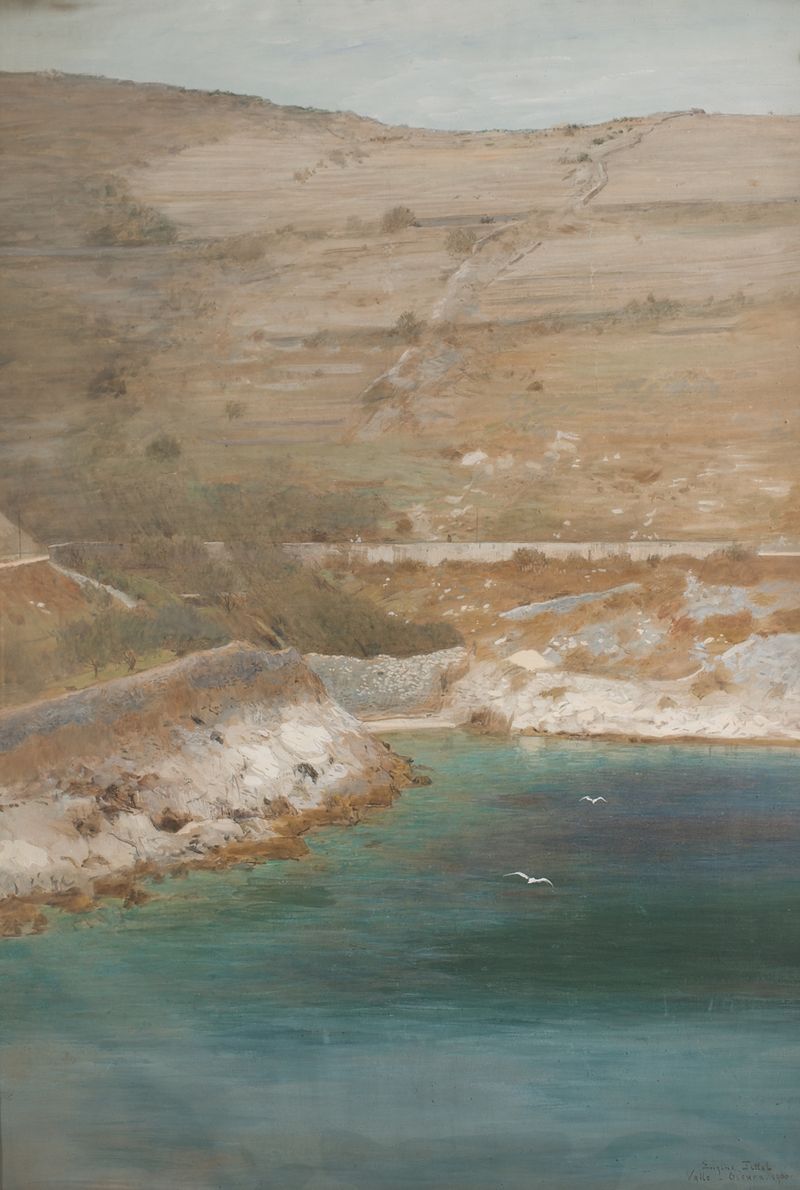
Valle Oscura
Eugen Jettel





